Roger De Sá: Why joining Carlos Queiroz’s Ghana World Cup coaching staff was a no‑brainer
Roger De Sá says joining Carlos Queiroz’s technical team for Ghana at the 2026 FIFA World Cup was a “no‑brainer,” praising the squad’s talent, unity and potential to advance in the tournament.

De Sá recalls the 3am phone call that sealed the move
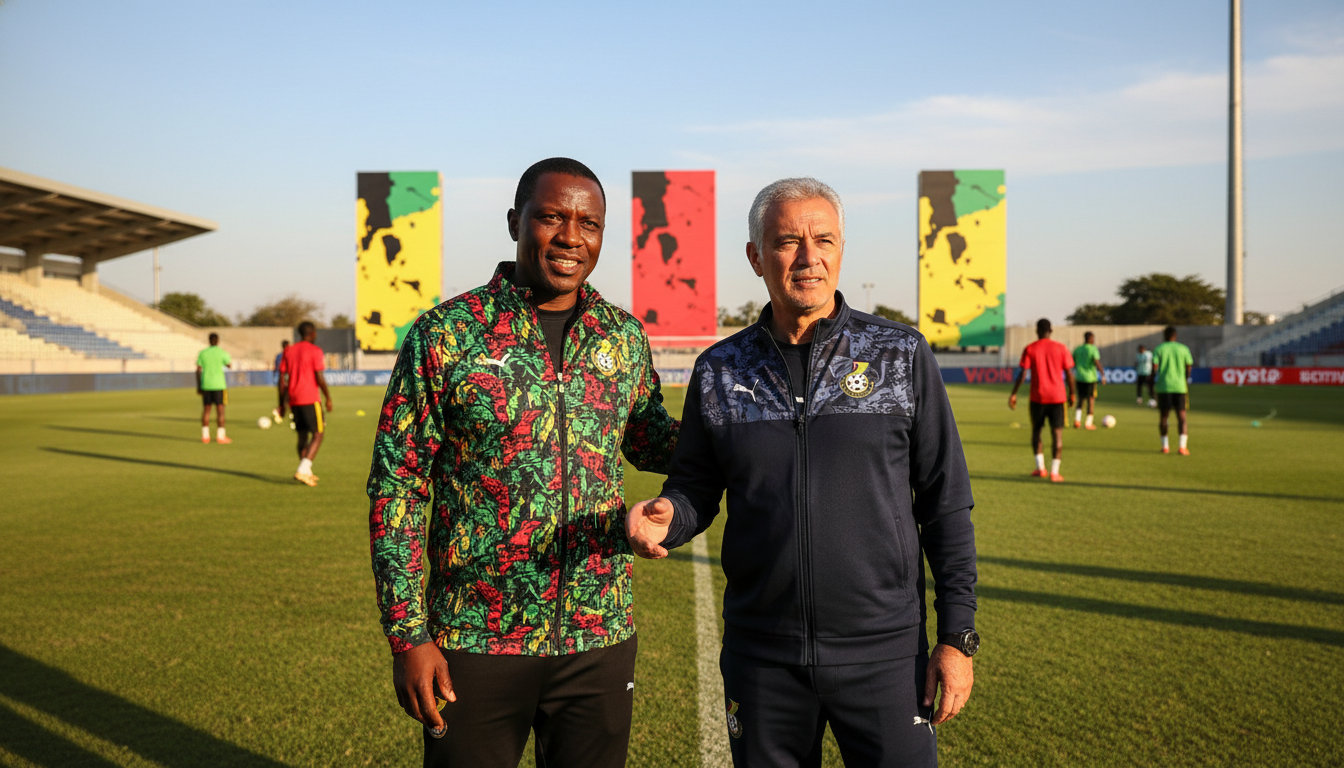
Roger De Sá described the moment Carlos Queiroz rang him as an emotional and decisive one, calling it an “exciting 3am call.”
He said he told his wife immediately and that her reaction — “We are leaving” — captured how quickly the decision was made.
De Sá framed the call as the natural result of a long-standing relationship and shared ambition with Queiroz.
He said the timing and the stakes — the 2026 FIFA World Cup with Ghana — made the opportunity impossible to turn down.
Role within Carlos Queiroz’s technical team and working relationship
De Sá outlined a collaborative dynamic with Queiroz, stressing that the Portuguese coach “listens” and welcomes differing views.
He emphasized that Queiroz does not adopt every opinion by default, but creates space for a technical team to contribute meaningfully.
The assistant coach pointed to their complementary experiences as a reason the pairing should strengthen Ghana’s preparations.
De Sá’s previous work, including time as Bafana Bafana assistant, gives him familiarity with African football contexts that he said will be valuable in Qatar and North America in 2026.
Assessment of Ghana’s talent and the infrastructure gap
De Sá was effusive in his praise for Ghana’s player pool, calling the natural ability “unbelievable” despite limitations in facilities and resources.
He highlighted a recurring theme in his comments: talent can and does exist independently of infrastructure, and Ghana’s players possess innate qualities that demand cultivation rather than instruction.
At the same time, De Sá contrasted Ghana’s situation with South Africa’s, noting that access to better facilities does not automatically translate into international progress.
He argued the challenge is not discovering talent but ensuring the talent reaches its potential through positioning, mindset and unity within the squad.
World Cup objectives: selection, positioning and realistic targets
De Sá made clear the technical team’s immediate focus is practical and tactical: pick the right players, place them in the right positions and prepare them mentally to wear the national jersey.
He insisted the Black Stars already know how to play; the staff’s job is to construct the environment in which players can perform consistently at the World Cup level.
Regarding outcomes, De Sá framed ambitions in realistic terms: if players perform to their abilities, Ghana has a tangible chance to progress.
He said the technical team will identify targets as they arise, and that progression depends on execution rather than extravagant promises.
Preparation priorities and message to supporters
Unity emerged as De Sá’s principal theme for the lead-up to the World Cup, with the coach urging cohesion across players, staff and supporters.
He pledged the technical team’s commitment to doing their best and to delivering performances that will make Ghanaians proud.
De Sá also implied a measured, evidence-based approach to preparation, focusing on clear roles, match-ready tactics and the psychological readiness to compete on football’s biggest stage.
The message to fans was both candid and encouraging: the ingredients for success are present, and a united camp will maximize the Black Stars’ chances.
The appointment represents a high-profile addition to Carlos Queiroz’s setup and signals a tactical and cultural blend aimed at converting Ghana’s raw talent into consistent World Cup performances.
Roger De Sá’s public remarks underline a practical plan: leverage experience, foster unity and place players in positions that allow natural ability to flourish on the 2026 stage.