
Scotland 1-0 Haiti: McGinn’s deflected strike hands Scots a nervy World Cup victory
Scotland clinched a 1-0 World Cup win against Haiti as John McGinn’s deflected shot settled a tense opening match at Gillette Stadium. The Scotland World Cup win ended a long wait for tournament success and puts Steve Clarke’s side top of Group C after their first game of the competition.
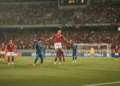

McGinn strike decides Scotland’s opening match
John McGinn produced the decisive moment just before the half-hour mark when his effort took a fortunate deflection and slipped past Haiti’s goalkeeper. The Aston Villa captain’s low strike proved enough to separate the teams in a match that rarely produced clear-cut chances. Scotland then shifted into protective mode, defending the lead amid growing pressure as the second half wore on.
The goal provided a crucial boost for a Scotland side returning to the World Cup after a 28-year absence. McGinn’s finish was the product of sustained possession and a tight finish from midfield, reflecting the team’s plan to control the central areas. From that point Scotland increasingly focused on structure and discipline to preserve the advantage.
Haiti threatened sporadically but could not find the breakthrough their energy promised early on. Scotland’s backline absorbed late surges and made key interventions as the match edged toward a nervy finale. The single strike proved decisive in a contest where margins were slim and concentration mattered most.
Gillette Stadium packed with travelling Scottish supporters
Gillette Stadium in Foxborough was filled to capacity for the match, with approximately 64,000 in attendance and a large majority of supporters wearing Scotland’s colors. The vocal presence of travelling fans created a tournament atmosphere typically reserved for host-nation fixtures. Their numbers and noise provided a tangible lift to the Scottish players throughout the evening.
The crowd’s full-throated celebrations after the goal underlined the emotional significance of the occasion for supporters who had waited nearly three decades to see their team back at football’s biggest stage. Fans sang and cheered at every defensive clearance and tactical restart, amplifying the sense that this was a landmark night. That support helped sustain the team during tense passages of the game when Haiti probed for an equaliser.
Local officials and stadium stewards reported orderly conduct among visiting fans, with many arriving early to build momentum before kickoff. The match day experience reflected careful planning by supporters’ groups and event organisers to maximise turnout. The large Scottish contingent transformed the New England venue into an environment more commonly associated with European stadia.
Scotland end long wait for World Cup and major-tournament victory
The result marks Scotland’s first World Cup victory since a 2-1 win over Sweden in 1990 and their first victory at a major international tournament since UEFA Euro 1996. Returning to the World Cup after missing the previous editions, Scotland achieved a milestone that carries both historical and emotional weight. The win provides tangible proof that the current squad can compete on football’s largest stage.
Beyond the immediate triumph, the victory offers relief after repeated near-misses in qualification cycles and the heightened expectations that accompanied Scotland’s successful campaign to reach this tournament. It is a rare moment of positive momentum for a national programme that has frequently fallen short at the final hurdle. The result will be cited by supporters and officials alike as evidence of progress under the current coaching setup.
Statistically, the victory alters Scotland’s standing in Group C and provides an early points advantage that will be important in a format where multiple third-placed teams can advance. The achievement is both symbolic and practical as Scotland now has a platform from which to build across the remaining group fixtures. That platform will be tested in the coming days as attention turns to squad management and the tactical responses of upcoming opponents.
Steve Clarke’s selection and defensive resilience
Manager Steve Clarke opted for a selection that balanced midfield solidity and defensive experience, a pragmatic choice that showed in Scotland’s overall shape. Clarke’s setup emphasised compactness in central areas, seeking to limit Haiti’s ability to progress with the ball through the middle. The side’s organisation allowed them to absorb pressure while still offering enough presence in midfield to produce McGinn’s match-winning moment.
Substitutions late in the match were designed to maintain defensive discipline rather than radically alter the team’s attacking intent. Clarke’s decision-making reflected an awareness that the priority was to protect the lead and secure a positive result in a demanding opening fixture. Players executed that brief, with multiple interceptions and clearances in the closing stages preventing Haiti from building meaningful sequences.
The performance underlined the manager’s emphasis on collective responsibility and work-rate across the pitch. Scotland’s defenders and midfielders combined to restrict clear shooting opportunities and to contest second balls aggressively. That collective defensive resilience will be a cornerstone of Clarke’s strategy as the team seeks to navigate an unpredictable group phase.
Implications for Group C standings and qualification chances
The win places Scotland at the top of Group C after the first round of matches, offering a crucial early advantage in the race to advance. In the expanded 2026 World Cup format, there are additional routes to the knockout phase, including progression for the better-performing third-placed teams. Scotland’s three points therefore carry extra significance both psychologically and mathematically.
A positive opening result reduces immediate pressure on the squad and allows Clarke greater flexibility in rotating the group for upcoming fixtures. Points accumulated early in the competition will be valuable given the short turnaround between group matches and the physical demands of tournament football. Scotland can now plan for opponent-specific adjustments without the desperation that accompanies a poor start.
The team’s goal difference and defensive record will remain important variables as the group unfolds, particularly if multiple teams finish level on points. Scotland’s clean sheet in this match improves their statistical position and could prove decisive in tiebreak scenarios. Coaching staff will monitor recovery and fitness closely to maintain the momentum from this opening victory.
Haiti’s valiant display and next steps
Haiti arrived as the underdog but demonstrated organisation, resilience and moments of threat that forced Scotland to remain vigilant for the full 90 minutes. Their tactical approach combined disciplined defending with quick transitions aimed at exploiting space behind the Scottish lines. While they left without a point, the performance contained sufficient positives to suggest the team can be competitive in subsequent fixtures.
Haiti’s players showed commitment in duels and utilized counter-attacking opportunities to unsettle their opponents on occasion. The narrow defeat will be examined for lessons on finishing and late-game management, areas that can turn close contests into favourable results. For Haitian coaching staff, the focus now shifts to recovery and refining attacking patterns ahead of the next group match.
From a broader perspective, Haiti’s showing contributes to the narrative of the tournament as one where smaller nations can spring surprises and challenge established footballing countries. The team’s spirit and organisation offer a foundation to build upon, and they will seek to convert the positive elements of this display into points in the fixtures to come.
Scotland leave Gillette Stadium with a slender but vital victory that restores a long-absent sense of possibility at the World Cup and gives the squad a platform to pursue historic progress through the group stage. The result will be measured in the coming days as both fitness and form determine whether this opening triumph can be turned into a sustained run in the tournament.