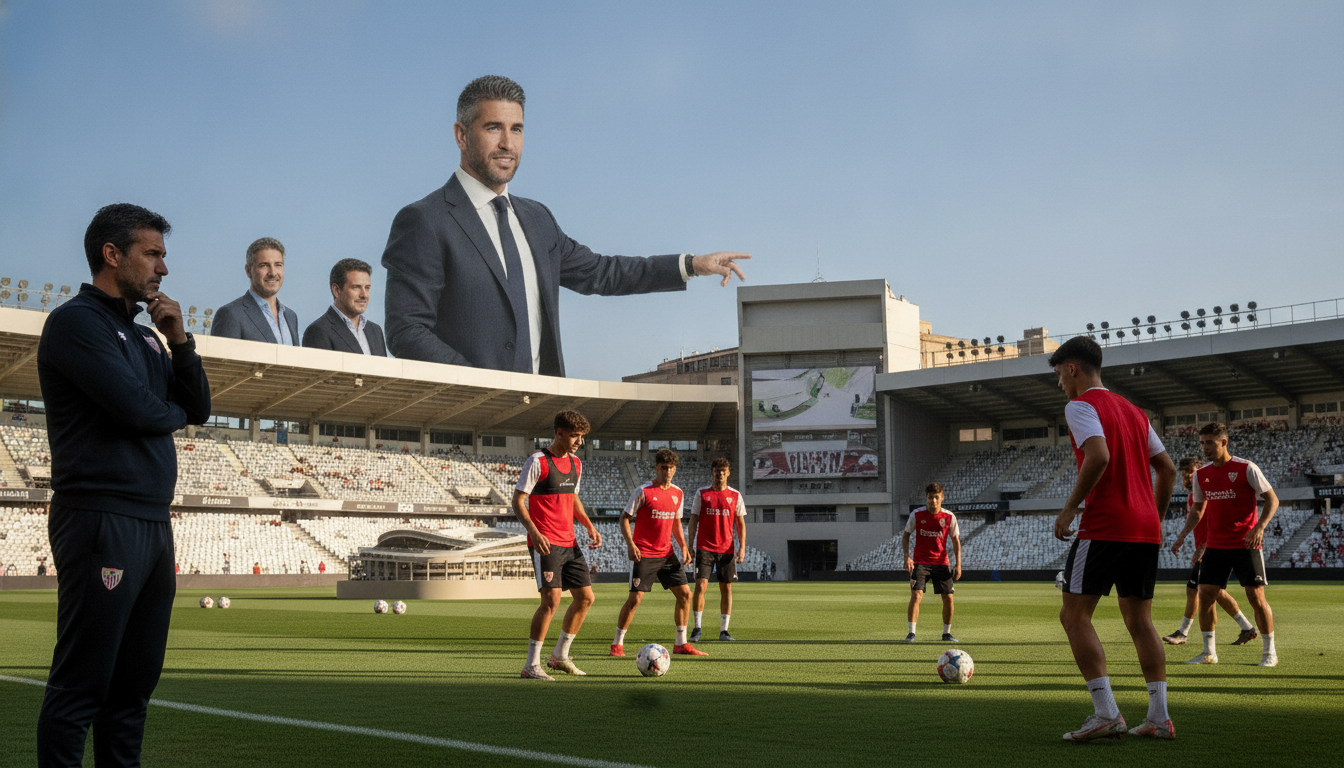
Sevilla FC’s youth surge and boardroom drama give Nervión fresh direction
Sevilla FC breathed life into a faltering season with a nervy win over Athletic Club, a result powered by academy graduates and underscored by mounting off-field turmoil.


Sevilla’s crucial win and the academy breakthrough
Sevilla FC’s tight victory against Athletic Club felt like a pivotal moment in a season marked by dramatic swings. The home triumph not only halted a difficult January run but also showcased a deliberate shift toward relying on players developed at the club’s academy.
Manager Matías Almeyda fielded a significant number of homegrown players during the match, a tactical and symbolic move that suggested a new reliance on internal talent. Fans at the Sánchez Pizjuán responded with renewed energy, witnessing a blend of youthful urgency and experienced leadership that restored some optimism in Nervión.
Almeyda’s pragmatic overhaul on the pitch
Almeyda has imposed a pragmatic, collective identity on Sevilla FC, prioritizing compactness and coordinated pressing over individual brilliance. The coach has adjusted spacing between lines and emphasized a medium block that pressures opponents without committing to an ultra-high defensive line.
This system has demanded collective buy-in, including from senior figures who might not have been built for relentless pressing. The result has been greater defensive cohesion and clearer roles for midfielders and forwards tasked with both ball recovery and quick transitions.
Academy graduates stepping up at senior level
Sevilla’s latest win was notable for the number of academy players who featured prominently, both from the start and as substitutes. Several graduates earned significant minutes, reflecting a strategic shift toward promoting youth as a short- and medium-term remedy for sporting and financial constraints.
Relying on academy talent offers Sevilla FC dual benefits: it supplies inexpensive first-team contributors and preserves assets that can be monetized if the club needs to balance the books. Young players on the pitch also bring tempo and hunger, qualities that have helped the team produce bright performances amid inconsistent results.
Tactical strengths and the squad’s limitations
Under Almeyda, Sevilla have developed a clear defensive spine and a midfield core that provides both protection and ball progression. Goalkeeper stability, a combative central midfield, and a forward pairing that blends physical presence with link-up play have become defining features of recent performances.
Despite these improvements, the squad has clear limits in depth and top-end quality, which help explain swings from dominant wins to heavy defeats. Inconsistency often emerges against higher-quality opposition or during congested schedules, exposing the thin margins that separate mid-table stability from a drop into concern.
Boardroom conflict and mounting financial pressure
Off the pitch, Sevilla FC remains hamstrung by a prolonged power struggle between major shareholders that has seeped into governance and strategic planning. Persistent disputes at the board level have delayed long-term decisions and left departments operating without coherent, sustained direction.
Financial results have mirrored this instability, with recent accounts revealing significant losses driven by missed European revenue, softer domestic broadcast income, and underwhelming transfer activity. Those deficits have intensified calls within the club for decisive financial restructuring and fresh capital to avoid a deeper crisis.
Sergio Ramos’ takeover bid and investor interest
One of the most consequential developments this year has been Sergio Ramos’ emergence as the public face of a takeover initiative aimed at acquiring Sevilla FC. The former captain’s consortium has signed a letter of intent with key stakeholders, securing a period of exclusivity to undertake due diligence and structure a potential purchase.
The proposed deal would combine Ramos’ local profile with international financing and a plan to inject immediate liquidity into the club. The bid envisions settling high-cost short-term debt and enabling a capital expansion to lift salary ceilings and restore more competitive transfer capacity. The proposal still depends on audits, valuation of liabilities, and the cooperation of all major shareholders.
What a change of ownership would mean for sport and finance
A successful takeover would alter Sevilla’s strategic playbook by providing the financial headroom to retain top performers and invest in squad upgrades without forced sales. It could also formalize a longer-term roadmap for stadium, academy, and commercial expansion that has been difficult to pursue amid current boardroom rancor.
However, transition risks remain significant. New ownership would inherit the club’s existing debts and contractual obligations, and delivering improved sporting results requires careful recruitment and operational stability—neither of which can be solved by capital alone. Negotiations with entrenched shareholders will be politically sensitive and could determine whether a deal is viable.
Fan expectations and the longer recovery journey
Supporters are adjusting to a recalibrated set of expectations that blends patience with pragmatic hope. Nights of European competition and dramatic knockout runs remain the emotional benchmark for Sevilla FC fans, but many recognize that rebuilding financial health and sporting credibility will likely take multiple seasons.
In the short term, supporters are eager to see the club maximize what Almeyda’s structure and the academy can deliver: resilient performances, clearer tactical cohesion, and the emergence of marketable young players. Those elements would provide both sporting value and potential financial returns, helping to create a steadier platform for the future.
Sevilla FC’s recent home victory was more than three points; it was a tangible expression of a club navigating a complex crossroads where tactical clarity and homegrown talent intersect with urgent governance and financial questions. The next months will test whether on-field momentum can be translated into institutional stability and whether any change in ownership can provide the resources without undermining the club’s identity. The balance between sporting pragmatism and prudent investment will determine if Sevilla can move from episodic optimism to sustained recovery.