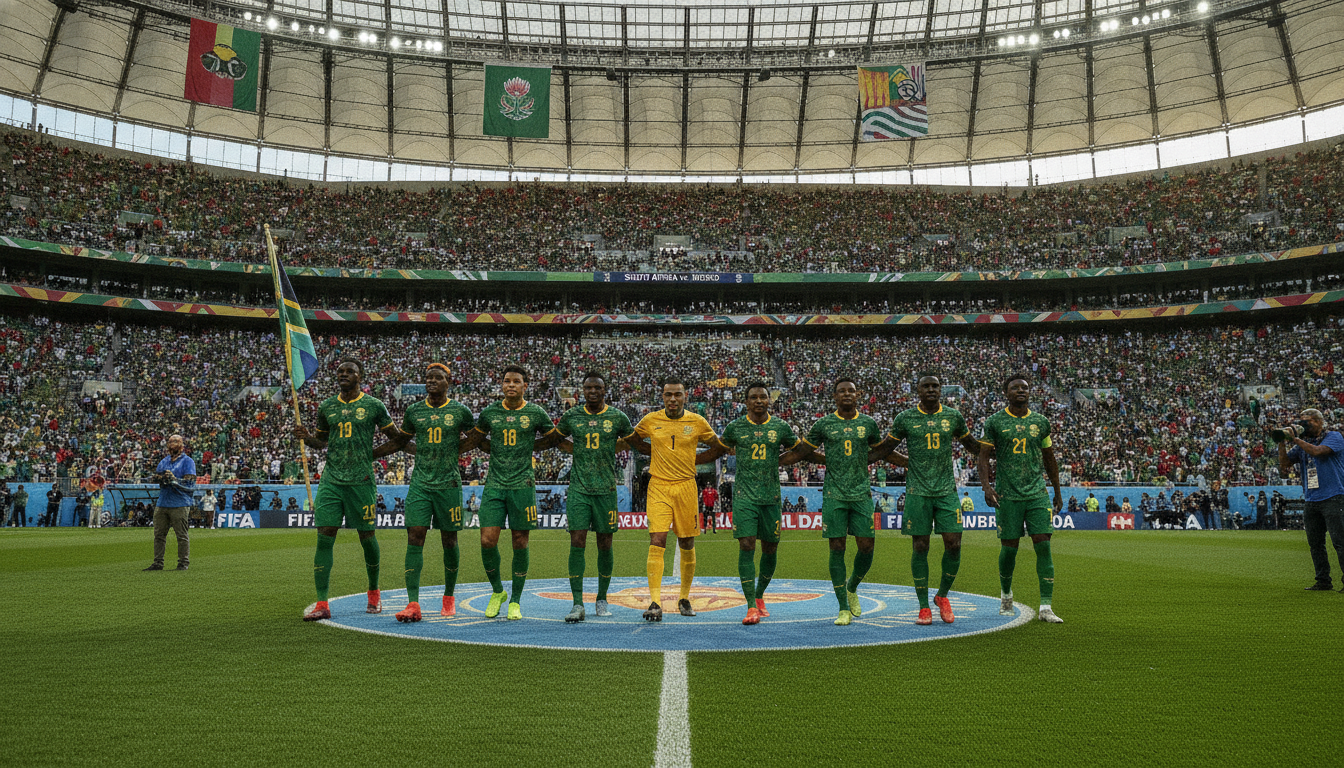
South Africa World Cup return set for curtain‑raiser against Mexico at Estadio Azteca
South Africa World Cup return ends 16-year wait as Bafana Bafana face Mexico in the tournament opener at Estadio Azteca, aiming for a positive Group F start.


South Africa make first World Cup appearance since 2010
South Africa’s return to the World Cup marks the end of a 16‑year absence from the tournament, and the country will take the field in the official opener. The South Africa World Cup curtain‑raiser against cohost Mexico places Bafana Bafana under an intense global spotlight from the first whistle. Expectations at home are high, with supporters and officials alike keen for a strong performance after a long wait.
The match will be seen as a statement of intent from a team that navigated a challenging qualification period to reach the finals. For many players, this is a rare chance to compete on the game’s biggest stage and to restore pride for South African football. The nation’s supporters will be watching closely for signs that the squad can translate domestic and continental form into results against elite international opposition.
Curtain‑raiser at Estadio Azteca rekindles 2010 memories
The opening game will take place at Mexico City’s Estadio Azteca, the same nation that South Africa faced in the 2010 tournament hosted on African soil. That earlier fixture in Johannesburg produced a memorable 1‑1 draw, a match best remembered for Siphiwe Tshabalala’s opening goal and Rafael Márquez’s equaliser. The setting and history add resonance to the 2026 meeting, turning a routine group kickoff into a match heavy with narrative.
Players and fans on both sides are likely to feel the weight of that shared history, even as the squads themselves have changed dramatically. For many South African supporters, the encounter will evoke the atmosphere of 2010 and the pride that accompanied hosting the World Cup. For the current team, the game offers an opportunity to create fresh memories at one of football’s most iconic venues.
Match details and logistical considerations
Kickoff for the Mexico v South Africa opener was scheduled for Thursday, June 11, at 21:00 South African Standard Time, aligning the fixture with the global schedule for the tournament’s first day. The late local kick‑off in South Africa places physical demands on the travelling squad, who must adjust to altitude, travel fatigue and a hostile atmosphere in Mexico City. Match preparation and recovery will be a key part of South Africa’s immediate game plan.
Organisers and coaching staff will monitor fitness levels closely as the short turnaround between travel and competition can affect performance. The coaching team has indicated an emphasis on measured intensity in training to balance match readiness with player welfare. Tactical briefings and video analysis will have played a central role in the final days leading up to the match.
Group F composition and pathway to the knockout stage
South Africa are drawn in Group F alongside Mexico, Czechia and South Korea, a mix of technical and physical styles that will test Bafana Bafana across multiple phases of the tournament. Success in the group will require consistency rather than a single standout performance, with each opponent presenting distinct challenges. The team’s early priority is to secure points in the opening match to build momentum and reduce pressure in subsequent fixtures.
Mexico, as cohosts, enter the group with home advantage and expectations from local supporters, while Czechia and South Korea bring varied tactical approaches and a history of disciplined tournament play. South Africa’s route to the knockout rounds will hinge on avoiding heavy defeats and capitalising on scoring chances in each game. Squad rotation and injury management will likely influence the team’s capacity to sustain form across the group stage.
Squad profile and senior figures in the team
South Africa’s squad blends experienced campaigners with younger players eager to make an international impact, and the selection reflects a balance of domestic and overseas‑based talent. Mamelodi Sundowns midfielder Themba Zwane is one of the more senior members of the group; he was 20 during the 2010 World Cup and brings continuity between eras. Leadership on and off the pitch will be essential for the squad as it navigates the pressures of major‑tournament football.
Several players will carry heavy responsibility to provide creativity and defensive stability, particularly in transition phases where Mexico often excels. Attacking rhythm and set‑piece efficiency are expected to be focal points for South Africa, who will seek to translate possession into clear scoring opportunities. The coaching staff’s trust in certain key performers will shape the starting lineup and in‑match adjustments.
Tactical outlook and coaching priorities ahead of the opener
Tactically, South Africa are likely to adopt a compact defensive shape while probing for openings on the counter‑attack, a pragmatic approach against a technically strong Mexico side. The coaching team has emphasised organisation, discipline and quick vertical transitions as foundations for the game plan. Managing possession phases intelligently and avoiding unnecessary turnovers in midfield will be decisive factors in retaining control of the match flow.
Set pieces and moments of individual brilliance could tip the balance in a tightly contested opener, so preparation in those areas has featured prominently in training sessions. The coach’s selection choices for the starting XI and bench will reflect a desire to match Mexico’s intensity while preserving the ability to alter the game through substitutions. Match management, particularly in the final 20 minutes, could determine whether South Africa leave Mexico City with a positive result.
Historical ties and the emotional significance for South African fans
The 2010 World Cup remains a defining chapter in South African football history, and the national team’s reappearance on the global stage carries emotional weight for supporters. The memory of Tshabalala’s celebrated strike and the roar that followed is still vivid among older fans, and that legacy informs present expectations. A competitive showing in the opener would be seen as a reaffirmation of the country’s ongoing football development.
For younger players and fans who were not present in 2010, the match provides a new point of reference and the chance to build fresh traditions tied to this generation. The broader impact on domestic interest, youth participation and national football investment could be significant if Bafana Bafana perform credibly. Win, draw or loss, the tournament offers an important platform to measure progress and set benchmarks for the future.
South Africa travel to Mexico with a mixture of nostalgia and cautious optimism, aware that the opener will shape narratives both at home and abroad. The team’s preparation has focused on resilience and tactical clarity, and the players will have the opportunity to write a new chapter at one of the sport’s most storied stadiums. Whatever the outcome, the match will mark the end of a long wait and the start of South Africa’s renewed pursuit of World Cup success.