South Korea World Cup exit sparks nationwide anger as coach Hong Myung‑bo resigns
Coach Hong Myung‑bo resigns after South Korea World Cup exit; fans boo at Incheon, Red Devils demand accountability and president orders a probe into the team.
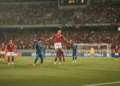
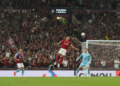
South Korea’s World Cup exit has left the nation reeling and prompted the resignation of head coach Hong Myung‑bo, with anger directed at leadership rather than the players. The phrase “South Korea World Cup exit” has become the focus of public debate as supporters, political leaders and officials respond to a campaign that ended in Guadalajara and a fraught return home. Tensions escalated at Incheon International Airport and in online exchanges, underscoring the depth of disappointment after South Korea failed to advance beyond the group stage.
Fans Place Blame on Coach, Not Captain
Fans made clear that their grievances were aimed at the national team’s coaching and management rather than captain Son Heung‑min or the playing squad. Supporters boxed their frustration into calls for accountability after results that fell short of expectations on football’s biggest stage. Messages at airports and on social media singled out tactical choices and selection decisions as primary causes of the early exit.
Public sentiment held that players delivered effort but were let down by the structure around them, a theme reflected in chants and protest placards. That distinction shaped much of the immediate criticism and framed discussions about the next steps for the Korea Football Association.
Match Results and Elimination Explained
South Korea opened the tournament with a 2-1 victory over the Czech Republic but then lost 1-0 to Mexico before suffering another 1-0 defeat to South Africa. Those results left the team short of the points and goal difference required to progress as one of the tournament’s best third-placed sides. The combination of a solitary win and two narrow defeats proved decisive in a competitive group.
Analysts noted that while the margin in each loss was small, missed chances and defensive lapses at critical moments prevented the team from converting a promising start into qualification for the knockout rounds. The elimination exposed weaknesses that supporters and officials now expect the association to address.
Return to Incheon Marked by Protests and Threats
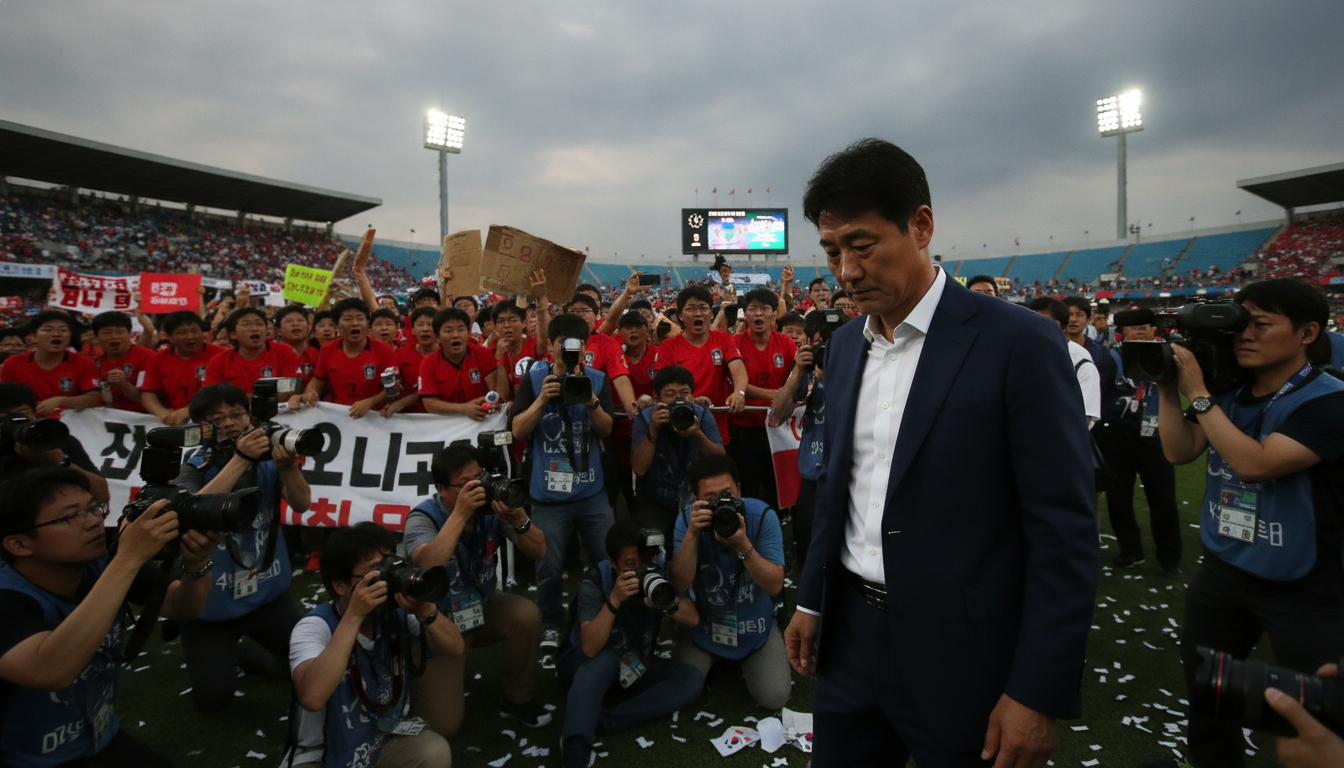
When Hong Myung‑bo returned to South Korea, he faced a hostile reception at Incheon International Airport in the early hours, where he was surrounded by security and met with loud boos and banners. Protesters held signs declaring harsh judgments about the state of Korean football, and the atmosphere was charged with anger and disbelief. Authorities responded after an online death threat linked to the coach appeared before the team’s arrival, triggering a police inquiry.
The incident at the airport highlighted how quickly sporting disappointment can spill into public disorder and criminal investigations. Law enforcement emphasized that threats and intimidation cross legal lines and would be treated as matters for formal investigation rather than public protest.
Red Devils Demand Public Apology and Exit
The national team’s official supporters’ group, the Red Devils, issued a stark demand that the coach publicly apologize and leave the sport, framing their statement as a response to what they described as unacceptable performance and leadership. Their June 29 declaration called for a symbolic and irreversible break with the coach’s presence in national football. The group’s stance amplified public pressure on the Korea Football Association and government officials to take immediate action.
Supporters’ organizations have considerable influence over public sentiment in South Korea, and their organized protests can shape political and institutional responses. The Red Devils’ call for accountability added momentum to broader debates about selection, preparation, and oversight within the national program.
Political Leadership Orders Investigation
President Lee Jae‑Myung publicly expressed “utter bewilderment” at the result and instructed the culture ministry to examine organisational and personnel failures tied to the national team’s performance. The directive signalled that the fallout from the World Cup exit would extend beyond sport into governmental oversight of national institutions. Officials now face pressure to assess whether structural problems or administrative decisions contributed to the outcome.
The president’s intervention underscores how football results can take on national significance in South Korea, where international sporting success is often seen as a reflection of national pride and administrative competence. The ministry’s review is expected to cover selection processes, coaching appointments and the broader governance framework that shapes elite football.
Questions Raised Over Leadership, Merit and Selection
Commentators and analysts have linked the public backlash to wider concerns about meritocracy and the appointment of leaders across South Korean institutions. The debate has shifted from on-field tactics to how officials are chosen and whether those entrusted with national roles possess the credentials and track records required. Critics argue that repeated failures at major tournaments intensify scrutiny of how coaching and administrative appointments are made.
Observers suggest that any review should examine both short‑term tactical decisions and longer‑term structural reforms, including talent development, scouting networks and the relationship between the Korea Football Association and domestic clubs. Lessons drawn from this episode may influence policy and personnel decisions well beyond the current coaching vacancy.
The culture ministry’s probe, in conjunction with possible internal reviews by the football association, is likely to produce recommendations aimed at rebuilding trust with supporters and improving accountability. How those recommendations are implemented will determine whether public confidence in the national program can be restored.
Termination of Hong’s tenure opens a search for a successor who can navigate high expectations and a critical media environment. The next coach will inherit not only a squad still capable of competing on the international stage but also a national dialogue about standards, leadership and reform.
The squad’s performances, while not meeting the ultimate objective of advancing, nonetheless showcased individual talents who may form the nucleus of future campaigns. Balancing immediate turnover with the need for continuity will be a key consideration for decision makers in the weeks ahead.
Sporting federations elsewhere have responded to similar setbacks by combining coaching changes with institutional overhauls, and stakeholders in South Korea are now weighing comparable options. Fans insist on swift, visible action while others urge a measured, evidence‑based approach to avoid reactive decisions that could hinder long‑term progress.
The longer-term challenge will be reconnecting the public with a vision for national football that delivers both results and credibility. That process will require transparent selection criteria, improved development pathways and a governance model that withstands public and political scrutiny.
The immediate consequence of the South Korea World Cup exit is a leadership vacuum and a national conversation about how elite sport is run, funded and overseen. The coming weeks are likely to bring further announcements from the Korea Football Association and government bodies as they consult with stakeholders and consider structural reforms.
In the short term, supporters will be watching how the association responds to demands for accountability and whether actions taken satisfy calls for change. The event has already reshaped the national discourse on sport and leadership, placing football governance at the center of public attention.
The resignation of Hong Myung‑bo, the protests at Incheon and the president’s order for an investigation mark the start of a high‑stakes period for South Korean football, one in which policy, public trust and on‑field performance must be reconciled.