Real Madrid to send 500-page Negreira case dossier to UEFA as Barcelona studies legal action
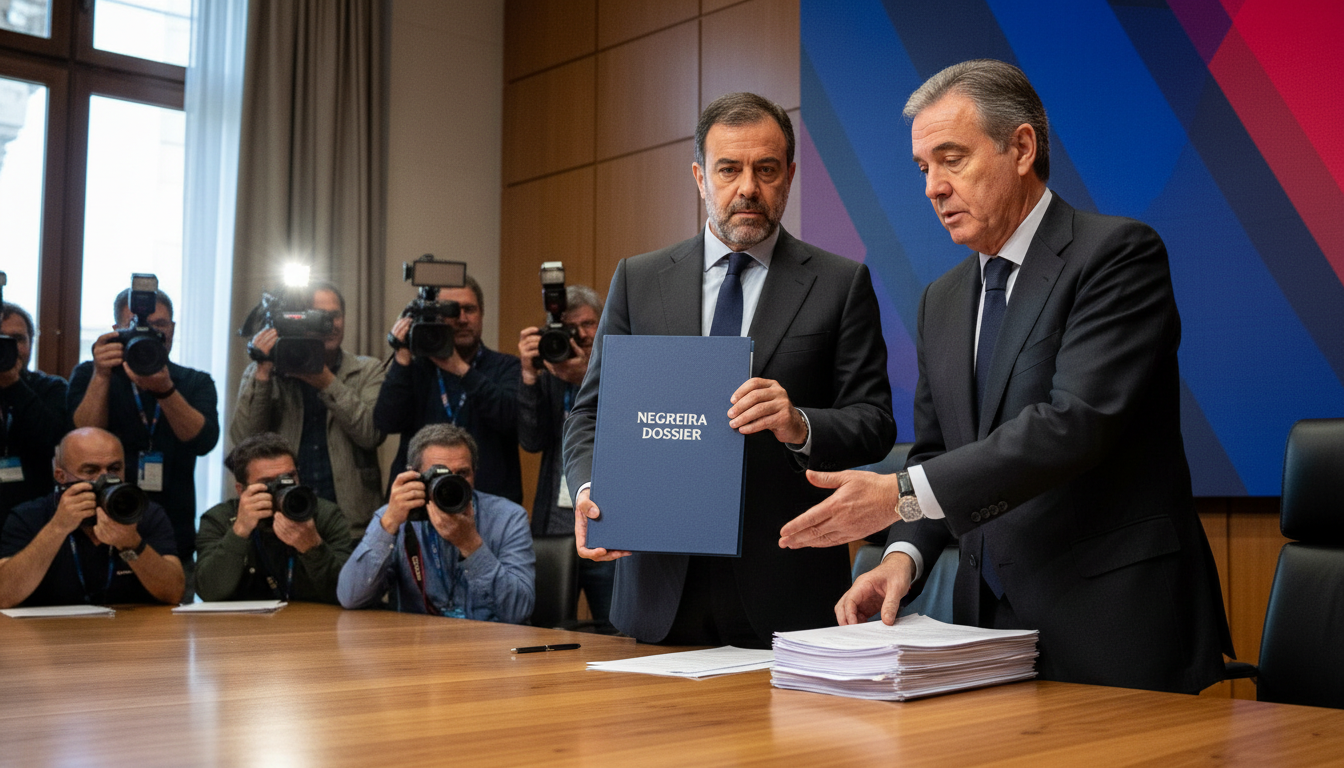
Real Madrid says it will deliver a 500-page Negreira case dossier to UEFA after Florentino Pérez’s press conference, and Barcelona has announced its legal team is reviewing possible action.


Barcelona said its legal department will study measures after Real Madrid president Florentino Pérez pledged to submit a detailed dossier on the Negreira case to UEFA following a high-profile press conference on Monday. The announcement escalates a long-running controversy over payments linked to former head of referees José María Enríquez Negreira, which have been under judicial scrutiny in Spain. Pérez also called internal elections at Real Madrid and framed the move as part of a wider campaign to seek sporting and institutional remedies through UEFA.
Perez announces elections and a UEFA complaint
Pérez used a club press conference to reveal that Real Madrid will transmit a comprehensive file to UEFA that, he said, documents alleged irregularities connected to the Negreira case. He described the dossier as unprecedented in scale and significance and signalled that it would be handed to UEFA once the domestic season concludes. The president framed the submission as a necessary step because, in his assessment, Spanish authorities had not acted decisively on the matter.
Alongside the dossier announcement, Pérez confirmed he had called elections at Real Madrid, tying the institutional move to what he characterised as a systemic problem that affects the integrity of competition. He accused rival institutions and media outlets of bias and said the dossier would allow UEFA to assess potential sporting breaches independently. Pérez reiterated that the club sees UEFA involvement as complementary to, rather than a substitute for, national judicial processes.
Allegations, sums and the scope of the dossier
The payments at the centre of the controversy are reported to span approximately 17 years and are estimated in media accounts at around €7–8 million, though Barcelona continues to contest the characterisation of those transfers. Pérez referred to these payments in stark terms during his remarks, calling the situation “the biggest scandal in history” of the sport and arguing that the evidence merits UEFA scrutiny. He also said the dossier prepared by Real Madrid runs to some 500 pages, signalling the club believes it has assembled detailed material aimed at demonstrating a pattern of conduct.
Real Madrid’s claim that the dossier will address both criminal and sporting elements reflects the dual nature of the allegations and the overlapping jurisdictions that typically handle such matters. Pérez emphasised that UEFA had been informed and that the organisation had agreed to receive the file, suggesting a desire to trigger possible sporting inquiries or disciplinary procedures. The club also released material intended to highlight specific matches and sequences of events that, it asserts, demonstrate competitive harm.
Current legal process in Spain and Barcelona’s position
In Spain, the matter tied to Negreira remains in pre-trial proceedings, where authorities are collecting testimony and evidence to determine whether criminal charges should proceed. Barcelona has consistently denied any wrongdoing and maintains that the payments were legitimate fees for consultancy and scouting services provided to the club. The club’s formal position, reiterated in its public communications, is that the transfers were contractual and aimed at analysis of referees, not at influencing match officials.
Legal specialists note that a pre-trial investigation is an early stage in a complex process and does not equate to guilt; it instead seeks to establish whether there is sufficient evidence to bring formal charges. The potential for separate sports-governance proceedings adds layers of complexity, because UEFA and national leagues can initiate disciplinary action independently of criminal courts if they conclude that regulations governing fair play or ethics have been breached. That division of remit means Barcelona could face parallel inquiries of different legal character.
Barcelona announces its legal department will respond
Shortly after Pérez’s address, Barcelona issued a club statement saying its legal department would study the president’s declarations and consider appropriate measures in response. The statement reiterated Barcelona’s long-held defence that the disputed payments were for consultancy and scouting reports, and stressed the club’s commitment to cooperating with judicial and sporting investigations. The announcement did not specify the precise nature of possible legal actions, but it signalled that Barcelona intends to contest any allegations it considers unfounded.
Club officials are likely to weigh several routes, including civil remedies for reputational damage or the pursuit of corrective statements, depending on how Pérez’s comments and the dossier are framed publicly. Barcelona’s legal team could also seek clarifications from UEFA about the scope and handling of any complaint lodged by Real Madrid, particularly if it believes procedural protections are needed. The next steps from Barcelona are expected to be measured given the ongoing criminal process and the sensitivity of public commentary while hearings continue.
Broader governance implications for Spanish and European football
If UEFA accepts and acts upon a dossier from a major member club, the case could test the limits of sporting governance and the mechanisms available to international bodies to address allegations that also occupy national courts. Pérez invoked recent interactions between Real Madrid and UEFA, including references to earlier disputes around the Super League, to frame his club’s current co-operation with European authorities. That context highlights evolving relationships between clubs and governing organisations and raises questions about how disciplinary standards are enforced across differing legal systems.
Analysts warn that a high-profile UEFA probe could have significant consequences for competition integrity, fan perception, and commercial relationships across LaLiga and European competitions. Potential outcomes range from no sporting sanctions—if UEFA deems the matter primarily criminal—to formal sporting penalties, which could include fines or competition exclusions if rules are found to have been breached. Both clubs and regulators face reputational risk, and any final determinations will be closely scrutinised by domestic and international stakeholders.
Barcelona and Real Madrid also spoke in a climate where media narratives and membership pressures influence club decision-making. Pérez asserted he had the backing of Real Madrid members in pursuing the issue, while Barcelona’s communication reflected a defensive stance designed to reassure supporters and investors. The interplay of member-level politics, legal strategy, and public messaging will shape how the dispute develops in the weeks and months ahead.
What to expect next from UEFA and Spanish authorities
Procedurally, UEFA must determine whether the material provided by Real Madrid warrants opening a formal sporting investigation and if so, under which regulatory provisions that inquiry should proceed. UEFA’s handling will involve assessing whether evidence pertains to violations of its disciplinary code, such as influencing match officials or failing to cooperate with investigators. Parallel to that, Spain’s judicial process will continue its pre-trial work, and any eventual indictments or lack thereof will influence how the sporting case is perceived.
Both clubs will likely continue to exchange public statements while reserving detailed legal arguments for their respective legal teams and the courts. The timing of any significant developments will depend on a mix of factors, including the pace of judicial evidence-gathering and UEFA’s internal review procedures. Stakeholders across Spanish football—including LaLiga, refereeing bodies, and broadcasters—will monitor proceedings for signals about governance reform and accountability measures.
Barcelona’s announcement that it is studying legal action underscores the adversarial phase that now appears to be unfolding between two of Spain’s biggest clubs. Real Madrid’s pledge to submit a substantial dossier to UEFA raises the stakes and ensures that the Negreira case will remain at the centre of debate in Spanish and European football in the near term.
As both judicial and sporting avenues progress, supporters and officials will watch for formal notifications from public prosecutors and UEFA about whether investigations advance to charges or disciplinary hearings. The coming weeks are likely to produce further statements from the clubs and potentially procedural steps from the relevant authorities that will clarify the scope and direction of the inquiries.