Liberia women’s football surge: Rochell Woodson ramps up campaign with partnerships and funding pledge ahead of LFA May 15 vote
Rochell Woodson boosts Liberia women’s football ahead of the LFA May 15, 2026 election, courting partners, funding and welfare to professionalize the game.


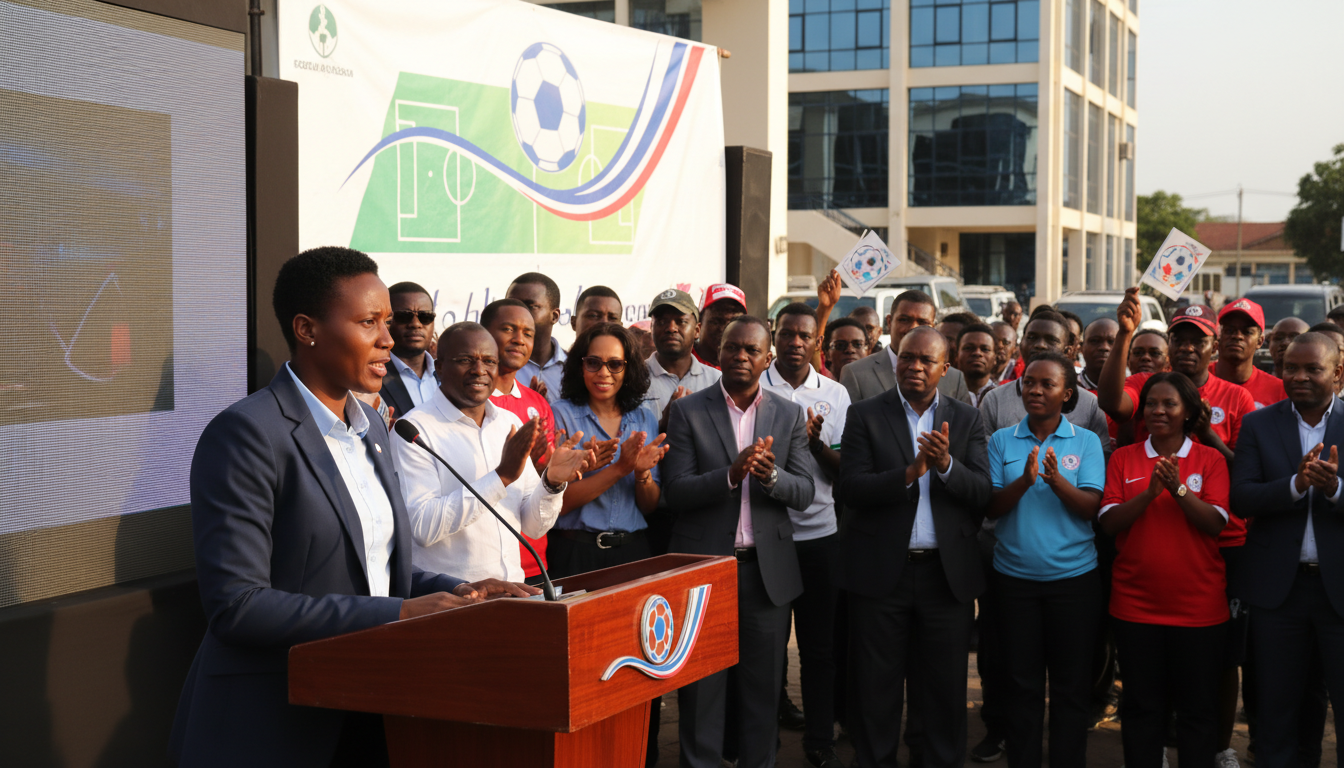
Rochell Woodson intensified her campaign for the Liberia Football Association (LFA) Women’s Football Representative position with a high-profile visit to Ganta, Nimba County, this week.
The campaign stop, which coincided with Rover Ladies FC’s league fixture against Nimba Girls FC, showcased Woodson’s emphasis on forging partnerships and mobilizing resources for Liberia women’s football.
Woodson, who appears as Number Two on the LFA ballot, framed the trip as a practical demonstration of her manifesto commitments ahead of the May 15, 2026 election.
Woodson leads delegation to Ganta for league fixture
Woodson traveled with a delegation that accompanied Rover Ladies FC to their match in Nimba County, signaling a hands-on approach to stakeholder engagement.
The visit included meetings with club officials, players and local supporters, and was designed to bridge campaign promises with visible support for teams on the ground.
Observers said the trip was intended to show delegates and voters that Woodson’s platform would move beyond rhetoric into concrete outreach.
Courtesy engagement with Senator Prince Moye and club leadership
During the Ganta visit, Woodson facilitated a courtesy call with Senator Prince Moye, who serves as chairman of Rover Ladies FC.
Senator Moye publicly pledged a L$50,000 victory bonus for the team as immediate financial support to motivate players and staff.
He also offered to host a championship dinner should the club win the league this season, a move analysts described as an indicator of rising political and institutional interest in the women’s league.
Campaign focus on strategic partnerships and financial mobilization
Woodson has centered her campaign on securing sustainable funding and institutional partnerships as the foundation for developing the women’s game nationwide.
Her platform promises targeted sponsorship outreach, improved welfare conditions for players and strengthened collaboration between clubs and government agencies.
The candidate argues that professionalized structures and dependable financing are essential to convert recent global interest in women’s sport into local progress.
Context: global momentum and regional examples
Woodson has pointed to the global surge in interest in women’s football, including record viewership at the 2023 FIFA Women’s World Cup, as a compelling reason for Liberia to modernize its approach.
She and supporters have cited policy-driven progress in neighboring countries such as Morocco and Nigeria as models for how targeted reforms can lift domestic leagues.
Campaign materials emphasize that strategic policy changes and investment, rather than ad hoc patronage, will be needed to sustain long-term growth.
Historic funding gaps and the reality for Liberian clubs
Liberian women’s clubs have historically operated with limited budgets and high dependence on the personal contributions of club presidents and volunteers.
Many teams struggle to finance basic logistics such as transportation, equipment and match-day operations, constraining player development and competitive consistency.
Woodson’s campaign highlights these chronic shortfalls and presents a plan to professionalize administrative systems and diversify revenue streams for clubs.
Tactical outreach to delegates and the significance of the May 15 vote
With the LFA election days away, Woodson has intensified outreach to delegates, officials and stakeholders across the national game, pressing for a "new vision" in football governance.
Her position on the ballot and visibility on the campaign trail reflect a focused effort to convert grassroots support into decisive delegate backing.
Supporters say the May 15 polls could be a watershed moment for governance reform if elected officials commit to greater transparency, inclusion and investment in both men’s and women’s football.
Immediate impact of local pledges and political backing
The L$50,000 victory bonus announced by Senator Moye offers short-term relief for Rover Ladies FC but also signals the potential for political figures to play a constructive role in club support.
Analysts caution that while such pledges are beneficial, long-term stability will depend on formalized funding mechanisms and accountability structures within the LFA.
Woodson has framed the senator’s involvement as evidence that partnerships with political and civic leaders can be harnessed responsibly to benefit the women’s game.
Planned reforms for player welfare and support systems
Woodson has outlined plans to improve welfare provisions for female athletes, including better medical support, travel arrangements and stipend structures.
Her proposal also includes capacity-building programs for club administrators and coaches to strengthen the domestic pipeline for talent development.
Campaign spokespeople argue that investing in welfare and professional competencies will reduce attrition and make the Liberian league more attractive to sponsors.
Barriers to implementation and the need for institutional buy-in
Despite campaign pledges, significant barriers remain, including limited commercial sponsorship markets, inadequate infrastructure and competing priorities within the national football calendar.
Successful implementation of Woodson’s agenda would require cooperation from the LFA executive, national government ministries and private sector stakeholders.
Delegates and club officials will be watching for detailed, fundable plans that move beyond high-level promises to operational roadmaps and measurable targets.
Reactions from clubs, players and local stakeholders
Club presidents and coaches present in Ganta praised the visibility brought by the campaign visit, describing it as a morale boost for players and volunteers.
Players said the senator’s bonus provided immediate encouragement but reiterated the need for structural change to address persistent logistical challenges.
Local stakeholders urged candidates across the ballot to present clear timelines and financing models to ensure that any new commitments are sustainable.
What a Woodson administration would prioritize in year one
If elected, Woodson has said her first-year priorities would include establishing a women’s football development fund, launching a national welfare audit and initiating sponsor engagement rounds.
She also proposes pilot programs in selected counties to test club support models and to create scalable best practices for league operations.
Campaign documents suggest an emphasis on measurable outputs such as reduced travel cancellations, improved medical coverage and increased match attendance.
The May 15 LFA election arrives with heightened expectations from supporters of the women’s game who want durable reforms rather than transient goodwill.
Woodson’s high-profile outreach in Nimba County and the backing shown by local leadership have drawn attention to the practical steps she proposes to boost Liberia women’s football.
As delegates prepare to vote, the central question will be whether promises of partnerships, funding and welfare translate into concrete policy and predictable support for clubs and players.