South Korea vs South Africa: Hong Myung-bo Awaits Home-Like Support in Monterrey
South Korea vs South Africa in Monterrey: Hong Myung-bo expects near‑home support from Mexican fans as the Taeguk Warriors chase vital World Cup Group A points.

South Korea manager Hong Myung-bo has said he expects a near‑home atmosphere when his side face South Africa in their final World Cup Group A match in Monterrey. The game comes after South Korea beat the Czech Republic 2-1 in Guadalajara, and Hong believes the large contingent of Mexican supporters will back the Taeguk Warriors again. The coach framed the vocal support as a significant advantage ahead of a decisive group fixture.
Hong Anticipates Home-Like Crowd in Monterrey
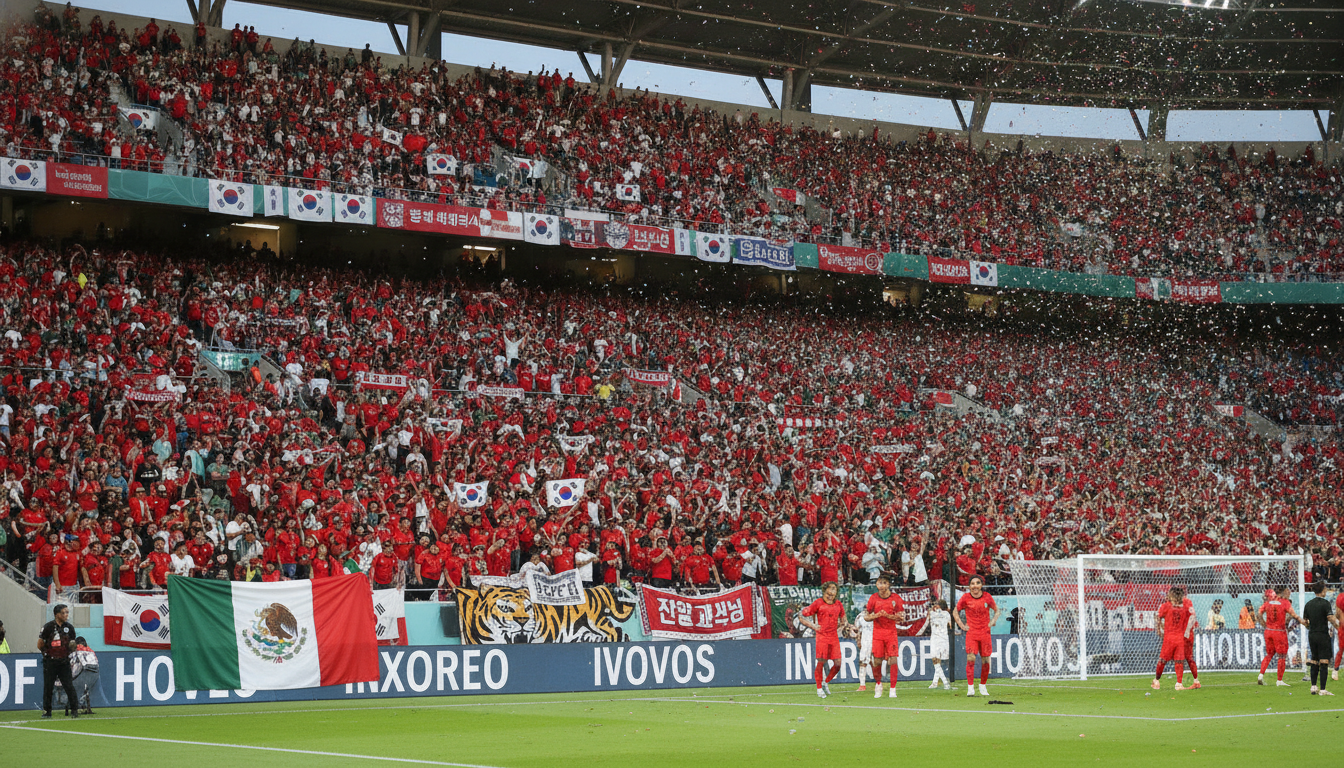
Hong Myung-bo described the anticipated crowd as an unexpected gift that could lift his players during the match. He pointed to the strong turnout of Mexican fans who backed South Korea in Guadalajara and suggested that similar backing in Monterrey would feel like playing at home. The coach referenced his experience as captain of the 2002 semi-final side to underline how meaningful vocal support can be for players on the pitch.
Hong framed the external atmosphere as a tactical asset rather than an emotional distraction for his squad. He emphasized the need to channel crowd energy into sharper focus and better execution rather than allow the occasion to unsettle his team. That approach signals a pragmatic management style aimed at keeping players composed under amplified expectations.
The Monterrey fixture is thus not only a sporting test but also an environment test for South Korea, who must combine on-field discipline with the lift from supporters. Hong’s comments suggest his staff will work to ensure the players remain grounded while absorbing the crowd’s momentum. The resulting balance could be decisive in a match that carries group-stage implications.
Mexican Fans Cement Affinity Since 2018 Celebration
The bond between Mexican supporters and South Korea intensified after the 2018 World Cup when South Korea’s win over Germany helped Mexico advance to the last 16. Celebratory scenes in Monterrey and elsewhere left a lasting impression on supporters from both nations and have been cited by officials and fans as the origin of a warm relationship. That goodwill has repeated itself in the stands this tournament, with substantial Mexican attendance at South Korea’s opening victory.
The 2018 episode remains a reference point for why many local fans now treat the Taeguk Warriors as friends of Mexican football. That public display of affection has produced repeated scenes of shared chanting, flags, and mutual appreciation during World Cup fixtures. Organizers and security officials in host cities have noted the largely peaceful and festive character of these encounters.
The continuation of that connection into the current tournament highlights how World Cup narratives extend beyond national lines. For South Korea, the phenomenon provides an unusual but welcome source of moral support when playing thousands of kilometres from home. For Mexican fans, the chance to back an underdog narrative or to reciprocate past gratitude appears to be a motivating factor.
Group A Stakes and Tactical Implications
The Monterrey meeting is the final Group A fixture for both sides, with each outcome carrying direct consequences for the group table. South Korea approach the game buoyed by an opening win, while South Africa will seek to secure the points needed to alter their path into the knockout stages. Coaches on both benches will therefore weigh risk and reward carefully when selecting lineups and in-game strategies.
Hong Myung-bo’s preference has been for structured defending combined with swift transitions through wide channels when opportunities open. That model allows South Korea to control contested areas and then exploit space on the break, particularly if the opponent commits numbers forward. In Monterrey, execution of that plan will be tested by South Africa’s athleticism and propensity to press in midfield.
For South Africa, a pragmatic setup that limits South Korea’s space while seeking to create set-piece opportunities could be decisive. Their coaching staff are likely to focus on compact defensive lines and quick counters to unsettle South Korea’s rhythm. The tactical chess match will be as influential as the crowd in determining the ultimate victor.
Squad Selection, Key Players and Fitness Considerations
Player availability and match fitness will shape both teams’ starting elevens, with coaching staff balancing caution and urgency. South Korea will monitor the condition of their creative outlets and wing players, whose touches often unlock defenses in transition. The manager’s squad rotation in the tournament so far indicates a willingness to adapt personnel to opponent profiles and to preserve freshness for key fixtures.
South Africa’s selection dilemmas will revolve around defensive solidity and the ability to press effectively over long spells. Their coaching team may prioritize players capable of sustained intensity while retaining passing quality to build counterattacks. Fitness management through the week and recovery protocols will therefore be central to both camps as they prepare for the matchday demands.
Set pieces and aerial duels are likely to receive special attention in training sessions ahead of kickoff. Both teams understand that tight matches at this stage often turn on dead-ball proficiency and marginal physical battles. Coaches typically drill routines to exploit opponent weaknesses and to guard against conceding in transition.
Matchday Atmosphere, Security and Stadium Dynamics
Monterrey is expected to host a large and boisterous crowd with a sizable representation of Mexican supporters sympathetic to South Korea. Local authorities and World Cup organizers have reiterated plans to steward the expected high attendance and to maintain safe passage for fans to the stadium. Stadium operations will prioritize clear ingress and egress, fan segregation where appropriate, and measures to mitigate any flashpoints.
The festive atmosphere can present both opportunity and challenge for visiting teams, who must harness energy while avoiding distraction. South Korea’s staff will likely rehearse routines that recreate home comforts in the away setting, such as pre-match warmups and communication protocols. For South Africa, adapting to a crowd that may be tilted away from them will demand mental resilience and composure.
Broadcast and media coverage will amplify the match environment, with global audiences tuning in to observe both the sporting contest and the crowd narrative. The visual of a vocally pro-South Korea crowd in Mexico will be part of the story regardless of the result, reinforcing the tournament’s capacity to produce unusual cross-national alliances.
Potential Outcomes and Broader Tournament Impact
A South Korea win in Monterrey would strengthen their position in Group A and could reshape knockout projections for multiple teams. Conversely, a South Africa victory or draw could open pathways for them to advance or to force a complex final-day calculation. Match officials and VAR protocols will be under scrutiny for key decisions that can swing tightly contested ties.
Beyond standings, the result will influence perceptions of both teams’ tournament credentials and coaching acumen. A composed performance by Hong Myung-bo’s side in front of a supportive crowd would reinforce their ability to manage expectation and pressure. For South Africa, showing tactical discipline and physical intensity would bolster confidence for any subsequent fixtures or scenarios.
The broader narrative also includes fan diplomacy and the tournament’s capacity to knit surprising sympathies across nations. The Monterrey fixture provides another instance where sporting outcomes intersect with cultural affinity, and that dimension will remain visible in post-match commentary and analysis.
South Korea and South Africa enter the match with contrasting national histories but a shared objective: secure the result that advances their World Cup ambitions. The interplay of crowd support, tactical adjustments, and player execution will decide whether Monterrey feels like a home ground for the Taeguk Warriors or a neutral arena for a hard-fought Group A decider.