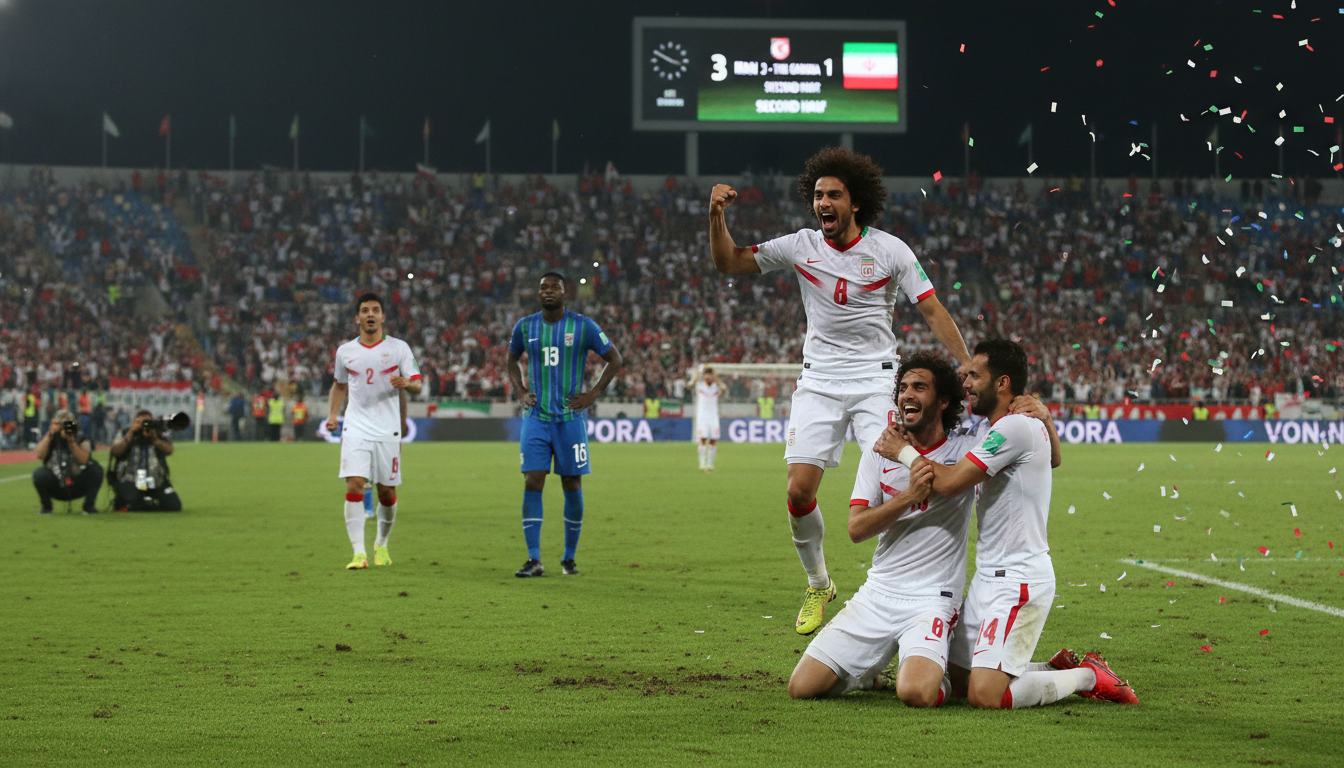
Gambia vs Iran friendly ends 3-1 in Antalya after second-half comeback
Gambia vs Iran friendly: Iran recovered from a 1-0 deficit to win 3-1 in Antalya, with goals by Yousefi, Rezaeian and Taremi reshaping the contest late on.


The Gambia began brightly but Iran overturned a half-time deficit to claim a 3-1 victory in an international friendly at the Titanic Sports Complex in Antalya, Turkey. The Gambia vs Iran friendly saw captain Omar Colley open the scoring on the cusp of half-time, before Aria Yousefi levelled within minutes of the restart. Iran then seized control with strikes from Ramin Rezaeian and Mehdi Taremi as the visitors turned pressure into goals and ultimately the win.
Colley gives The Gambia the lead before half-time
The Scorpions made a confident start and dominated midfield possession during the opening 45 minutes, creating a succession of forward runs and chances. Captain Omar Colley applied the finishing touch in the 43rd minute, tapping home from close range to reward The Gambia’s early control. That goal left the team and their supporters encouraged as they held a slender advantage going into the break.
Iran pushed to find an equaliser before half-time but struggled to break down The Gambia’s disciplined defensive block. The first half ended 1-0, a scoreline that underlined The Gambia’s effective organisation and ability to threaten on set plays and transitions. For a young Gambian side, the lead highlighted progress in executing a clear match plan against a technically composed opponent.
Iran respond immediately after the break
The second half saw a rapid shift in momentum as Iran regrouped and increased their attacking tempo from the restart. Aria Yousefi restored parity in the 47th minute, capitalising on a swift phase of play that unsettled The Gambia’s backline. The early equaliser changed the dynamic, forcing The Gambia to re-evaluate their approach while Iran pressed to build on that breakthrough.
Sustained pressure and better control in the final third allowed Iran to fashion more high-quality opportunities as the game progressed. Defender Ramin Rezaeian pushed his team in front with a well-taken second goal in the 59th minute, reflecting Iran’s ability to generate threats from multiple areas. The visitors then extended the lead through striker Mehdi Taremi in the 68th minute, a finish that effectively put the contest beyond The Gambia’s reach.
Tactical shifts determined the second half
The match turned on tactical adjustments at half-time, with Iran switching the balance of play to exploit space between The Gambia’s midfield and defence. Iran’s midfielders began to advance more aggressively, creating overloads and drawing Gambian defenders out of position. Those positional tweaks opened passing lanes that allowed Yousefi and Taremi to receive the ball in dangerous areas.
By contrast, The Gambia’s initial midblock remained compact but risked becoming reactive as Iran increased ball circulation. When Iran began to stretch play laterally, gaps appeared for runners to exploit and set-piece platforms to emerge. The ability of Iran to convert sustained pressure into goals was the decisive difference in the second period.
Defensive resilience and where it broke down
The Gambia’s defence was formidable in the first half, repelling several Iranian advances and keeping the contest under control. That organisation delivered a valuable lead and showcased why the side has developed a reputation for compact defending on the international stage. However, the cumulative effect of Iran’s second-half pressure exposed moments of indecision that the visitors capitalised upon.
Set-piece management and reactions to quick transitional moves proved costly for The Gambia after the interval. Iran’s second and third goals came from phases where the visitors sustained possession in dangerous zones and forced defensive errors. Once momentum swung, The Gambia found it difficult to regain the initiative despite spirited attempts to reassert control.
Individual performances and team contributions
Omar Colley’s opener underlined his leadership at the back and his capacity to influence the game at both ends of the pitch. The Gambia’s midfield starters deserve credit for an assertive opening on the ball, where they dictated tempo and looked threatening on the counter. Iran’s forwards and wide players combined more effectively after half-time, turning chances into goals through greater movement and sharper interplay.
Aria Yousefi’s quick response early in the second half set the tone for Iran’s comeback, while Ramin Rezaeian demonstrated his threat from advanced defensive positions. Mehdi Taremi’s goal was a clinical finish that completed the visitors’ turnaround and highlighted his value as a proven marksman. Across both squads, the match provided useful minutes for fringe players and a testing environment for tactical concepts.
What the result means for both national teams
For Iran, the victory offers a confidence boost and a blueprint for converting sustained pressure into meaningful results in friendly settings. The comeback will be encouraging to coaching staff assessing squad depth and game management during crucial periods. The win in Antalya serves as a practical rehearsal for systems the team may deploy in more competitive fixtures ahead.
The Gambia will take mixed lessons from the loss: strong phases that produced a lead, counterbalanced by a second-half lapse that cost the match. The performance reinforced areas of progress, particularly in defensive organisation and set-piece threat, while also highlighting the need for greater resilience when opponents increase tempo. Coaching staff will likely review the match footage to address transitions and coping strategies under extended pressure.
Transfer and squad news emerging from Antalya
Alongside the match report, a transfer item surfaced: Liverpool have reportedly made an initial approach for Gambian forward Yankuba Minteh. The link places a spotlight on young Gambian talent and underscores the growing attention on players from smaller footballing nations. Clubs monitoring internationals often use friendly fixtures to evaluate prospects and assess how they adapt to different tactical demands.
If interest in Minteh develops further, his club and national team involvements will be carefully managed to balance competitive minutes and potential moves. For The Gambia, producing players who attract attention from major European clubs is an important step in raising the profile of the national programme. Such transfers can deliver financial benefits and open pathways for other domestic talents.
Both teams will now return to their respective training bases to evaluate individual performances and refine tactical plans based on lessons from Antalya. The match provided a concise case study in how quickly momentum can shift and how second-half adjustments can determine outcomes in international friendlies. Coaches on both sides will extract positives while pinpointing areas that require immediate attention ahead of future fixtures.