South Korea vs Czech Republic: Korea rally from a Ladislav Krejci header to win in Guadalajara
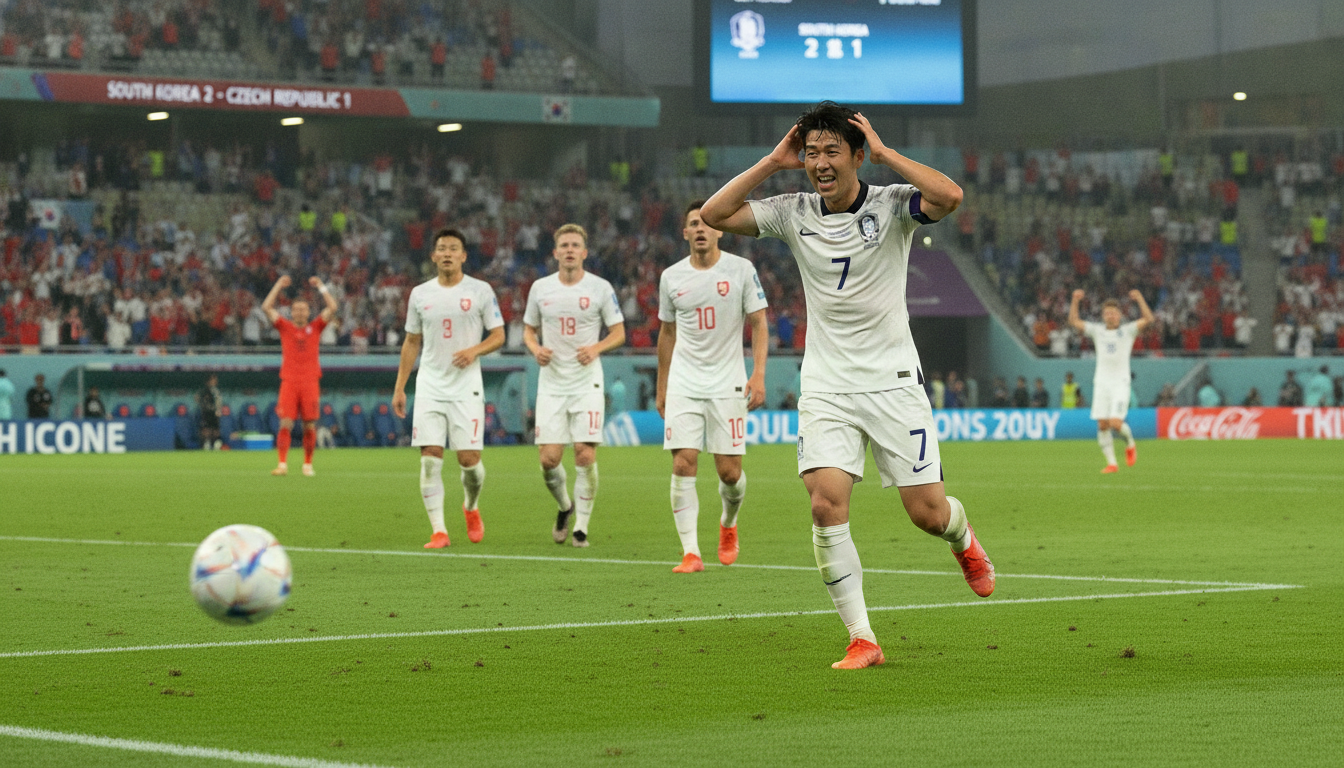
South Korea vs Czech Republic — South Korea recovered from a second-half header by Ladislav Krejci to beat the Czech Republic 2-1 in Guadalajara, with Hwang In-beom and substitute Oh Hyeon-gyu turning the game and securing three crucial points.
Late Czech lead gives way to Korean comeback
The match in Guadalajara looked set to swing in the Czech Republic’s favour when Ladislav Krejci rose to head a second-half goal that put his side ahead. For a period after that strike, the Czechs controlled the tempo and forced South Korea to chase the match in hostile conditions. The lead, however, proved fragile as South Korea regrouped and changed the momentum with purposeful attacking play.
South Korea’s response was immediate in intensity if not in finish, and their persistence paid off when Hwang In-beom found an equaliser that reset the scoreboard. That goal shifted pressure back onto the Czech defence and opened spaces for Korea’s wide players to exploit. From that point, the match tilted toward the visitors, who showed greater cohesion and belief.
The decisive moment arrived after a tactical switch that saw Oh Hyeon-gyu introduced from the bench, replacing captain Son Heung-min. Oh struck to complete the comeback and hand South Korea the victory, sealing three points that were described as crucial by players and staff alike. The substitution underscored the match’s turning point and highlighted the impact a single change can have at this level.
Son Heung-min’s difficult afternoon and substitute impact
Captain Son Heung-min experienced an uncharacteristic off day, missing five clear chances in the first half alone before being replaced. His inability to convert opportunities was glaring given his status as Korea’s leading forward, but team staff and the coach moved swiftly to alter the attacking configuration. The decision to bring on Oh Hyeon-gyu proved pivotal; the substitute not only restored momentum but ultimately scored the match-winner.
The misses did not derail South Korea’s overall plan, but they exposed vulnerabilities in the final third that the coaching staff will want to address. Son’s replacement introduced fresh legs and a different dynamic, helping Korea exploit the gaps left by a Czech side that had committed men forward after taking the lead. The intervention underlined the importance of management decisions and the value of quality depth on the bench.
Despite the personal frustrations, Son received public defence from his coach after the final whistle, with the team emphasising collective effort over individual lapses. That backing reflects both his standing within the squad and the recognition that a single player’s form can fluctuate within a broader system. South Korea’s ability to overcome those missed chances will be a lesson the squad carries forward.
Koubek praises effort but calls for sharper attack
Czech Republic coach Miroslav Koubek acknowledged his players’ effort after the match but conceded that the better team won on the night. He praised the work ethic and defensive commitment yet stressed that the team must add more bite to the attack to remain competitive in the competition. Koubek’s post-match remarks combined recognition of positives with a clear call for improvement in the final third.
The coach’s critique focused on the need for greater cutting edge and sharper decision-making when chances arrive, aiming to prevent similar outcomes in future fixtures. Koubek highlighted the team’s resilience in taking the lead but insisted that converting pressure into goals requires a more aggressive attacking mindset. His assessment was measured, balancing praise with practical instruction for the players.
For the Czech squad, the defeat will prompt tactical and personnel review, particularly around transitional play and striker support. The brief advantage they earned through Krejci’s header was not reinforced, and Koubek’s message suggests adjustments are likely as the team seeks to regain momentum. The coach’s emphasis on adding “bite” frames the immediate objective for training and selection decisions.
Coach Kim’s pre-match message and team unity
South Korea’s coaching staff entered the match with two clear instructions: do not give up until the end and unite as one, a message the head coach reiterated after the game. “Before the match I gave two messages: not to give up until the end and unite as one,” he told reporters, urging collective discipline both on and off the pitch. That rallying cry appeared to resonate as the team fought back from a deficit to secure the win.
The unity displayed on the field manifested in coordinated pressing, compact defensive work, and a willingness by multiple players to contribute in attack and defense. Players rotated positions to cover for one another and displayed a tempered patience that allowed them to manufacture opportunities without panic. The tactical cohesion evidenced in the comeback will be held up as an example of executing a clear match plan under pressure.
Kim’s emphasis on togetherness extended to backing veterans while trusting newer options on the bench to make an impact. The balance between supporting established leaders like Son Heung-min and deploying substitutes such as Oh Hyeon-gyu showcased the coach’s management style. That approach produced a decisive result and provided a template for handling similar challenges ahead.
Tactical adjustments and momentum shifts
Tactically, the match pivoted after the Czech goal as South Korea adjusted its shape to increase tempo and movement in the final third. Midfielders and forwards interchanged positions more fluidly, creating uncertainty for the Czech backline and opening channels for Hwang In-beom to exploit. The tweak in approach made Korea less predictable and amplified their attacking threat during the second half.
Czech Republic had enjoyed periods of control, particularly when they managed to press Korea into defensive resets after set pieces and midfield turnovers. Their ability to generate an early second-half advantage underscored moments of tactical discipline, but they were unable to sustain territorial dominance. The loss of composure after conceding the equaliser allowed South Korea to seize the initiative and dictate the closing stages.
Substitutions proved decisive for both teams, but more so for Korea, where the timing and selection of changes created the decisive attacking outlet. The move to introduce Oh Hyeon-gyu shifted the risk-reward balance and rewarded the coach’s willingness to be proactive. The tactical battle will be dissected by both staffs, with a focus on transition defense and the management of counterattacking opportunities.
Implications for both squads going forward
The victory delivers three valuable points to South Korea and momentum that can be contagious in tournament play, while the Czech Republic must regroup and translate positives into more consistent finishing. For Korea, the result reinforces belief in their depth and collective resolve, even when key players are not at their sharpest. The ability to secure results under such circumstances is often a hallmark of teams that advance from competitive groups.
Czech Republic leaves Guadalajara with a performance that contained promise but also revealed areas in need of refinement, principally in turning possession and chances into more reliable goal output. The immediate task for Koubek and his players will be to add that attacking edge without sacrificing the defensive solidity that kept them competitive. How quickly they can adapt may determine their course in the coming matches.
Both coaching staffs will mine the game for lessons: Korea for how to maintain intensity and clinical finishing, and the Czech Republic for how to convert dominance into sustainable leads. The result is a reminder that single moments—whether a headed goal or a well-timed substitution—can reshape a match and its broader narrative. Each side now faces clear priorities as they plan for the remainder of the competition.
South Korea’s comeback in Guadalajara highlighted the value of resilience and squad depth, and it underscored the fine margins that separate victory from defeat in international football. The match will be remembered for a spirited turnaround, Son Heung-min’s rare misfires, and a substitute who made the decisive impact. Teams and coaches will now turn their attention to preparation and correction as the tournament continues.