Super Eagles draw Poland as Wiśniewski’s stoppage-time strike salvages 2-2 friendly in Warsaw
Nigeria draw with Poland in a dramatic 2-2 friendly at PGE Narodowy Stadium, where a stoppage-time Przemysław Wiśniewski finish denied the Super Eagles victory. The result extended Nigeria’s unbeaten run to 11 matches in regulation time while leaving questions about late-game concentration. Both sides used the fixture to test players and systems ahead of competitive commitments later this year. The friendly provided a measuring stick for squad depth and tactical plans for coach Eric Chelle.
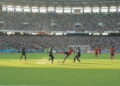

Late Wiśniewski strike rescues Poland
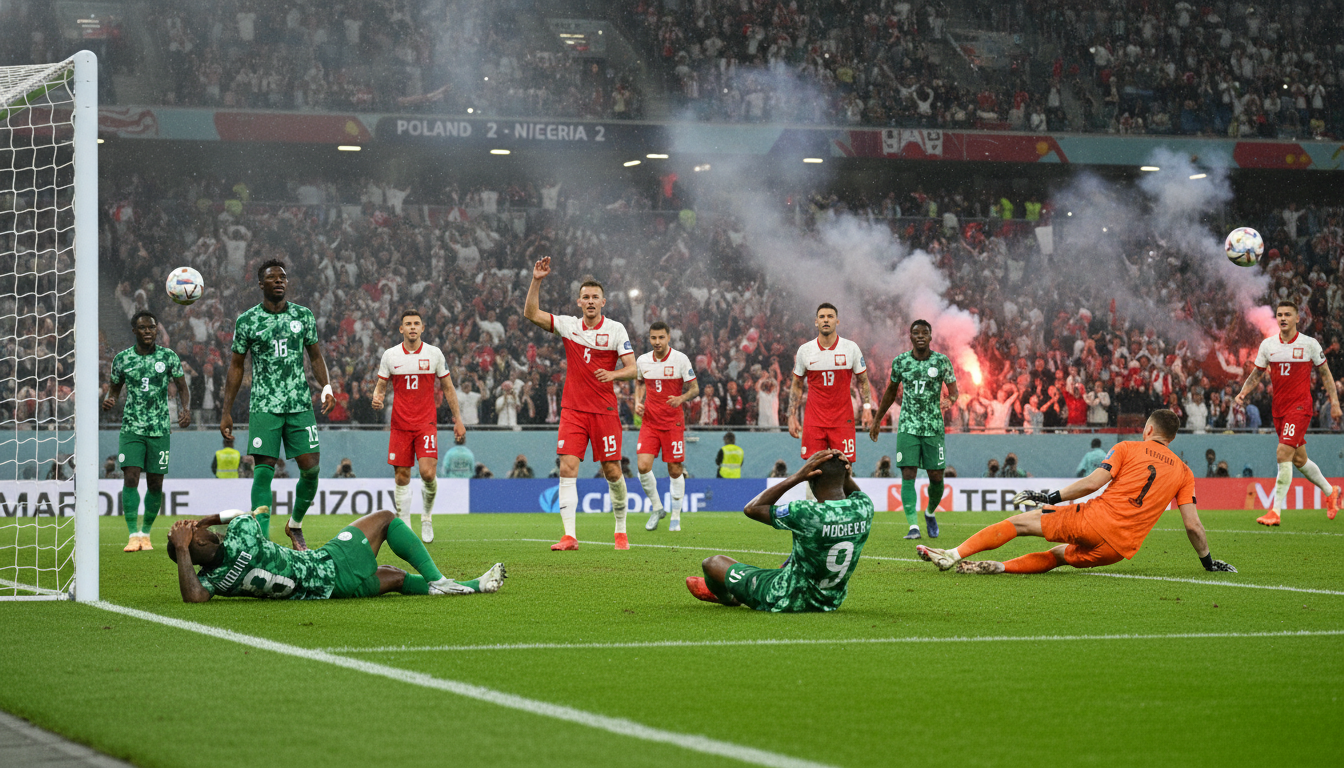
Poland thought they had lost the match moments before the final whistle, only for defender Przemysław Wiśniewski to hammer home a dramatic equaliser deep into stoppage time. The goal came as the hosts intensified pressure in the closing stages and capitalised on a final scramble inside the Nigerian box. The leveller changed the narrative of the fixture and spoiled what had been a promising night for the visitors.
The timing of Wiśniewski’s strike — the last kick of six added minutes — underlined Poland’s refusal to surrender and illustrated why friendly fixtures can still produce intense, competitive moments. For Nigeria, the goal was a bitter blow, undoing sustained periods of control and the advantage gained from a second-half penalty. The finish also showcased Poland’s resilience and finishing presence in their own final third.
Moffi and Onuachu provide the goals for Nigeria
Terem Moffi opened the scoring in the 23rd minute after a move that began with captain Wilfred Ndidi and finished with Moses Simon’s cross, which Moffi tapped in following a VAR review that ultimately awarded the goal. The opening strike was the product of quick transitional pressing and clinical delivery into the box, offering the Super Eagles an early platform. Moffi’s movement and finishing underlined his importance to Nigeria’s attack in the absence of Victor Osimhen and Ademola Lookman.
Paul Onuachu restored Nigeria’s lead in the 77th minute from the penalty spot after a VAR-checked foul was confirmed inside the area. Onuachu’s composed conversion gave the visitors a 2-1 advantage and suggested the momentum had swung in their favour. Both goals illustrated Nigeria’s ability to manufacture chances from wide play and from sustained pressure through their central presence.
Poland respond through Potulski and late pressure
Poland levelled before half-time when Kacper Potulski reacted quickest in a scramble inside the box to poke home and send both sides into the break at 1-1. That equaliser came after gradual pressure from Robert Lewandowski and Piotr Zieliński, who probed Nigeria’s defensive lines throughout the first half. The hosts’ response demonstrated their capacity to exploit set-piece and chaotic moments inside the penalty area.
As the match progressed Poland increased their urgency and variety in the final third, seeking openings against a disciplined Nigerian backline. Their sustained efforts eventually paid off through the late Wiśniewski intervention, which capped a sequence of substitutes and adjustments designed to unsettle the visitors. Poland’s ability to maintain pressure in stoppage time will be seen as a positive from a performance standpoint.
Midfield control and defensive shape under Chelle
Coach Eric Chelle set his side up to be compact and difficult to break down, with Wilfred Ndidi and Frank Onyeka providing cover and control in midfield for long spells. The pair’s presence allowed Nigeria to stay organised when Poland advanced, and it enabled quick transitions to the flanks where Moses Simon and others looked to create. That midfield balance was a key reason Nigeria managed to withstand several sustained Polish attacks before the late equaliser.
Defensively, Nigeria showed structure and discipline but also exhibited the recurring issue of conceding late under pressure. The team’s overall shape limited clear-cut chances for much of the match, yet the conceding of scramble goals and the stoppage-time finish highlighted moments of vulnerability. Chelle will likely underline the positives of midfield control while addressing the lapses in concentration at the death.
Substitutions, VAR and tactical adjustments shaped the match
Both teams made a raft of changes after the interval in search of fresh energy, with Nigeria introducing players such as Paul Onuachu, Fisayo Dele-Bashiru, Raphael Onyedika, Zaidu Sanusi and Calvin Bassey to bolster key areas. Those adjustments helped Nigeria regain momentum and eventually led to the penalty that put them ahead. Poland’s substitutions were aimed at increasing tempo and penetration, and their late-game setup forced a frantic finale.
VAR played a decisive role in the match on two notable occasions: the confirmation of Moffi’s opener and the review that led to Nigeria’s second-half penalty. The referrals added a layer of scrutiny and drama, affecting momentum and the flow of the contest. Both coaching staffs will weigh how their players responded to the technological interventions and whether decisions altered their match-management approach.
Unbeaten run maintained but questions remain for Super Eagles
The draw extended Nigeria’s unbeaten run in regulation time to 11 matches across the last two years, a statistic that offers a measure of continuity and progress under the current setup. That run provides the Super Eagles with confidence and a platform to push for consistency as they prepare for competitive fixtures. Nonetheless, the manner of the draw — conceded in the final moments after leading twice — will prompt reflection on game management and late-stage tactics.
With key absences such as Victor Osimhen and Ademola Lookman, the match served as an opportunity to test alternative attacking partnerships and squad depth. The performances of Moffi and Onuachu, among others, gave the coaching staff tangible options to consider going into qualifiers and tournaments. The squad’s ability to integrate those players while maintaining defensive resilience will be central to future selections.
Fixture context and the road to AFCON 2027 qualifiers
The friendly in Warsaw formed part of a brief run of fixtures that included the Unity Cup in London and will be followed by another international test against Portugal in midweek. Those matches are being used to prepare personnel combinations, fine-tune tactical ideas and build match fitness ahead of the AFCON 2027 qualifying campaign. The qualifiers are scheduled to begin in September, making these friendlies important for establishing form and cohesion.
Both Nigeria and Poland missed the recent World Cup, and these fixtures provide a platform for rebuilding and experimentation without the pressure of points. For Nigeria, the emphasis appears to be on integrating returning talent and discovering formations that can sustain across qualifying and tournament play. For Poland, the match offered a chance to assess domestic-based players and to restore momentum following international disappointment.
The coaching staff of both nations will take different lessons from the match: Chelle will aim to shore up concentration late in games and to cement a preferred backline, while Poland’s manager will be encouraged by the team’s resolve and late finishing. The immediate focus for Nigeria will shift to the Portugal friendly, where further adjustments and match-readiness checks are expected.
Despite the dramatic ending, the friendly yielded valuable data for selection, tactics and player development for both teams. The Super Eagles draw Poland will be dissected in training sessions and in tactical meetings in the days ahead as coaches seek to translate positives into consistent competitive outcomes.
Fans, analysts and national team staff alike will now turn attention to the next fixtures and the long-term objective of a strong AFCON 2027 qualification campaign. The lessons from Warsaw — about pressing, set-piece management and late-game concentration — are likely to shape selection and preparation choices in the coming weeks.