Uganda in Talks Over Visit Uganda Jersey Sponsorship with Premier League Clubs
Uganda pursues ‘Visit Uganda’ jersey sponsorship with Premier League clubs to boost tourism exposure worldwide, showcasing the country to millions of fans.


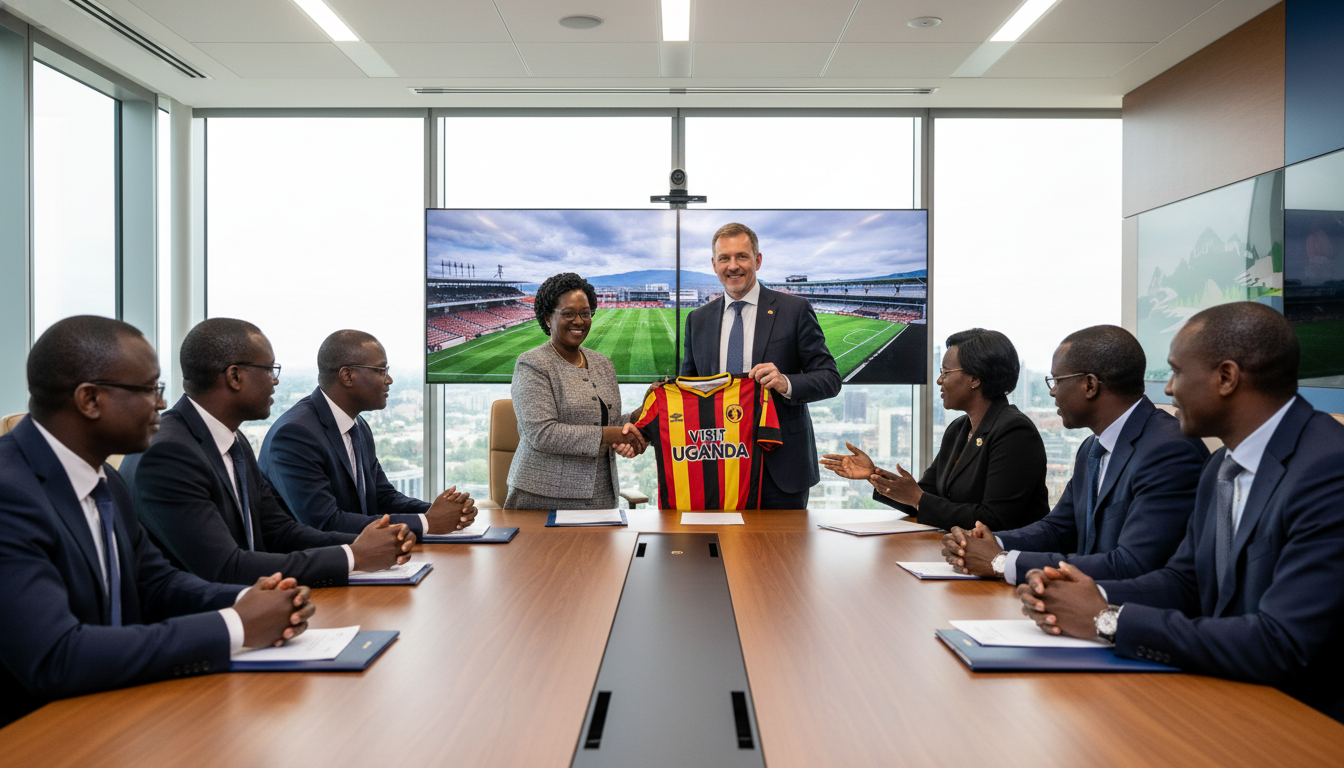
The Ugandan government has opened formal discussions with several English Premier League clubs over a potential Visit Uganda jersey sponsorship that would place the country’s tourism brand on match kits. The initiative, announced by incoming State Minister for Tourism Susan Nakawuki, aims to amplify Uganda’s global profile by using elite football broadcasts as a marketing platform. Officials describe the move as a deliberate shift toward high-impact, sports-driven destination branding to attract more visitors and investment to the country.
Government in talks with Premier League clubs
Negotiations are underway between Uganda’s tourism ministry and unnamed Premier League teams about featuring the Visit Uganda brand on shirts and training wear. Officials say these talks are part of a broader strategy to secure high-visibility placements that reach a global audience across live broadcasts and digital channels. The ministry frames the potential deals as a way to move beyond traditional advertising and into partnerships that deliver sustained international exposure.
The incoming State Minister for Tourism, Susan Nakawuki, has signaled that the government is prioritizing partnerships with globally recognized clubs to accelerate tourism awareness. She emphasized that football’s reach — including matchday TV audiences and social media engagement — presents a unique avenue to position Uganda as a competitive tourism destination. Ministry sources describe the conversations as exploratory but substantive, with commercial and branding teams from both sides involved in early-stage terms.
Rwanda precedent and regional models
The Uganda proposal follows a regional precedent where destination marketing has successfully used football sponsorships to raise international profiles. Rwanda’s long-running Visit Rwanda program with top European clubs has been cited by Kampala officials as evidence that sustained football partnerships can translate into elevated brand recognition. Observers note that these deals typically blend kit or sleeve branding with broader promotional campaigns and community or grassroots initiatives tied to the destination.
Analysts caution that while the Rwanda model demonstrates potential, outcomes depend on deal structure, integration with wider tourism campaigns, and measurable follow-through on conversion strategies. The most effective partnerships align sponsorship visibility with targeted travel products, digital engagement and clear calls to action that convert awareness into bookings. Ugandan officials have indicated they are studying such precedents to design a package that maximizes return on investment.
Strategic objectives for Uganda tourism
Officials say the Visit Uganda jersey sponsorship effort is driven by multiple objectives: increasing visitor arrivals, attracting foreign investment, and reshaping international perception of the country. Tourism remains a strategic sector for Uganda, with wildlife, gorilla trekking, and cultural travel forming the backbone of the destination offer. By aligning the national brand with football’s global stages, Kampala aims to insert Uganda into consideration sets for travelers and investors who may otherwise overlook East Africa.
The ministry also frames the initiative as an opportunity to modernize branding approaches and reach younger, digitally active audiences who follow club football across platforms. Part of the strategy involves pairing on-kit branding with integrated digital content, destination storytelling and targeted advertising that leverages matchday momentum. Officials stress that sponsorships would complement, not replace, existing marketing campaigns coordinated through embassies, trade shows and online channels.
Projected audience reach and marketing impact
If finalised, a Visit Uganda jersey sponsorship could place the country’s name in front of hundreds of millions of viewers across a single Premier League season, according to government estimates. Premier League matches command large, international broadcast audiences and generate social media traction that amplifies brand messages beyond linear TV. The multiplier effect — live broadcasts, highlights packages, club social channels and international media coverage — is central to why sports sponsorship is being pursued.
Marketing specialists point out that exposure alone is not a guarantee of increased tourism; conversion depends on consistent messaging, accessible travel products and measurable digital touchpoints. To address that, Uganda’s tourism planners are reportedly preparing a parallel push to ensure that the spike in awareness routes viewers to compelling information and booking channels. Officials told reporters they intend to track metrics such as web traffic, search interest and bookings tied to campaign periods.
Industry reaction and stakeholder perspectives
Tourism stakeholders and operators in Uganda have largely welcomed the prospect as a bold step to raise the country’s profile in priority source markets. Industry figures say higher visibility on Premier League platforms could catalyze interest in experiences such as gorilla trekking, national park safaris and cultural tourism circuits. Business groups have also flagged potential spin-offs in investment and enterprise development if the campaign stimulates longer-term travel demand.
At the same time, some experts urge caution on costs and governance, stressing the need for transparent procurement processes and clear performance indicators. Commercial sponsorships of national brands can carry reputational and financial risks if not carefully negotiated, they warn. Government sources say due diligence and cost–benefit analysis are being applied to ensure any agreement aligns with public-sector accountability and delivers measurable outcomes.
Negotiation timeline and next steps
Officials have not disclosed a firm timetable for concluding any Visit Uganda jersey sponsorship, describing the discussions as ongoing and complex. Key next steps include finalizing commercial terms with clubs, securing budgetary approvals, and designing integrated marketing plans that leverage on- and off-field channels. The ministry has indicated that any formal deal would be announced once contractual, legal and logistical matters are settled and linked to a broader rollout plan.
Observers expect negotiations to touch on duration, rights packages, appearance obligations and clauses tying exposure to campaign activations. Decisions will also need to consider how the sponsorship integrates with other country branding and whether additional investments are required for supporting digital and travel infrastructure. Government sources indicate that a pragmatic approach is being taken to balance ambition with fiscal responsibility.
Uganda is positioning the Visit Uganda jersey sponsorship as one element in a renewed push to market the country more aggressively on the world stage. Officials frame the initiative as a strategic, high-visibility method to attract tourists and investors while learning from regional precedents. As talks proceed, stakeholders will watch for deal specifics, measurable targets and the ways in which kit branding is translated into bookings and sustained tourism growth.