Vipers SC clinch Group A top spot with stoppage-time winner against Gor Mahia
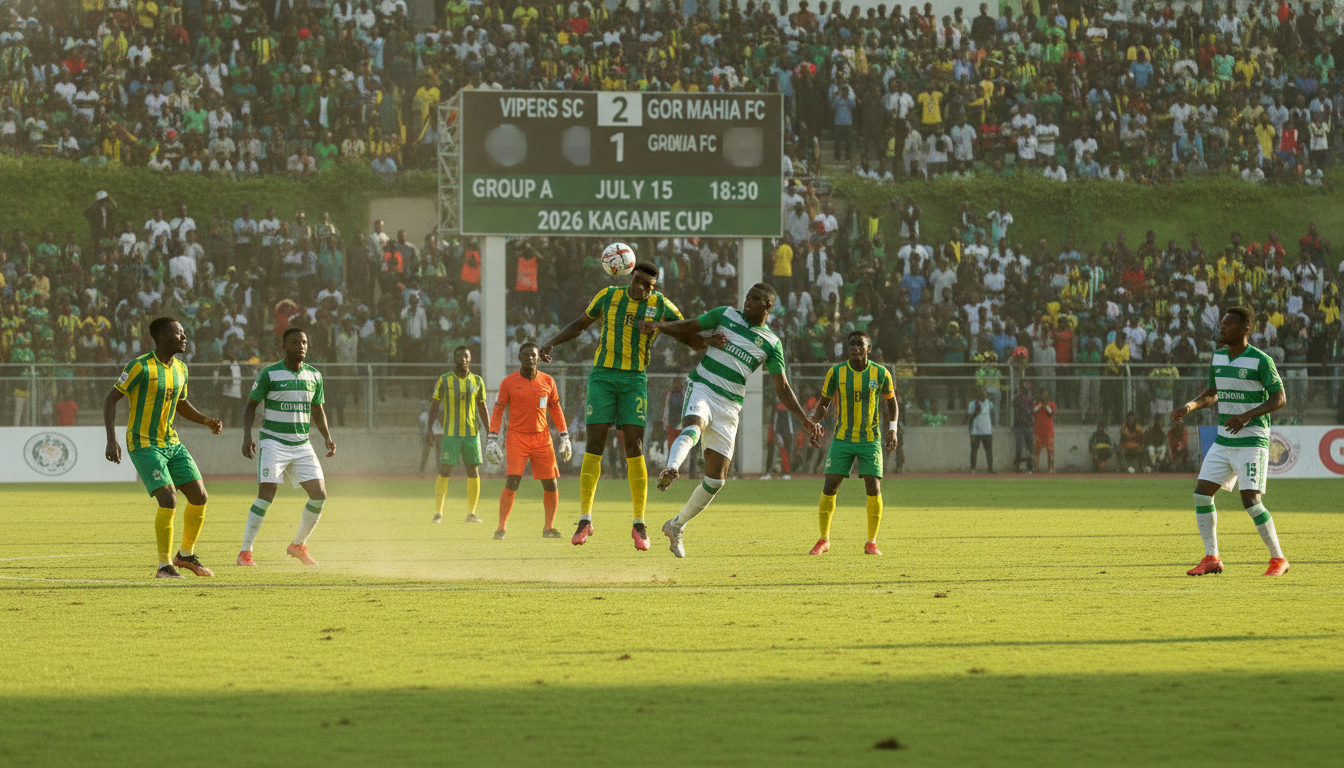
Gusto Mulongo’s stoppage-time header delivered a 1-0 victory for Vipers SC over Gor Mahia at Kigali Pelé Stadium on July 27, 2026, moving them top of Group A.


Vipers SC secured top spot in Group A of the 2026 CECAFA Kagame Cup after Gusto Mulongo scored a dramatic stoppage-time winner against Kenyan giants Gor Mahia on Monday, July 27, 2026. The late header, supplied by Ashraf Mandela, settled an intensely fought contest at Kigali Pelé Stadium and extended Vipers’ perfect start in the tournament. The Ugandan champions now sit on maximum points from their opening two matches and will need only a draw in their final group fixture to guarantee a semi-final berth.
Mulongo’s stoppage-time header decides the tie
The match appeared bound for a goalless draw until deep into stoppage time when substitute Gusto Mulongo rose highest to meet Ashraf Mandela’s pinpoint cross and steer a header beyond goalkeeper Humphrey Katasi. The decisive moment triggered jubilant scenes on the Vipers bench and secured a 1-0 victory that will be remembered for its late drama. Mulongo’s intervention underlined the importance of game-changing substitutes in tightly contested knockout-style group fixtures.
Mandela’s assist was the product of persistence on the right flank and precise delivery into the penalty area, exploiting space created by Vipers’ late forward surges. The finish came at the near post, leaving Katasi little time to react despite a brave attempt to parry the ball. The goal was a textbook example of timing and concentration in the dying moments of a major regional competition.
For Mulongo, the winner provided a timely boost and showcased his ability to make an immediate impact off the bench. The header also highlighted Vipers’ aerial threat from set-play situations and crosses, a facet that head coach Denis Lavagne appeared to target when introducing fresh attacking options late in the match.
Tactical switch: Lavagne’s triple substitution shifts momentum
Denis Lavagne altered the course of the game with a triple substitution on the hour mark, bringing on Mulongo, Odili Chukwuma and Usama Arafat for Isaac Ogwang, Yunus Sentamu and Milton Karisa. The changes were designed to inject energy and directness into Vipers’ attack after a midfield-dominated first half produced few clear-cut chances. Within minutes of the alterations the Venoms looked more purposeful, stretching Gor Mahia’s defensive shape and creating openings in the final third.
Chukwuma’s presence on the right added width and service into the box, while Arafat’s movement sought to unsettle the Kenyan backline. The substitutions also allowed Lavagne to refresh his pressing structure, helping Vipers regain control of transitional phases and keep Gor Mahia pinned deeper. The coach’s willingness to reshuffle his forward configuration paid off when Mandela’s late cross found Mulongo at the decisive moment.
Tactically, the switch demonstrated Lavagne’s preference for proactive change rather than passive adjustments, and it underlined his focus on finding a winning balance between ball retention and quick territorial gains. The move illustrated the kind of managerial intervention that can swing short-format tournaments where goal difference and timely victories matter.
Match flow: chance creation and defensive grit
The contest was tightly contested from the start, with both teams matching each other for intensity and physicality, resulting in relatively few clear-cut opportunities. Vipers fashioned the first notable opening in the 18th minute when Yunus Sentamu beat his marker and delivered a low cross that failed to connect with a teammate in the box. Later in the half Farouk Miya found Hillary Mukundane with a dangerous delivery that was blocked by Gor Mahia defender Ebenezer Ocran, denying Vipers a clear opening.
After the interval Vipers returned with greater urgency, continuing to probe for ways to break down a disciplined Gor Mahia defence. Sentamu teed up Miya in the 55th minute but the midfielder’s effort drifted narrowly wide of the post, illustrating how fine margins separated the sides throughout. Gor Mahia, for their part, defended in numbers and sought to counter when opportunities arose, though they were ultimately undone by Vipers’ late set-piece delivery.
The game’s tempo and territorial shifts often favored Vipers, who applied periods of pressure without allowing Gor Mahia sustained control. Defensive contributions from the backline and goalkeeper Humphrey Katasi kept the contest balanced until the decisive moment, with both teams showing physical resilience under pressure.
Gor Mahia’s opportunities and defensive interventions
Gor Mahia, widely regarded as one of Kenya’s strongest clubs, were involved in a battle where moments of defensive heroics kept them in the match. Ebenezer Ocran’s block before half-time exemplified Gor Mahia’s willingness to commit bodies to prevent clear scoring chances. The Kenyan side’s backline held firm for long periods, limiting the Venoms to sporadic shots on target and neutralising several promising attacks.
Opportunities for Gor Mahia proved scarce as Vipers’ compact shape minimised space between lines and forced the visitors to attempt low-percentage passes into congested areas. When chances did arise, Gor Mahia were unable to capitalise and lacked the clinical edge necessary to punish Vipers’ occasional lapses. The end result left Gor Mahia with frustration at a defeat decided by a single moment rather than sustained dominance.
The narrow loss will prompt tactical reassessment for Gor Mahia, who must now focus on creating higher-quality chances in their remaining group fixtures. Maintaining defensive solidity will remain critical, but the side will also need to find sharper attacking combinations if they are to respond effectively in tournament play.
Implications for Group A and semi-final qualification
The victory leaves Vipers SC with maximum points from their opening two matches and places them at the top of Group A in the 2026 CECAFA Kagame Cup. With two straight wins and two clean sheets, Vipers are in a commanding position heading into their final group match, where a draw would be sufficient to secure a place in the semi-finals. The result increases pressure on other group contenders to produce consistent results if they are to displace the Ugandan champions.
Mathematically, Vipers can afford to manage squad rotation and rest key players knowing a point will be enough to seal progression, but the coaching staff will likely balance that with the desire to maintain momentum. Goal difference and head-to-head records remain potential tiebreakers, so Vipers may still treat their final fixture with competitive intent. For Gor Mahia, the defeat complicates their pathway and leaves little margin for error in the remaining group stage fixtures.
The wider tournament picture now sees Vipers emerge as one of the favourites from Group A, carrying confidence from both their defensive display and their late-game composure. The psychological advantage of a stoppage-time winner can be significant in short competitions and may influence opponents’ approaches in future meetings.
Tournament context and immediate next steps for both teams
The CECAFA Kagame Cup carries regional prestige and provides clubs with a platform to test squad depth and tactical approaches in a condensed schedule. For Vipers SC, the win consolidates their reputation as a well-drilled side capable of closing out tight encounters and capitalising on set-piece situations. Their ability to keep consecutive clean sheets highlights a defensive framework that could serve them well in knockout rounds.
Gor Mahia will return to training with the objective of sharpening their attacking transitions and finding ways to penetrate compact defensive units. The Kenyan side have shown resilience and organisation, but converting possession and territorial advantage into goals will be the central focus ahead of their next group assignment. Both clubs will also monitor player fitness and recovery as they manage the physical demands of tournament football.
Upcoming fixtures will provide further clarity on which teams can sustain form and handle the tactical variability required in the CECAFA Kagame Cup. Vipers can approach their remaining matches with a degree of control, while Gor Mahia must adopt a proactive approach to salvage their campaign.
Vipers SC’s stoppage-time triumph at Kigali Pelé Stadium underlines the fine margins that determine success in regional cup competitions and sets up an intriguing final round of group fixtures as teams jostle for semi-final places.