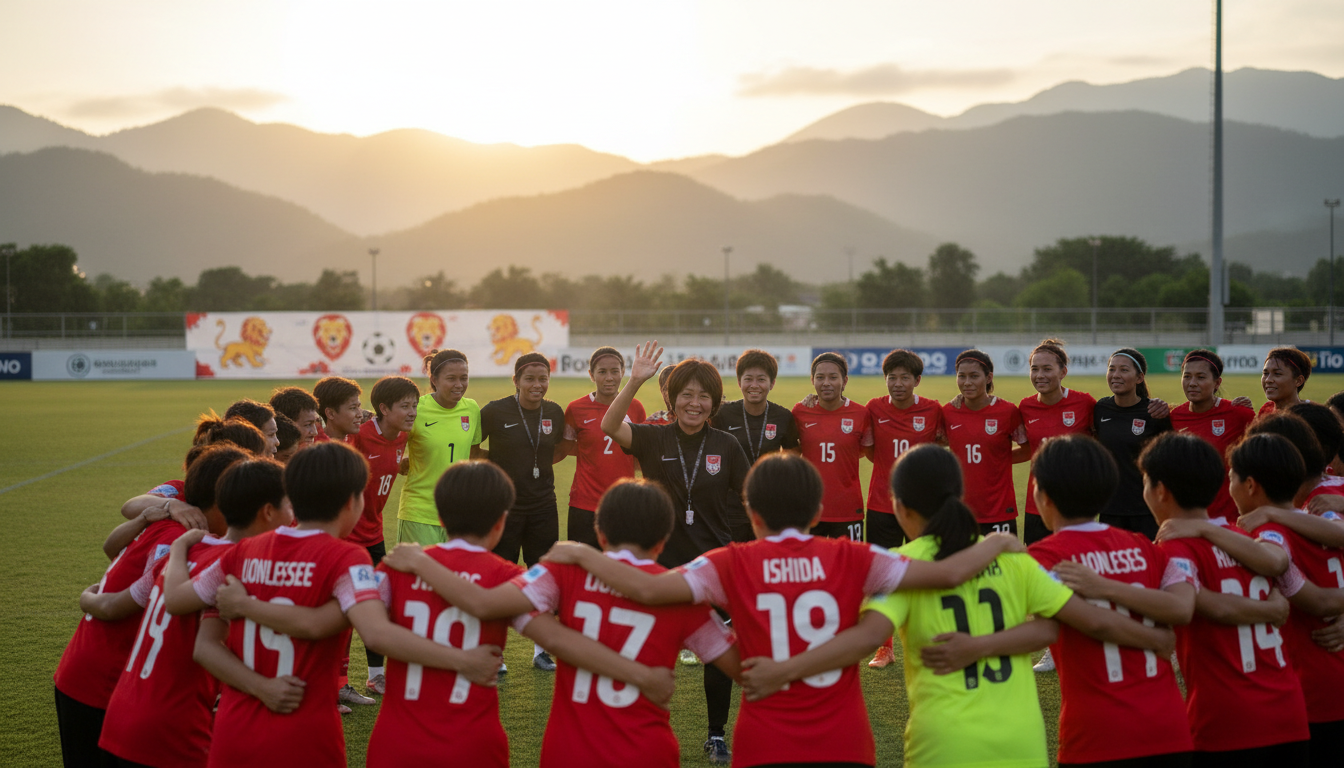
Singapore Women’s National Team conclude Kota Kinabalu camp as Mihoko Ishida begins new era
Singapore Women’s National Team end Kota Kinabalu camp under Ishida, stressing youth integration, tactical foundations and plans for the upcoming window.


The Singapore Women’s National Team concluded a seven-day training camp in Kota Kinabalu on April 26, 2026, marking the completion of head coach Mihoko Ishida’s first international window in charge. The camp focused on laying tactical foundations, integrating younger players and establishing standards for the program moving forward. The week offered a chance for assessment and reset ahead of competitive fixtures scheduled for later in the season.
Ishida completes first international window in Kota Kinabalu
The week-long camp in Kota Kinabalu represented Mihoko Ishida’s first opportunity to work with the national squad during an official FIFA window. Ishida used the period to observe players in training environments, introduce her preferred tactical shapes, and begin implementing fitness and professional standards she expects at international level. The Football Association of Singapore approved the camp as part of a broader strategy to rebuild the program and improve competitive readiness.
Players reported a clear line of communication from the coaching staff and a structured daily routine that combined technical work, tactical drills and recovery sessions. The camp concluded on April 26, 2026, with coaches completing individual reviews and a final group meeting to lay out next steps. Officials described the window as a diagnostic phase intended to identify strengths and immediate areas for development.
Youth integration highlighted by Naureen Qadriyah’s call-up
A prominent feature of the camp was the inclusion of younger players, most notably 17-year-old forward Naureen Qadriyah, whose first senior call-up drew attention. Naureen described the experience as “surreal” and said she took a moment to process the selection before focusing on training duties. Her presence underlined the coaching staff’s willingness to accelerate development pathways for promising talent.
Coaches emphasized that youth call-ups were performance-based and tied to long-term planning rather than short-term publicity. Several younger players received targeted development plans, including extra technical sessions and individualized strength work. The integration was framed as both an investment in the future and a pragmatic response to positional needs within the current squad.
Training methods and tactical emphasis introduced by coaching staff
The coaching agenda in Kota Kinabalu stressed transitional phases, compactness in defensive shape, and coordinated pressing triggers. Sessions were designed to replicate match-intensity moments, with small-sided games and scenario-based drills to accelerate decision-making. Strength and conditioning staff also delivered a program aimed at improving recovery and reducing injury risk during congested schedules.
Ishida and her assistants prioritized clarity in roles and simple, repeatable patterns that players can execute under pressure. Video analysis became a daily fixture, with players receiving clips to study and apply before the next training session. Technical staff noted early gains in communication and organizational discipline that will require time to convert into consistent match performances.
Squad assessment, performance markers and individual feedback
Throughout the camp the technical team conducted formal and informal assessments to track progress against coaching objectives. Players underwent fitness testing, positional drills and live-match simulations that generated performance data for each individual. Staff used that information to produce personalized feedback, setting measurable targets for the coming months.
Several players stood out in physical tests and drill-based evaluations, while others were identified for specific skill development such as crossing, first touch under pressure and positional awareness. The coaching staff communicated a transparent selection philosophy: continued inclusion will depend on adherence to performance standards and progress against the personalized plans issued at camp. This approach aims to create internal competition and accountability across the squad.
FAS response and the program’s short-term roadmap
The Football Association of Singapore framed the camp as the opening phase of a broader rebuild intended to raise standards across the women’s program. FAS officials praised the focus on youth and structure while acknowledging that tangible improvement will be measured across upcoming competitive windows. The association said it will monitor player development and coordinate further camps, friendly matches and domestic collaboration to support the national setup.
FAS outlined an immediate roadmap that includes more frequent international windows, targeted scouting at the domestic youth level, and strengthened ties with clubs to ensure players receive consistent coaching. The association also highlighted the need for investment in sports science and medical support as key to sustaining performance gains and protecting player welfare throughout the season.
Immediate priorities and expectations ahead of competitive fixtures
Coaching staff listed several priorities following the Kota Kinabalu camp: consolidate tactical concepts introduced in training, accelerate the development of younger players, and expand the pool of players ready for match selection. Emphasis will remain on improving transitions, set-piece organization and maintaining fitness standards through targeted programs. The next international window will be used to test these priorities in match conditions and to provide further clarity on squad composition.
Officials are planning a series of friendlies and intensified domestic monitoring as the team prepares for competitive fixtures later in the year. The technical team expects to use those matches to evaluate tactical adherence and the psychological readiness of younger call-ups. Consistency of selection and a focus on incremental progress were underlined as the guiding principles for the next phase.
The closing session in Kota Kinabalu brought together players and staff to reflect on the week’s gains and to set clear, actionable goals for the months ahead. The camp closed with individual performance reviews, a renewed sense of purpose among players, and an institutional commitment from FAS to support the coach’s roadmap. The Singapore Women’s National Team now shifts into a preparatory period that will test whether the foundational work laid during this first international window can be translated into competitive results.