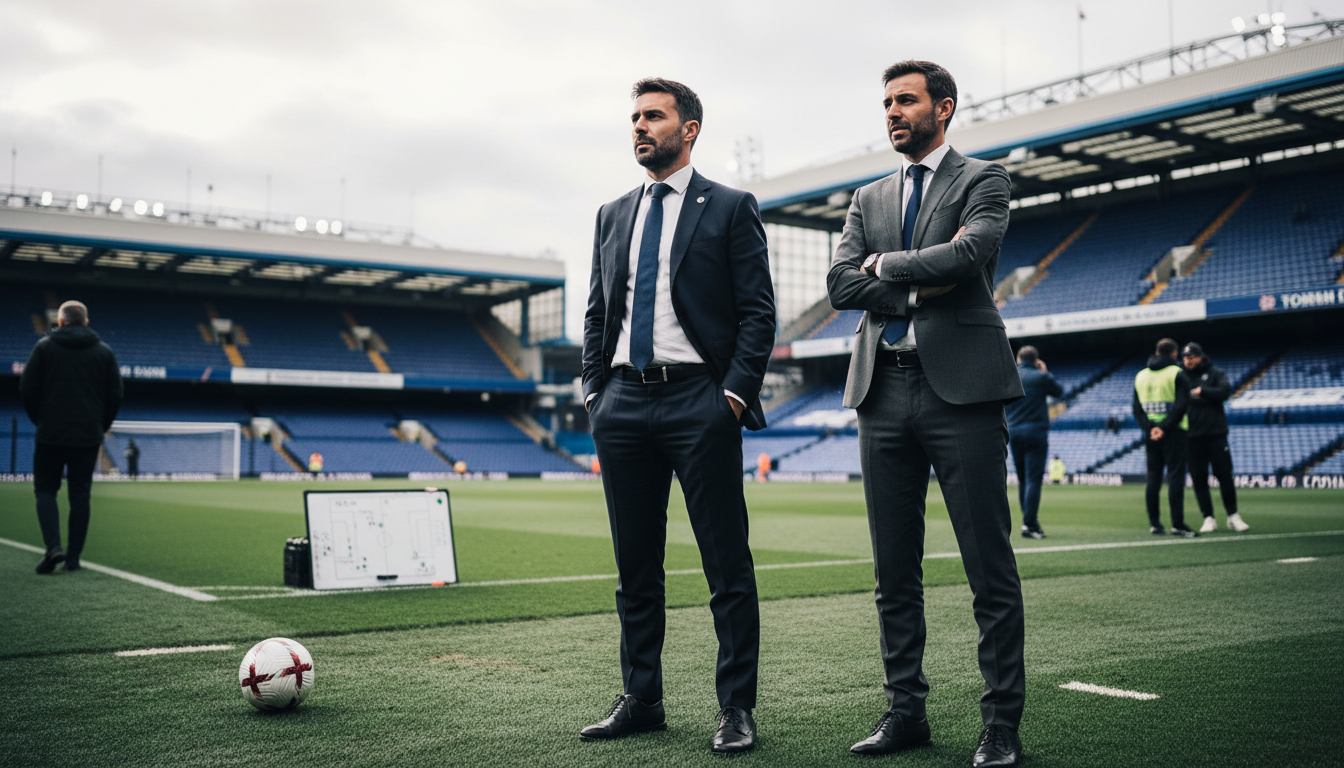
Chelsea target Andoni Iraola as leading candidate in search for new manager
Chelsea are in talks with Andoni Iraola and Xabi Alonso as they seek a new manager, focusing on tactical fit, youth development and Premier League experience.


Chelsea have opened discussions with Andoni Iraola and Xabi Alonso as part of a concerted search for a new manager to lead the club into next season. The club moved quickly after recent changes in the coaching setup, and those talks are understood to be at an early stage as recruitment planning accelerates. The search puts the emphasis on a candidate who can rebuild confidence in a squad that requires tactical clarity and younger-player development.
Chelsea open talks with Andoni Iraola and Xabi Alonso
Reports indicate the Blues have held preliminary conversations with both Iraola and Alonso, with both coaches available to begin planning immediately after the season ends. Those initial contacts are framed as exploratory, aimed at assessing willingness, strategic alignment and timelines rather than final offers. Club officials are balancing immediate continuity with long-term design as they evaluate candidates who can deliver sustained improvement.
A short-term caretaker has steadied results in the interim, but ownership and the sporting director are focused on appointing a manager who can shape recruitment and footballing philosophy over multiple seasons. That process involves interviews, technical briefings and likely requests for detailed plans for transfer windows and youth integration. Timing is critical: Chelsea want whoever they appoint to have input on the squad ahead of the summer window.
Iraola’s Bournemouth record and managerial profile
Andoni Iraola has built a profile as a tactically astute coach who has improved Bournemouth’s competitive profile in the Premier League. His teams have been praised for organized pressing, fluid transitions and a clear identity that maximizes limited resources. Those attributes have attracted attention because they align with Chelsea’s need for structure and a coach comfortable with developing emerging talents.
Iraola is also noted for getting the most out of younger players and integrating academy graduates into senior roles, an experience Chelsea view as particularly valuable given their current squad composition. His Premier League experience provides a practical advantage in understanding opponent profiles, player recruitment in England and the day-to-day pressures of the league. That experience, combined with a reputation for steady tactical evolution, is central to the club’s interest.
Xabi Alonso’s recent success and concerns
Xabi Alonso’s managerial résumé includes a standout Bundesliga title with Bayer Leverkusen, a campaign that enhanced his reputation as an innovative coach capable of implementing a high-intensity, possession-based approach. His tactical sophistication and ability to prepare teams for domestic and European competition are among the qualities that make him an attractive candidate for clubs seeking quick elevation. Alonso’s profile is strengthened by his capacity to build competitive teams in short order.
At the same time, Alonso’s most recent spell at a top-level club ended prematurely amid reports of dressing-room tensions and inconsistent man-management in an environment of established stars. Observers point to questions about whether his leadership style consistently translates across different squad cultures, particularly where experienced, high-profile players require distinct management. Chelsea must weigh those considerations against the tactical advantages he would bring to the role.
Why Chelsea may favor Iraola for the Chelsea manager role
Chelsea’s decision-makers appear to be prioritizing a manager who combines Premier League familiarity with a demonstrable track record of youth development and tactical pragmatism. Iraola’s work at Bournemouth ticks several of those boxes: Premier League-tested systems, a reputation for improving younger players and adaptability when operating with modest transfer budgets. That alignment with Chelsea’s immediate and medium-term needs presents a persuasive case for his candidacy.
The club also values a coach who can provide incremental improvement without disrupting squad cohesion, and Iraola is perceived as steady and methodical in his approach. His tactical plans emphasize organization and progressive ball movement rather than wholesale stylistic overhaul, which could suit a dressing room in need of stability. These factors, combined with his availability at the end of the season, strengthen his appeal in the recruitment process.
Immediate sporting challenges awaiting a new manager
Whoever takes charge will face a dense agenda: squad assessment, summer window planning, and preparation for the following season’s competitions. Chelsea’s squad requires careful evaluation to determine which players fit the incoming manager’s system and which additions are necessary to restore competitiveness. That shortlist will likely include targets across defence, midfield and the attacking lines, with an emphasis on players who can be developed further rather than short-term marquee signings.
Additional challenges include rebuilding team morale and establishing a coherent playing identity after recent instability in the dugout. The new manager will need to assert authority while maintaining an inclusive environment that encourages buy-in from established personnel and emerging talents. Delivering early results will be important, but so too will setting a foundation for sustainable progress.
Transfer market implications and recruitment priorities
Appointment timing is linked closely to transfer strategy: an early decision gives the incoming manager the chance to influence targets and recruitment priorities for the summer. Chelsea’s sporting hierarchy has signaled a desire to blend experienced acquisitions with younger players who can grow into the club’s identity, and managerial input will be decisive in shaping that balance. The club’s scouting and analytics departments will be tasked with presenting options that fit a clear tactical blueprint.
Budget considerations and competition from other clubs mean Chelsea must act decisively once they settle on a preferred candidate. The market for managers and players is interconnected, and clubs targeting similar coaches may also pursue overlapping transfer targets. Therefore, aligning managerial philosophy with recruitment resources will be essential to executing a coherent offseason plan.
Potential timeline and negotiation hurdles
The process is expected to move through intensive negotiations in the coming weeks, with the club aiming to complete the managerial appointment promptly after the season concludes. Any appointment will require clarity on contract length, control over transfers and staffing decisions, and a mutual understanding of performance expectations. Negotiations could be prolonged if multiple suitors are involved or if candidates seek extensive assurances about autonomy and project scope.
Other clubs’ interest in the same candidates represents a practical hurdle, and Chelsea will need to balance speed with thorough vetting to avoid rushed decisions. The club’s ownership has demonstrated a willingness to invest in a long-term footballing vision, but that investment hinges on securing a manager aligned with its strategic priorities. The next few weeks are therefore likely to be decisive.
Chelsea’s managerial choice will shape the club’s immediate prospects and long-term trajectory, particularly if the selected coach successfully integrates young talent while restoring competitive consistency. The board and sporting directors are weighing options carefully, with an eye toward appointing a manager who offers both tactical clarity and developmental credibility.
The incoming manager will inherit a complex brief: steady the present, shape the future and ensure the squad is positioned to compete within the Premier League and in cup competitions. Support from the club’s hierarchy in transfer windows, recruitment and infrastructure will be critical to translating managerial plans into on-field progress. Continuity of purpose and a measured, well-resourced approach are the most likely determinants of success.
Expectation across the club and among supporters is that the next appointment will be strategic rather than headline-driven, emphasizing structure and sustainable development. Chelsea’s leadership understands the risks and rewards associated with each candidate and appears committed to a thorough process. The decision that emerges will set the tone for the summer and for the seasons that follow.