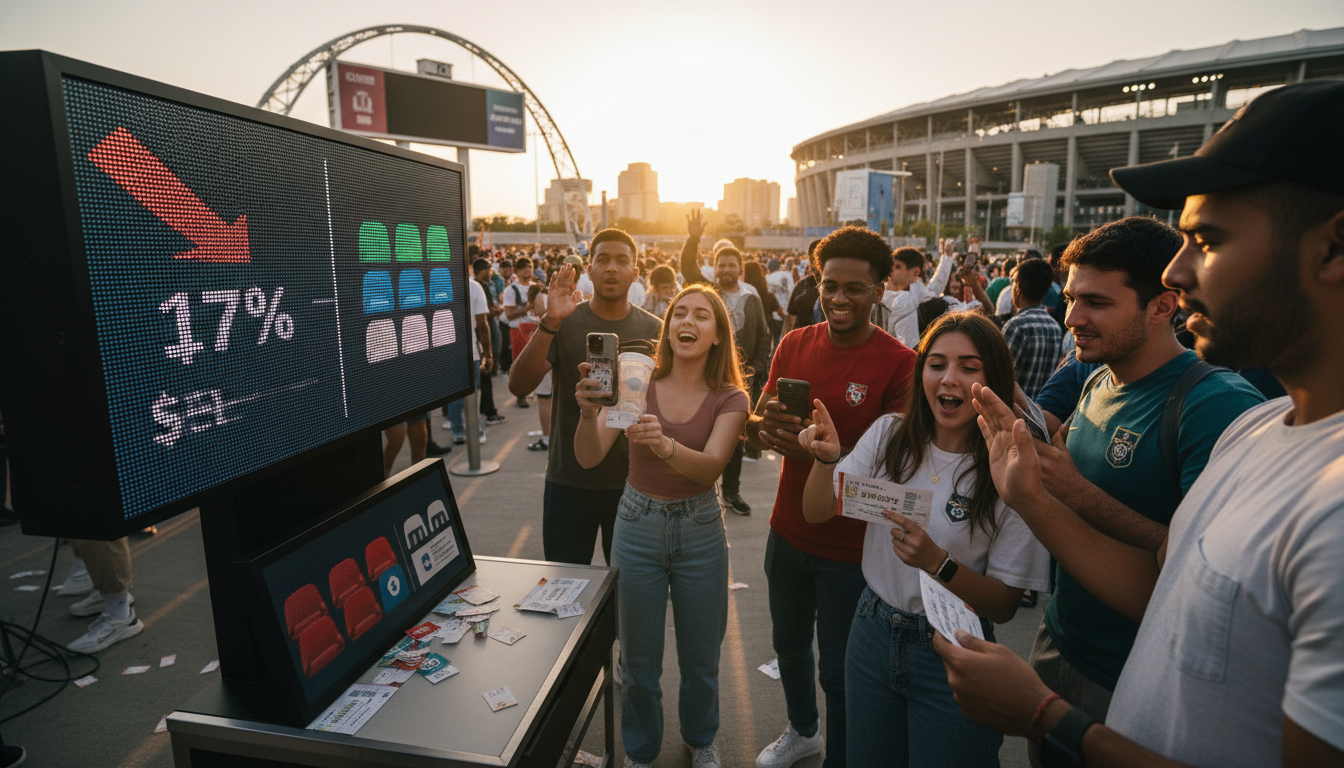
2026 World Cup ticket prices fall as secondary-market get-in drops 17.1% in two weeks
Ticket resale data show the average get-in for 2026 World Cup ticket prices has fallen sharply, signaling easing demand and rising secondary-market supply.


The average get-in price for 2026 World Cup ticket prices on the secondary market has dropped to US$567, a 17.1% decline over the past 14 days and a 21.2% fall from US$720 a month ago. The move comes after FIFA released a new batch of tickets and amid growing scrutiny over costs for travel and match access at the expanded 48-team tournament. Market trackers report 87 of 91 matches in the United States and Canada saw their cheapest resale tickets fall in the past two weeks, underlining a broad softening rather than an isolated correction.
Secondary Market Falls 17.1% in Two Weeks
Per TicketData.com, the metric known as the "get-in price" — the cheapest ticket available on secondary platforms — has decreased from US$684 two weeks ago to US$567 today. This marks a 17.1% slide in a fortnight and is part of a steeper monthly descent from US$720.
The decline reflects both seller behavior and an inflow of additional inventory after FIFA’s latest release of tickets for sale. Sellers who bought early or received allocations appear to be lowering asking prices to move inventory as the tournament approaches.
Market observers note that ticketing dynamics for a 48-team, multi-country event can be volatile; broader supply and shifting buyer expectations often prompt rapid price adjustments as demand signals become clearer. The pattern in this case suggests sellers are recalibrating to match actual interest rather than initial hype.
FIFA Release and Official Supply Influenced Prices
FIFA’s decision to open another tranche of World Cup tickets coincided with the observed price drops on resale platforms. Adding official supply to the market typically relieves pressure on resales, particularly for less high-profile fixtures.
FIFA President Gianni Infantino publicly defended the overall price structure at a conference in Beverly Hills, saying the levels reflected market demand in the United States. Even so, the fresh official availability appears to have encouraged price competition and downward pressure among secondary-market sellers.
Analysts say the timing of official releases is a key lever: when more tickets enter the primary channel, resellers face increased incentive to lower prices rather than hold for higher bids, especially as the event date nears and travel decisions firm up.
Levi’s and NRG Lead Stadium-Level Price Movements
Not all venues moved in the same direction or at the same pace. Levi’s Stadium in Santa Clara recorded the largest 30-day decline among U.S. host venues, with its get-in price tumbling 29.5% over the month. That drop is consistent with weaker demand for particular matchups and an influx of supply.
Houston’s NRG Stadium registered the biggest two-week fall among the 11 U.S. stadiums, with a 22.8% decline, indicating rapid adjustment in that market. Other American and Canadian venues showed similar softening, with the vast majority of matches on the continent showing decreased cheapest-ticket listings.
Local factors — such as match scheduling, travel logistics, and the presence or absence of marquee teams — help explain variance between stadiums. Matches featuring heavyweight national sides or weekend time slots typically retained stronger pricing, while midweek or lower-profile fixtures were more susceptible to steep cuts.
Public and Political Reaction to Ticket Costs
The ticket-price story has unfolded against sustained public attention to affordability for the first 48-team World Cup. Critics have pointed to the aggregate cost of tickets, international travel, lodging and related expenses as barriers for many fans.
On Thursday, former President Donald Trump was asked about reports of get-in prices near US$1,000 for the United States men’s opener against Paraguay in Los Angeles on June 12, and he said, "I wouldn’t pay it either." The exchange underscored how high-ticket headlines have entered broader political and cultural conversation ahead of the June 11 start date.
FIFA has defended its pricing strategy and emphasised market conditions in the U.S., while consumer advocates and fan groups have called for more transparent allocation and greater access to affordable seats. The interplay of official messaging, political commentary and resale pricing has kept the ticket debate in the headlines.
Market Mechanics: Why Prices Can Fall as Event Nears
Resale markets are governed by supply, demand and timing; as an event approaches, sellers face a narrowing window to convert stock into cash. When additional official tickets are released, or when projected demand softens, sellers often lower prices to avoid holding worthless inventory.
The get-in price is particularly sensitive because it reflects the floor of availability; once the cheapest tickets begin to sell out or drop in price, it sets expectations across the market. For this World Cup cycle, the combination of extra official supply and sellers recalibrating to observed buyer interest has created a broad floor adjustment.
Professional sellers with large allocations may prefer to reduce prices incrementally to ensure sales, while casual sellers who bought for personal plans are more likely to accept lower offers if they can no longer attend. That mix accelerates the downward pressure when both groups choose to liquidate.
Implications for Fans, Travel Planning and Secondary Platforms
For prospective attendees, the recent decline offers some opportunity: shoppers who delayed purchases may find lower entry points on the resale market, though prime matches and premium seats remain expensive. Fans should weigh the trade-off between securing confirmed tickets now and hoping for further declines that may not materialize uniformly across all fixtures.
Travel and accommodation costs remain separate and often larger components of total expense for an international spectator, especially for matches in multiple countries or for fans following their teams through several games. Those costs are less likely to mirror the short-term movements seen in ticket resales.
Resale platforms and brokers will likely respond by adjusting inventory strategies, fees and promotional activity to attract buyers. Observers caution consumers to use verified resale channels and to account for secondary fees and guarantees when comparing offers, as headline get-in prices do not always reflect total outlay.
Final paragraph
The recent fall in 2026 World Cup ticket prices on the secondary market highlights an evolving equilibrium between official supply and fan demand as the tournament approaches, and it gives prospective spectators a critical window to reassess purchase timing while continuing to factor in travel and accommodation costs.