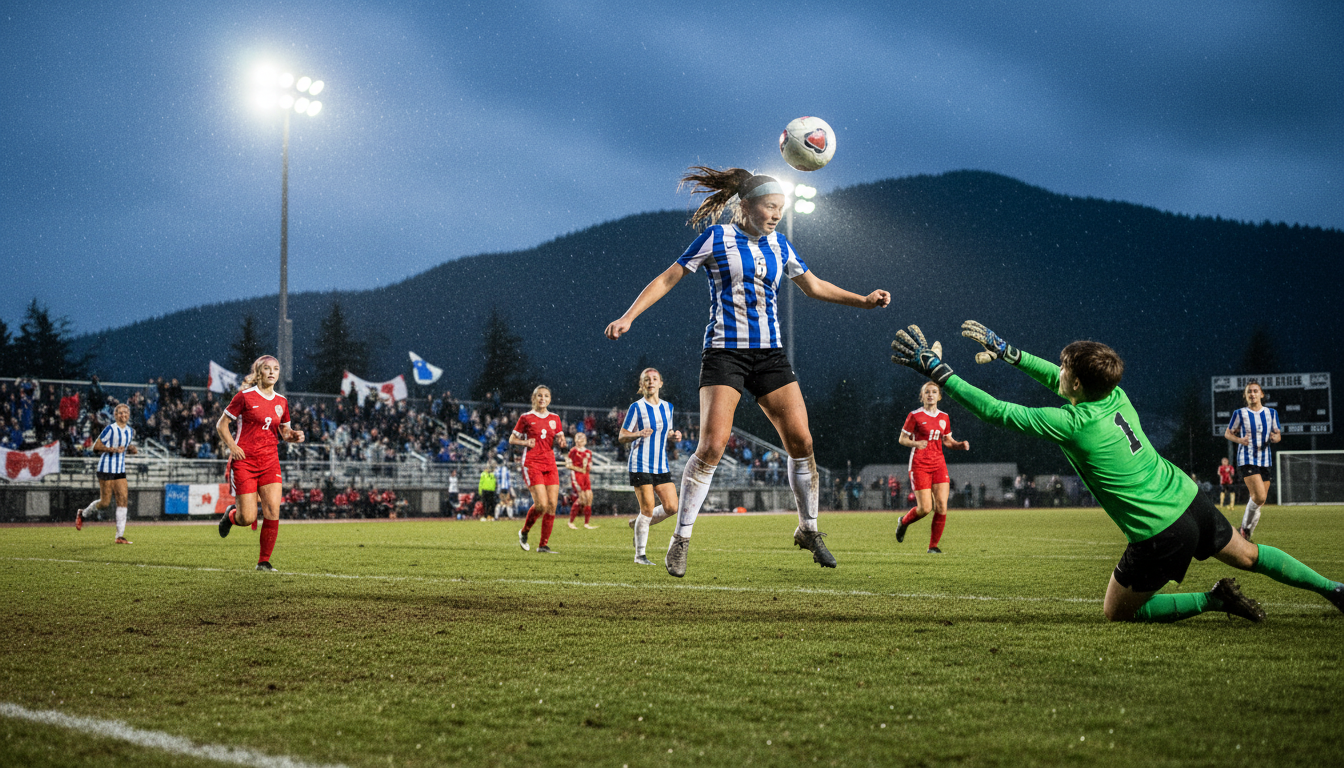
Pacific Northwest High School Soccer Roundup: Washington and Alaska Dominate Early Season
Pacific Northwest high school soccer roundup: midseason look at Washington and Alaska, standout players, recruiting watch, coaching trends and playoff outlook.


The Pacific Northwest high school soccer landscape is settling into a clear pattern midway through the spring season, with Washington and Alaska boys’ programs and Alaska girls’ teams posting the most consistent form. This Pacific Northwest high school soccer roundup examines which teams and players are shaping the region’s early storylines, how coaches are adapting tactically, and which athletes are drawing collegiate attention. The report highlights competitive balance, logistical challenges unique to the region, and what to expect as districts move toward postseason play.
Washington Boys: Early Standouts and Top Teams
Washington boys’ programs have shown depth across several classifications, with established powerhouses blending veteran leadership and promising underclassmen. In suburban and urban districts, teams have relied on structured possession play and disciplined defensive organization to control matches. Several regional coaches credit organized preseason schedules and feeder-club relationships for producing technically sound squads ready for the demands of league play.
Emerging scoring threats have surfaced in midseason performances, often from forwards who combine pace with intelligent off-ball movement. Goalkeeping units have also been a difference-maker, with shot-stopping and distribution under pressure helping teams transition rapidly from defense to attack. Expect the upper-tier Washington programs to jockey for district seeding down the final stretch, where small margins in goal differential and results against common opponents will matter.
Youth development pipelines are reflected in the number of sophomores and juniors logging significant minutes at varsity level, suggesting sustained competitiveness for several programs. Coaches balancing academic commitments with compressed travel windows have emphasized squad rotation to manage fitness and reduce injury risk. That strategy has kept several teams fresh for the busiest part of the schedule.
Alaska Boys: Surprising Depth and Breakout Players
Alaska’s boys’ soccer scene has delivered surprising depth this season, with teams outside traditional centers posting competitive results in statewide play. Despite broader geographic and climate challenges, several Alaska programs have cultivated technical midfielders and aggressive wide attackers who create consistent scoring opportunities. Coaches attribute improvement to extended winter training programs and increased access to indoor turf facilities in populated hubs.
Travel logistics still shape season planning, with longer trips and weather-related adjustments testing squads’ resilience and roster flexibility. That environment has fostered mentally tough players who can perform after late-night travel or compressed schedules. Some breakout players from smaller towns have begun to attract interest from mainland colleges and showcase events, signaling expanding scouting networks into Alaska.
Goal-scoring distribution has been a theme for Alaska teams, with contributions coming from multiple positions rather than reliance on a single striker. That balance has frustrated defenses and produced tighter margins in tournament games. As regionals approach, teams that can sustain consistency during lengthy travel windows will likely separate themselves in the final seedings.
Alaska Girls: State Leaders and Key Performers
On the girls’ side, Alaska programs are pacing the region with disciplined tactical systems and standout individual talents who influence both ends of the field. Several teams have adopted compact defensive structures that allow quick vertical transitions and exploit counterattacking chances down the flanks. Coaches point to improved goalkeeper training and a generation of technically adept midfielders as key reasons for the competitive uptick.
Top performers on the field include central midfielders who manage tempo and wide players with direct attacking instincts, creating a reliable combination for game control. Veteran defenders are anchoring back lines while young attackers provide dynamism and finishing. The result has been a mix of experienced, possession-oriented sides and high-energy units willing to press aggressively.
Developmental programs and interscholastic tournaments in Alaska have increased playing opportunities for girls, contributing to deeper rosters and stronger competitive parity. As the season advances toward district and state tournament play, teams that combine tactical discipline with bench depth will be best positioned to make deep runs.
Recruiting Watch: Players Appealing to College Programs
The Pacific Northwest remains fertile ground for collegiate coaches scouting high school talent, and this roundup identifies several profiles gaining attention across Washington and Alaska. Midfielders with high soccer IQ, strikers who demonstrate consistent finishing, and fullbacks comfortable in both defensive and attacking phases are drawing the most interest. College recruiters increasingly value players who can adapt to multiple roles and demonstrate tactical understanding beyond individual technique.
High school performances are being augmented by club play and showcase events that provide additional film and context for evaluators. Players in remote locations, particularly in Alaska, are leveraging digital platforms to share match footage and training highlights, narrowing the exposure gap. Coaches and families are advised to prioritize consistent, high-quality game footage and clear communication with prospective programs.
Academic standing and character remain important factors in recruitment, with college coaches emphasizing reliability as much as on-field ability. Players who can present a polished highlight package, maintain strong academic profiles, and articulate their development trajectory are more likely to secure interest. Continued midseason performances and postseason showcases will be decisive for athletes hoping to land offers or invites to collegiate ID camps.
Tactical Trends and Coaching Notes Across the Region
Coaching trends in the Pacific Northwest high school soccer scene show an increased focus on defensive compactness and rapid transitions from back to front. Many programs have implemented hybrid formations that prioritize midfield control while allowing wingbacks to provide width. The emphasis on transitional speed reflects coaches’ desire to maximize scoring chances from turnovers rather than sustained build-up alone.
Set pieces have become a planned source of goals, with teams practicing a mixture of direct and disguised routines to unsettle opponents. Goalkeepers have been trained not only in shot-stopping but also in efficient distribution to exploit high-pressing opponents. This evolution in goalkeeper responsibilities has allowed coaches to initiate quick counters and bypass congested midfield areas.
Physical preparation and load management are priorities as coaches navigate congested schedules and extended travel demands, particularly for Alaska teams. Teams employing structured rotation policies have reduced fatigue-related dips in form and maintained sharper performances late in matches. Coaching staffs are also investing in video analysis to reinforce tactical concepts and accelerate individual development during training cycles.
Schedule, Playoffs Outlook and What to Watch Next
As districts move toward playoff qualifiers, expect tighter margins and strategic adjustments as coaches prepare for knockout formats. Teams that have conserved fitness and maintained consistent defensive records are positioned to advance in single-elimination settings. Conversely, squads that rely heavily on individual brilliance rather than systemic balance may struggle against organized playoff opponents.
Key matchups to monitor include district clashes that serve as de facto previews of potential playoff pairings, where tactical approaches and personnel depth will be tested. Home-field advantage remains meaningful, especially for Alaska teams managing long travel, and seeding battles will influence the postseason landscape. Fans and scouts should pay attention to late-season form, where momentum often dictates playoff trajectories.
Regional all-star considerations and postseason awards discussions will intensify as selectors review performances across both Washington and Alaska. Players who step up in high-pressure regular-season finales or district tournaments can make decisive impressions on collegiate scouts. The final weeks before state tournaments will likely determine which programs and athletes gain broader recognition.
Coaches and athletic directors are also monitoring potential scheduling conflicts and weather contingencies that could affect postseason planning. Contingency protocols and clear communication with officials have been essential in prior seasons and remain a priority for administrators. Teams that navigate these variables smoothly will enter postseason play with a competitive edge.
Across the Pacific Northwest, the high school soccer calendar is delivering compelling narratives of program growth, individual development, and rising recruitment interest. This Pacific Northwest high school soccer roundup will continue to track the region’s progression through district finals and into state tournaments, highlighting standout performances and tactical trends as they emerge. For coaches, players, and fans with noteworthy performances to share, submissions can be sent to [email protected] for consideration in upcoming coverage.