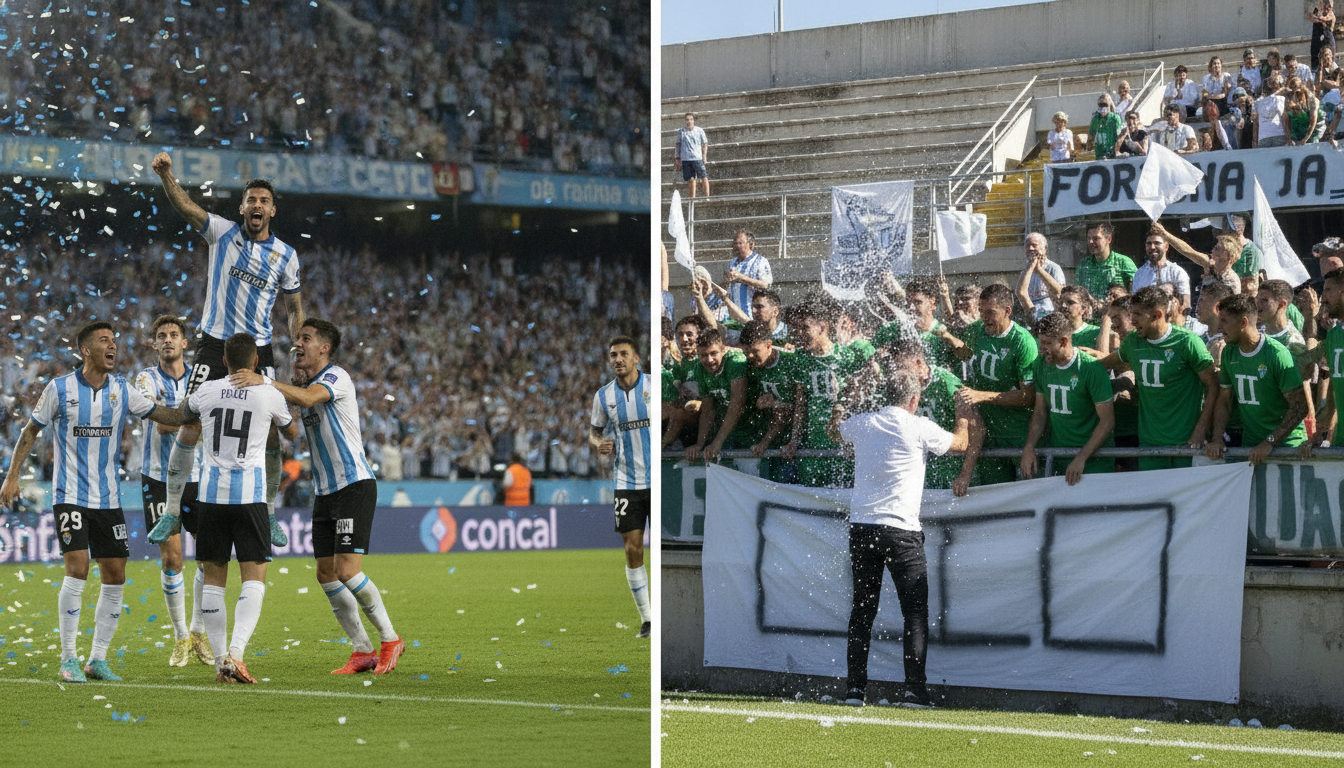
Celta Fortuna promoted to Segunda División as Celta Vigo complete landmark 2025–26 season
Celta Fortuna secure historic promotion to Segunda División while Celta Vigo finish sixth in LaLiga, reach the Europa League quarter finals and secure European football again.


Celta Vigo’s season reached an unprecedented high as their reserve side Celta Fortuna clinched promotion to the Segunda División, the first time in the club’s 103 year history that both teams will play as professional sides next season. The first team capped a remarkable campaign by finishing sixth in LaLiga, thereby earning European qualification for only the second time in the club’s history, and advanced to the Europa League quarter finals. The combined achievements underline a season shaped by a deliberate focus on homegrown talent and a clubwide performance that will reshape planning ahead of 2026–27.
Celta Fortuna reach Segunda División for the first time
Celta Fortuna completed a promotion run that will see the Vigo club field two professional teams next season, a milestone not previously achieved in their 103 year existence. The reserve team’s success is a historic landmark for the club and a tangible result of years of investment in youth coaching and pathway planning. Promotion to the Segunda División raises the competitive level for the reserve players and changes the operational status of the second team from semi professional to fully professional football.
The promotion will bring Celta Fortuna into a national league that provides increased exposure, more demanding fixtures and additional regulatory requirements. That shift will force the club to reassess contracts, staffing and infrastructure to ensure the reserve team can meet the standards of the second tier. The achievement also alters the dynamics of talent management, because players now face a higher level of competition while still remaining eligible for first team consideration.
First team seals sixth place and European return
Claudio Giráldez’s first team concluded the 2025–26 LaLiga season in sixth place, a finish that secures European competition for the next campaign. The club also made a deep run in the Europa League, reaching the quarter finals and reinforcing the squad’s capacity to compete on multiple fronts. These outcomes represent one of the most successful seasons in recent Celta Vigo history.
The league position and continental performance reflect a season of consistent form and tactical coherence under Giráldez. The coaching staff managed squad rotation effectively while integrating rising talents from the reserve side. Qualification for Europe presents both competitive opportunity and scheduling pressure that the club will need to manage carefully.
Youth pipeline fuels both squads
A defining feature of this season has been the heavy reliance on academy graduates across the first team roster, with the majority of players used by Giráldez having progressed through the club’s structures. More than half of the 36 players deployed by the first team this season had experience with the reserve team, illustrating the depth of the pathway from youth ranks to senior football. This integrated model has allowed the club to field a cohesive group that shares tactical understanding and cultural identity.
The reserve team’s promotion validates that pipeline and underscores the strategic choice to prioritize homegrown talent. For young professionals, competing in the Segunda División will provide a higher intensity environment and accelerate development. The club’s sporting directors now face the task of balancing playing time between the two squads while ensuring that emerging prospects continue to receive structured support.
Operational challenges as both teams turn professional
Maintaining two professional teams will require Celta Vigo to scale operations and adjust logistics across multiple areas including staffing, facilities and player contracts. The club must ensure appropriate medical, coaching and backroom resources are in place for the Segunda División campaign while preserving the first team’s capacity to contest domestic and European fixtures. That dual responsibility stretches budgets and operational bandwidth, particularly in travel planning and match day operations.
The schedule demands will intensify when the first team competes on three fronts and the reserve side faces rigorous league demands, creating potential bottlenecks in player availability. To mitigate that risk the club will need to expand its squad depth and refine its rotation policies. Strengthening scouting and recruitment at both levels will be essential to sustain competitiveness without undermining the pathway for academy players.
Financial and sporting implications of two professional teams
Promotion brings both revenue opportunities and additional costs for Celta Vigo, with the Segunda División offering larger broadcasting, sponsorship and commercial exposure than regional competitions. However the financial upside will be tempered by increased wage bills, greater operating expenses and the need for enhanced infrastructure. The club’s financial planning will therefore need to reconcile short term demands with long term growth.
Sporting benefits are clear, as competitive minutes in the Segunda División will accelerate the maturation of young players and increase the internal market value of the club’s talent. The ability to test prospects in a fully professional national league also strengthens Celta’s position in transfer negotiations and talent retention. The club must now choose where to allocate resources to maximize both sporting returns and financial sustainability.
Supporters respond with heightened demand for season tickets
Fan engagement has surged as a result of the season’s successes, with season ticket demand rising sharply and waiting lists lengthening across home fixtures. The club’s connection with its supporters appears stronger than at any recent point, reflecting enthusiasm for a team that blends local youth with competitive results. That heightened demand poses an opportunity to deepen community ties while also creating logistical challenges in ticket allocation and stadium management.
Managing supporter expectations will be a priority, especially as the club navigates two professional campaigns and an expanded match calendar. Ensuring ticketing fairness for both first team and reserve fixtures will be important to sustain goodwill. The club may also explore enhanced fan experiences and membership options to capitalize on the renewed interest and to support long term revenue stability.
Planning for the next season will test Celta Vigo’s capacity to balance ambition with pragmatism. The technical staff must devise a squad rotation model that protects player welfare and maintains competitive intensity across competitions. Recruitment priorities are likely to focus on bolstering depth in key positions while preserving opportunities for academy graduates who have proven their readiness.
The club’s sporting directors will also need to map out a development plan for reserve players whose trajectories now include professional league experience. Integrating individualized training, tailored match exposure and clear progression milestones will help ensure that the reserve team’s elevated status serves the broader first team agenda. Effective coordination between the two squads will be essential to maximize both immediate results and long term talent cultivation.
Celta’s model this season showcases the potential payoff of a sustained commitment to youth development combined with pragmatic first team management. The alignment between academy philosophy and senior team tactics has produced both competitive achievements and institutional milestones. If the club maintains that alignment, it could establish a durable competitive platform in Spain and on the continental stage.
Looking ahead, the upcoming transfer window and preseason period will be decisive as the club prepares to meet the demands of a packed calendar. Balancing investment in player recruitment with the need to preserve the identity that fueled this season’s progress will shape the club’s trajectory. Fans and stakeholders will watch closely as Celta Vigo translates this watershed season into sustainable progress.
Celta Fortuna’s promotion and the first team’s European qualification together mark a season that will be remembered in Vigo for generations, and they set a new baseline for expectations at the club.