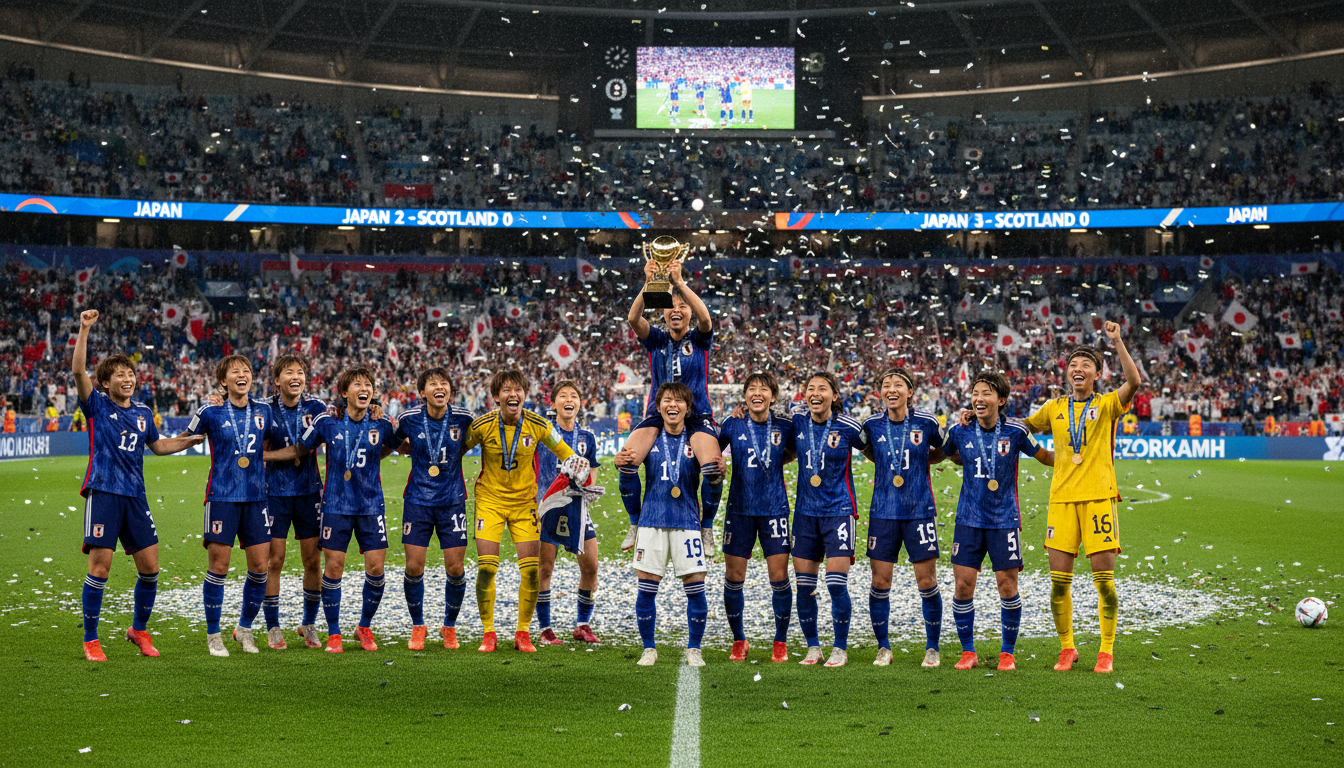
Japan World Cup Hopes Soar After Historic Wins Over England and Scotland
Japan World Cup prospects rise after back-to-back victories at Wembley and Hampden Park, boosting belief ahead of the finals.


Japan’s back-to-back wins over England and Scotland at Wembley and Hampden Park have intensified expectations that the nation can make a significant impact at the World Cup. The results, combined with a string of positive performances, have given coach Hajime Moriyasu and his squad a clear psychological and tactical lift as they prepare to face the Netherlands, Sweden and Tunisia in the tournament. While Japan dominated headlines, other Asian qualifiers experienced a mixed international window, underlining differing levels of readiness across the continent.
Japan’s historic wins at Wembley and Hampden Park
Japan recorded consecutive 1-0 victories at two of the United Kingdom’s most storied venues, marking a milestone for Asian football. The win at Wembley was the first ever by an Asian nation against England on that ground, and the Hampden Park result further underscored Japan’s growing capacity to perform under pressure in hostile environments. These results followed a five-match winning streak and capped a preparation period that blended tactical refinement with confidence-building outcomes.
Players and staff emphasized the psychological value of succeeding on big stages, noting how the team matched physical intensity with disciplined defensive organization. Japan’s ability to grind out narrow victories against strong opponents suggests an emerging resilience that could be decisive in World Cup group play. The wins also provided a tangible signal to rivals and neutral observers that Japan cannot be underestimated at the finals.
Moriyasu demands tactical versatility ahead of the finals
Coach Hajime Moriyasu has made clear his expectation that Japan will display multiple styles of play at the World Cup, highlighting both patient build-up and rapid counterattacking as necessary tools. He stated that the team must “be able to do many things,” pointing to the need for adaptability against varied opponents. This emphasis on tactical flexibility has shaped recent squad selections and training sessions, with players being prepared to switch roles and tempo as matches demand.
Moriyasu’s approach balances structure with creativity, asking his midfielders and forwards to execute both measured possession phases and sudden, high-speed transitions. That dual capability will be tested in Japan’s group, where opponents present contrasting tactical profiles. The coach’s public insistence on versatility also serves to manage expectations, framing Japan’s ambition in terms of process as well as results.
Asia’s international window produced mixed signals for the continent
While Japan emerged as the clear headline-maker, Asia’s other World Cup qualifiers returned from the same international window with mixed fortunes. Some teams used the dates to fine-tune formations and integrate fringe players, while others were forced into last-minute tactical adjustments after underwhelming displays. The variety of outcomes revealed different preparation strategies and left a divergent set of questions about which Asian sides will peak in time for the finals.
Certain nations prioritized rest and injury management as they concluded long qualifying campaigns, accepting short-term dips in form to safeguard fitness for the World Cup itself. Others pushed for cohesion through competitive friendlies and received more immediate tactical clarity as a result. The window therefore acted as both a test and a rehearsal, exposing vulnerabilities for some teams while reinforcing the strengths of others.
Australia completes marathon qualifying run under Graham Arnold
Australia marked the end of a 21-match qualifying journey that stretched across 28 months, a campaign that presented its own physical and logistical challenges. Under coach Graham Arnold, the Socceroos navigated a long, grinding path to the finals, balancing squad rotation and form management amid congested schedules. The completion of that marathon run has given Arnold and his players a platform to consolidate ahead of the finals, even if the journey left questions about sharpness in certain areas.
The extended qualifying sequence forced Australia to manage player workloads carefully and test emerging talent at key moments. Arnold’s post-campaign assessments have emphasized the need to blend experience with the energy of younger options during the World Cup itself. The Socceroos’ form during the most recent international dates will inform final tactical choices, though the primary objective remains to arrive at the finals with a fit, cohesive unit.
Tactical challenges inside Japan’s World Cup group
Japan’s group-stage opponents — the Netherlands, Sweden and Tunisia — present a range of tactical problems that will require the kind of versatility Moriyasu has been advocating. The Netherlands bring structured positional play and technical midfield control, Sweden are likely to offer physicality and aerial threat, while Tunisia can be compact defensively and quick in transition. Preparing for this mix demands strategic planning across set pieces, wide play and defensive coordination.
Japan’s recent results suggest a capacity to execute disciplined game plans, but the step up to World Cup intensity will require further refinement in attack and defensive transitions. Key areas of focus include shutting down long balls, exploiting space on the flanks, and maintaining concentration through phases of low possession. Success in the group stage will hinge on Japan’s ability to adjust in-game and impose different rhythms depending on opponent tendencies.
Player form and selection dilemmas for Japan ahead of the finals
Moriyasu’s squad choices are likely to reflect a tension between rewarding in-form performers and ensuring tactical balance across the spine of the team. Attacking players who thrive on counters may require different midfield partners than those prioritizing slow build-up play. The coach must therefore weigh individual form, international experience and positional flexibility when finalizing his roster and matchday line-ups.
Injury management will also feature prominently in selection decisions, with the coaching staff monitoring recovery timelines and match minutes in the lead-up to the tournament. Japan’s depth across multiple positions gives Moriyasu options, but those options must cohere into a functional system on the pitch. How effectively he blends those elements could determine whether Japan advances beyond the group phase and challenges for a deeper run.
Asian contenders face heightened expectations and global interest
Japan’s recent results have raised the profile of Asian football heading into the World Cup, prompting greater scrutiny of the continent’s other qualifiers. Media and fan attention has shifted toward how Asian representatives will perform against traditionally stronger European and South American sides. For the region’s teams, the period between qualification and the tournament is now about converting regional momentum into meaningful results on the world stage.
This spotlight brings both opportunity and pressure; performing well could accelerate investment and development within participating federations, while disappointing results would prompt tactical and structural reassessments. National associations will therefore balance short-term tournament preparation with longer-term planning aimed at sustaining international competitiveness. The World Cup offers a testing ground that could define the next cycle for many Asian football programs.
Japan’s consecutive victories in the international window have altered the narrative surrounding Asian prospects at the World Cup, but the finals will provide the definitive measure of progress. Preparation, tactical adaptability and player management remain the key variables that will determine whether Japan and its regional counterparts can translate recent promise into tournament success.
Ultimately, the next weeks will test the tactical theories and squad selections laid out by coaches, and Japan’s blend of confidence and versatility will be watched closely as the World Cup approaches.