Japan sacks Nils Nielsen 12 days after Women’s Asian Cup triumph
Japan dismisses Nils Nielsen amid board criticism of his approach, ending the Greenlander’s brief tenure after the March 21 Asian Cup final victory.

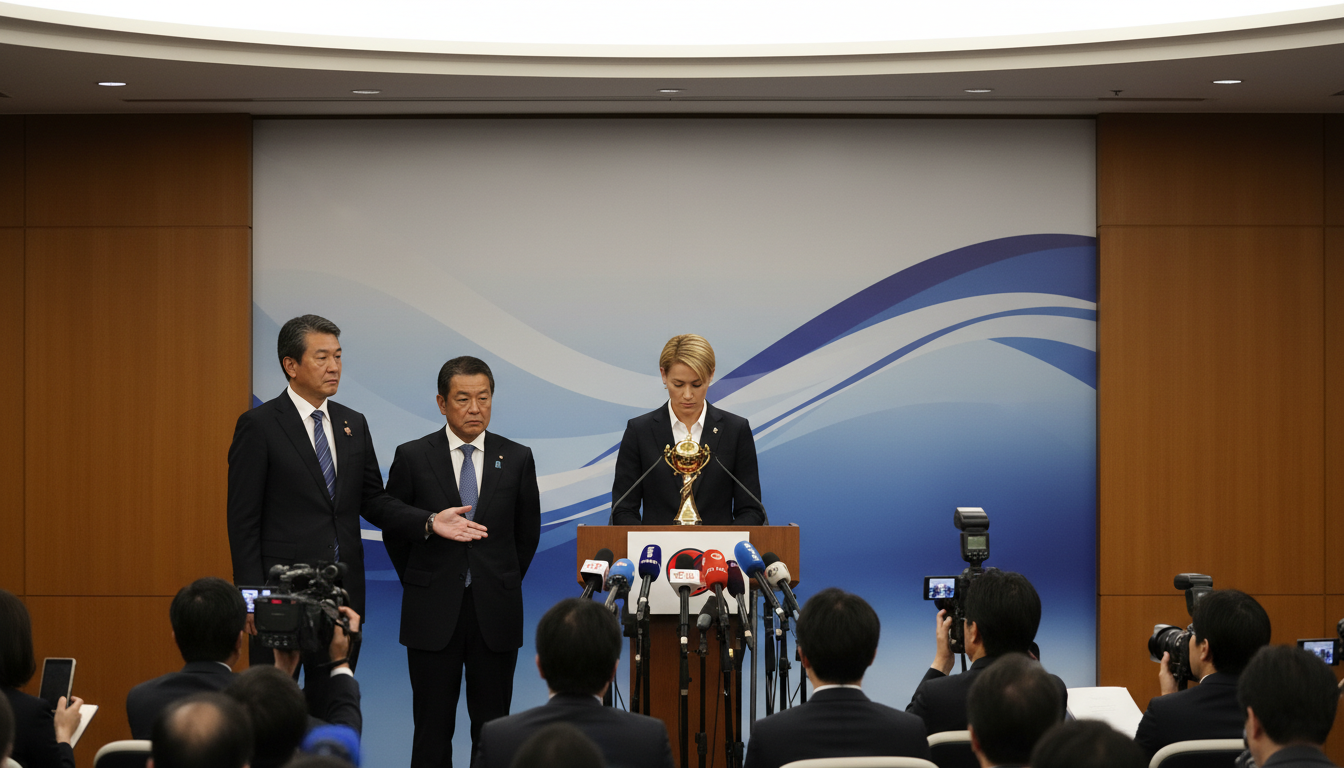
Nils Nielsen was relieved of his duties as Japan women’s national team coach just 12 days after guiding the side to the Women’s Asian Cup title, the Japan Football Association said, ending a short-lived tenure that began in December 2024. The JFA announced the coach’s contract expired following the tournament and that the board declined to offer an extension, citing concerns that Nielsen was “lax” and “lacking passion.” The decision comes despite Japan’s dominant continental campaign, in which the team scored freely and conceded scarcely.
Immediate decision by the Japan Football Association
The JFA formalized its choice in a statement explaining that the coaching contract terminated after the Asian Cup and the board of directors opted not to renew it.
President Tsuneyasu Miyamoto said the board weighed a range of factors connected to Japan’s objectives in major international tournaments before reaching its conclusion.
The association did not name a successor or give a timetable for appointing a new head coach, and it declined to comment further on internal deliberations beyond the reasons cited for not extending the contract.
Nielsen’s tenure and the Asian Cup success
Nielsen, 54, took charge of the Japan women’s team in December 2024 and became the program’s first foreign-born head coach.
He led the side through a potent campaign at the Women’s Asian Cup, finishing the tournament with a remarkable goals-for record and a single goal conceded, culminating in a 1-0 victory over host nation Australia in the final on March 21.
That performance secured Japan its third Asian title in four editions and drew praise for the team’s attacking output and defensive discipline throughout the competition.
Boardroom rationale and the “lax” criticism
The JFA made clear that its assessment extended beyond match results, telling stakeholders that long-term tournament aspirations required a particular profile from the team’s leadership.
Officials said the board concluded Nielsen’s style and approach did not fully align with what the JFA believes is necessary for sustained success, describing him in its statement as being “lax” and “lacking passion.”
Those pointed terms underscore a rare public rebuke from the association after a trophy win and highlight the weight JFA executives place on interpersonal fit and organizational culture as well as on-field outcomes.
Context: Nielsen’s background and coaching philosophy
A Greenland-born coach with experience in women’s football across Europe, Nielsen was recruited with the expectation that he could maintain and build on Japan’s tactical strengths.
Observers noted his teams at the Asian Cup combined fluent attacking play with a compact defense, a balance that delivered emphatic results in Australia.
Nielsen had publicly described the squad’s spirit during the tournament in positive terms and had been credited with rapid preparation during his short spell in charge.
Repercussions for the Japan women’s program
The abrupt change at the top introduces an element of uncertainty for a program that has set high standards at continental and global levels.
Player continuity and preparation cycles for forthcoming competitions could be affected if a transition accelerates or if the association opts for a markedly different coaching profile.
The board’s decision signals that JFA leadership is prioritizing alignment on broader strategic aims, which may shape recruitment for the next head coach and alter training or selection approaches.
International reaction and wider implications
The removal of a coach immediately after a tournament win is uncommon in elite football and is likely to prompt commentary from media and industry figures about governance and expectations in national-team management.
The JFA’s public justification may prompt debate over how federations balance short-term results with perceived leadership qualities and cultural fit.
For other associations, the episode will be watched as an example of how non-performance factors can drive personnel decisions at high levels of the game.
Japan’s women’s squad now faces a period of transition as the association begins its next steps to secure long-term stability and continuity. The team’s recent results provide a foundation of optimism, but the search for a successor who satisfies both competitive ambitions and the JFA’s broader criteria will be closely scrutinized by fans and stakeholders alike.
The JFA has not yet released details about the selection process or a timeline for naming the next head coach, leaving the footballing community to await further announcements as Japan prepares for the next cycle of international fixtures.