Al-Ahli hold off Machida Zelvia to retain AFC Champions League Elite crown
Al-Ahli defended the AFC Champions League Elite title with a 1-0 extra time win over Machida Zelvia in Jeddah as Firas Al Burikan struck in front of 60k

Al-Ahli retain AFC Champions League Elite title
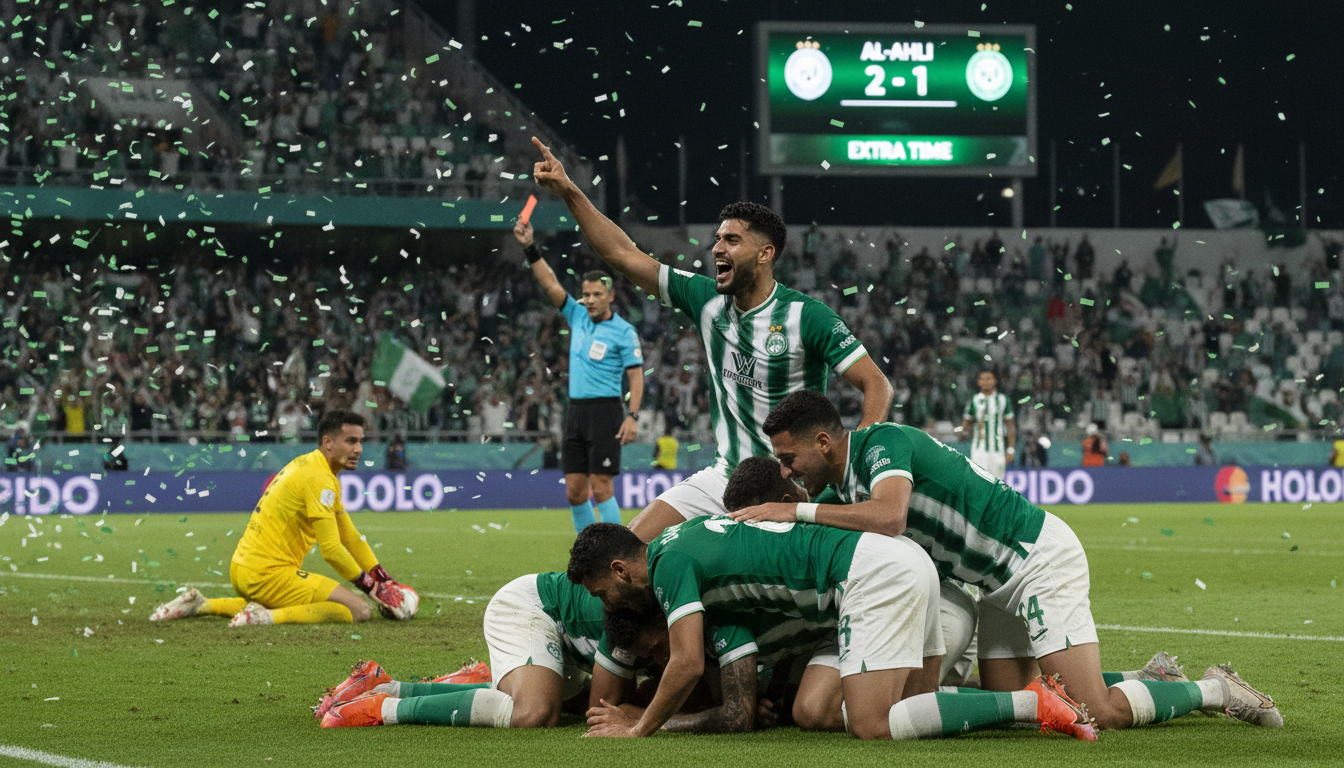
Al-Ahli successfully defended their AFC Champions League Elite crown with a hard fought 1-0 victory over Japan’s Machida Zelvia in Jeddah. The Saudi side prevailed after extra time when Firas Al Burikan scored the decisive goal to settle a final played before around 60,000 home supporters. The win secures back to back continental titles for the club owned by the Public Investment Fund and underscores Al-Ahli’s standing in Asian club football.
The final was tightly contested from the start with few clear chances during the opening 45 minutes. Al-Ahli created the best openings but were repeatedly denied by Machida goalkeeper Kosei Tani and a resilient defensive block late in the half. The match was marred by escalating tempers in the second half and required extra time to separate the teams.
Firas Al Burikan delivers in extra time
Firas Al Burikan was the match winner when he found space and finished in extra time to give Al-Ahli the slender margin they needed. The Saudi international’s goal arrived after a period of attritional midfield play and several near misses that had left both teams searching for a breakthrough. Al Burikan’s strike not only decided the final but also highlighted Al-Ahli’s depth of attacking quality in a match where open chances were scarce.
Al Burikan has emerged as one of Al-Ahli’s reliable scorers this season and his decisive moment in Jeddah will be remembered by the club’s supporters. His finish came after relentless pressure from the hosts who, despite being reduced to ten men, managed to control long spells of the match. The goal provided immediate relief and sent the crowd into celebration after a tense 120 minutes.
Red card shapes tense closing stages
The final’s dynamic shifted dramatically midway through the second half when Al-Ahli defender Zakaria Hawsawi was shown a straight red card for headbutting Machida’s Tete Yangi. The dismissal left Al-Ahli down to ten men for almost an hour of competitive play including the full period of extra time. Despite the numerical disadvantage, Al-Ahli reorganized defensively and relied on disciplined pressing to limit Machida’s opportunities.
Machida were unable to convert the extra man advantage into the decisive goal, with their best efforts repelled by a combination of goalkeeper saves and last ditch defending. The red card produced a fraught atmosphere on the pitch as both sides committed to physical challenges and tight marking. Refereeing decisions and player confrontations punctuated the final stages and tested the composure of both teams.
Key moments that decided the final
The first half offered few clear scoring opportunities but contained moments that hinted at how the game would unfold. Brazilian winger Galeno broke free of the Machida defence and was denied by a sprawling save from Kosei Tani, an intervention that kept the score level. Near the interval Merih Demiral saw a close range effort blocked on the line, another critical denial that prevented Al-Ahli from claiming an early advantage.
After the red card the contest opened up at times but remained tight in the final third as Machida searched for space and Al-Ahli focused on containment and counter attacks. Tactical fouls and frequent stoppages disrupted rhythm and reduced the number of sustained attacking sequences from either side. In extra time a lapse in Machida’s defensive marking allowed Al Burikan the chance he needed to clinch the title.
Tactics and reactions from Al-Ahli and Machida
Al-Ahli approached the match with a blend of possession management and quick wide transitions to test Machida’s defensive lines. Even after the sending off the team adjusted into a compact defensive shape and relied on timely forays forward to keep the opposition cautious. Riyad Mahrez, operating as a winger, played a calming role in possession and helped orchestrate the moments that allowed Al-Ahli to stay in the contest despite being numerically disadvantaged.
Machida Zelvia, making their first appearance in an AFC final, set out to press aggressively and disrupt Al-Ahli’s passing rhythm. The Japanese side showed resilience and tactical discipline, with goalkeeper Kosei Tani producing a number of important saves that kept Machida in the match. In post match remarks Machida’s coach acknowledged the fine margins that determined the final result and praised his players for their performance on a major stage.
Crowd atmosphere and wider club context
The match took place in front of an overwhelmingly pro Al-Ahli crowd with the stadium in Jeddah largely aligned behind the home side. The noisy support bolstered Al-Ahli as they weathered sustained Machida pressure after the red card and provided a boost in extra time. Roberto Firmino featured in the match and was involved in the physical exchanges that characterized the final, at one point tumbling under a challenge in a sequence captured by photographers.
Al-Ahli’s ownership by the Public Investment Fund and the club’s recent investment in talent and infrastructure have raised expectations domestically and across Asia. Defending the continental title will be viewed as a validation of the club’s long term project and its ability to attract high profile players and staff. For Machida Zelvia, the run to the final marks a landmark achievement and a platform from which the club can aim to build sustained continental competitiveness.
Implications for Asian club competition and next steps
Al-Ahli’s successful defence of the AFC Champions League Elite title sends a message about the evolving balance of power in Asian club football. The competition is increasingly competitive, with clubs from the Middle East and East Asia investing in squads capable of competing at the highest level. Al-Ahli will now turn to domestic commitments and the task of maintaining momentum after a dramatic finish to the continental campaign.
Machida Zelvia will return to Japan with experience gained in a major final and will seek to use this season as a springboard for future continental campaigns. Both clubs will reflect on marginal details such as set piece management and disciplinary control that proved decisive in Jeddah. For Al-Ahli the focus will shift to integrating the victory into a wider strategy that balances domestic obligations with the expectations that come with continental success.
The final in Jeddah provided a dramatic conclusion to the AFC Champions League Elite with Al-Ahli emerging as champions once again after a match decided by a single extra time strike.