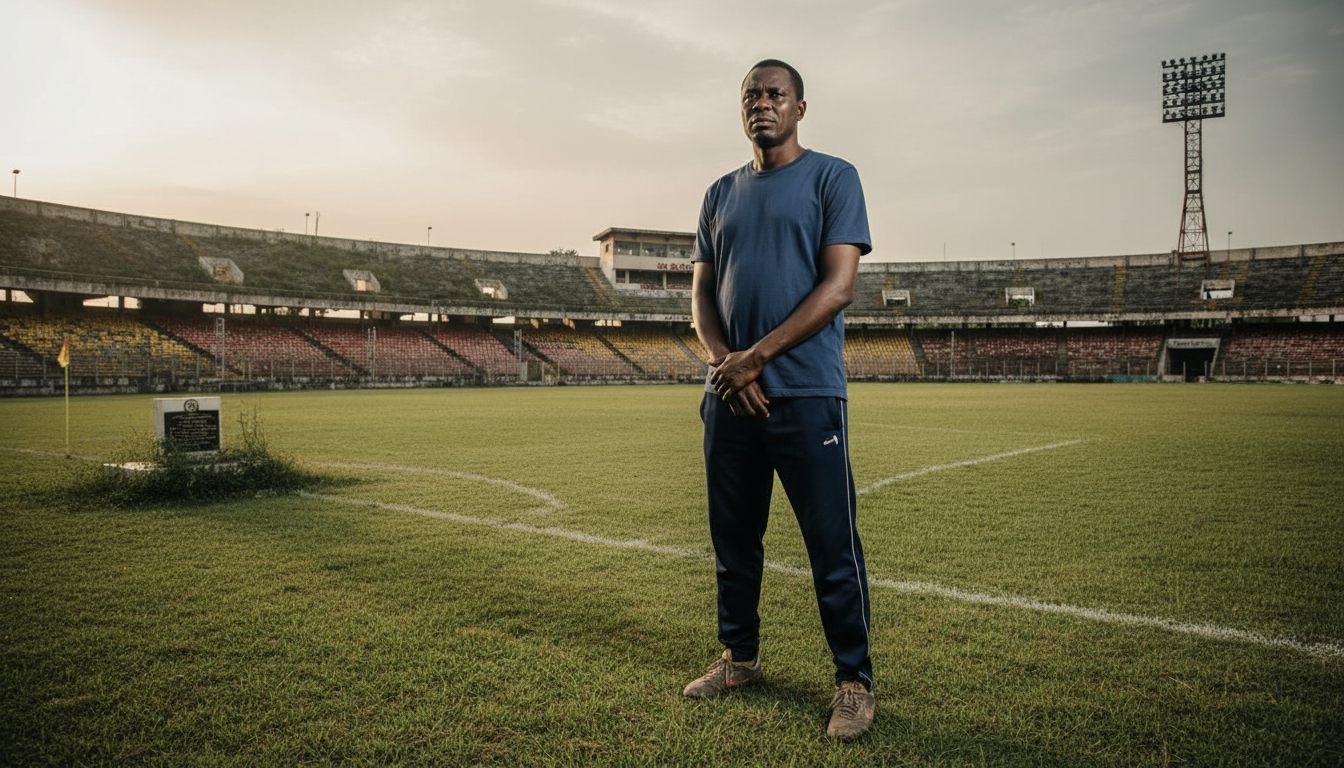
Accra Sports Stadium disaster: Son of victim describes life shaped by Ghana’s deadliest stadium tragedy
Emmanuel Clottey, who lost his father in the Accra Sports Stadium disaster, recounts how the May 9, 2001 tragedy has shaped his life and the ongoing call for safer stadiums.


A son’s memory and a life defined by a single night
Emmanuel Clottey was a year old when his father, Atu Quaye Clottey, went to watch a league match and never returned, a loss that has determined much of Emmanuel’s adult life. He says the knowledge of that night, and the fact that football took his father, has been a source of persistent restlessness and longing. Emmanuel grew up relying on odd jobs and friends to get by, while the absence of a parent he never knew remained a constant, quiet wound.
Emmanuel learned the truth about his father slowly and painfully, first through playground conversation rather than family disclosure when he was around ten. He remembers confronting his mother after hearing his father’s name mentioned at a local match and seeing a photograph that confirmed what he had been shielded from. The revelation prompted him to frame his ambitions around football as a way to honor a man he had not been able to know.
May 9, 2001 — what happened at the Accra Sports Stadium
On May 9, 2001, a league match between Accra Hearts of Oak and Kumasi Asante Kotoko descended into chaos after a late goal sent the crowd into upheaval. Police response included the use of tear gas in the stands, an action later identified by the Sam Okudzeto Commission of Inquiry as a principal cause of panic and stampede. Overcrowding, poor crowd control measures and a sealed exit turned the stadium into a lethal bottleneck, and by the end of the night 127 people had died.
The calamity stands as the deadliest stadium disaster in African football history and exposed severe failures in stadium management and emergency response. Eyewitness testimony and the commission’s findings pointed to a chain of decisions and conditions — from policing tactics to stadium infrastructure — that compounded the risk for supporters packed inside the venue. The scale of the fatalities brought national mourning and a long, fraught conversation about safety at sporting events.
Personal loss and the national reckoning
For families like Emmanuel’s, the disaster was both a personal tragedy and a public scandal that revealed structural weaknesses across Ghanaian football. Survivors and relatives have described the weeks and months after the disaster as a period of bewilderment, hospital overcrowding and fragmented information. The official inquiry led to recommendations aimed at improving crowd management, but many relatives have continued to press for fuller accountability and lasting reform.
The memory of May 9 remains visible in Accra, where a statue at the stadium entrance serves as a public reminder of the lives lost and the cost of complacency. Annual commemorations have become a focal point for survivors, families and officials to call for discipline among fans and better standards in stadium operations. Despite such rituals and reforms, veterans of the tragedy warn that the lessons must be continually reinforced to prevent recurrence.
From youth football to unrealized ambitions
After learning what had happened to his father, Emmanuel channeled his grief into football, aspiring to reach the professional level and honor his father’s passion for the game. He showed promise in youth leagues, representing Mighty Victory and attending trials with lower-division clubs, but the pathway to a stable professional career proved fragile. Financial constraints, lack of connections and a degree of bad luck eroded his prospects, a pattern familiar to many talented players in Ghana.
When opportunities on the pitch dwindled, Emmanuel briefly turned to boxing and sparring, receiving encouragement from established fighters who saw potential in him. That pursuit also faltered, and he later attempted to join the security services as a route to stability, applying repeatedly since 2019 without success. These detours underline the precariousness that can follow the children of victims, whose lives are often shaped by economic insecurity and limited support systems.
Survivor testimony and the lingering fear among fans
Sixty-year-old Raphael Okoo Parker survived the May 9 disaster and has kept a vivid recollection of the day, describing rain, packed stands and the sudden onset of tear gas that sent fans scrambling. Parker says he avoided the worst of the panic by keeping calm and not rushing toward exits, a decision he believes likely saved his life. He returned home to a shocked household and watched the immediate aftermath unfold on television as injured supporters were treated at military hospital facilities.
Parker’s experience remains a cautionary tale for contemporary supporters who still attend matches despite the memory of that night. He notes that hooliganism and volatile behavior at some match centers persist and urges fans to accept that football results will vary — win, draw or lose — rather than escalate into violence. His continued commitment to attending matches, despite personal scars among friends and family, reflects the complex bond many Ghanaians have with the game.
Commemoration, reform and the voice of officials
On the 25th anniversary of the tragedy, Ghana’s Minister of Sports and Recreation publicly urged supporters to reject violence and praised stakeholders who have preserved the annual remembrance. Officials stressed that commemorations play a key role in educating younger fans who were not alive in 2001 and in keeping the memory of those lost alive. The Ghana Football Association’s leadership said the anniversary underscored the need to strengthen discipline, safety and fair play across the sport.
Authorities and football administrators have pointed to progress in stadium safety and crowd management since the disaster, including infrastructure upgrades and revised security protocols. Yet family members and survivors continue to push for sustained implementation of reforms and for institutional accountability where failures persist. The anniversary events have been used not only to honor the dead but also to assess how much has changed and what gaps remain in protecting spectators.
Remembering the victims and seeking prevention measures have become entwined tasks, pursued through public ceremonies, education campaigns and occasional regulatory action. Advocates argue that genuine reform requires both technical improvements to venues and a cultural shift among fans and officials toward respecting safety procedures. For many, the goal is to ensure that the passion for football never again results in mass loss of life.
A community’s long shadow: social and economic repercussions
The aftermath of the stadium disaster extended beyond grief to tangible economic and social consequences for affected families, including single-parent households and children left without breadwinners. Emotional trauma, interrupted schooling and reduced household incomes have been recurring themes in the stories of survivors’ relatives. For individuals like Emmanuel, those pressures translated into a series of unstable jobs and persistent attempts to find a steady path toward self-sufficiency.
Local NGOs and community groups have sometimes provided limited assistance, while government and football bodies have faced criticism for inconsistent support to victims’ families. The intergenerational impact of the disaster — from psychological scars to diminished economic prospects — remains part of the broader national conversation about how to respond fairly to civic tragedies. Advocates emphasize that memorials and commemorations must be matched by programs addressing the long-term needs of survivors and dependents.
Public memory and the role of the stadium as a civic space
The Accra Sports Stadium now occupies a dual role as both a venue for national sporting life and a site of remembrance for a national tragedy. The statue at the entrance, commemorative ceremonies and media retrospectives all contribute to a public memory that aims to balance celebration of the sport with sober recollection of its costs. Officials and community leaders say that keeping the memory present is essential to preventing complacency around safety.
Yet memory alone is not sufficient, veterans of the disaster argue, urging continuous reassessment of emergency procedures, ticketing systems and policing tactics at stadiums nationwide. For many fans, attending matches remains a cherished communal activity, but it is increasingly framed by the knowledge that vigilance and respect for regulations are part of preserving life as well as the integrity of the game. The stadium’s physical and symbolic presence thus continues to shape how Ghanaians think about football and civic responsibility.
The long road to closure and prevention
For families such as Emmanuel Clottey’s, closure is a complicated project of personal healing and public reform that has progressed unevenly over more than two decades. Commemorations and official statements provide recognition, but the search for lasting economic stability and institutional accountability remains ongoing. Emmanuel’s story — a search for identity, opportunity and dignity shaped by a single, catastrophic night — reflects a broader need to ensure that public spaces for sport are governed by procedures that protect lives.
The memory of May 9, 2001, continues to inform debates on stadium management, policing and fan conduct in Ghana, and anniversaries serve as repeated calls for vigilance. As officials and supporters reflect on the past, survivors insist that the most meaningful tribute to those who died is a sustained commitment to safety and to the families who live with the consequences. The challenge for Ghanaian football is to honor that obligation so that passion for the game is never again paid for in lives lost.
Ghana’s struggle to reconcile a love for football with the imperative of spectator safety remains unresolved in many ways, but the stories of survivors and relatives persist as a moral and practical guide for reform. The Accra Sports Stadium disaster is no longer only a date in history; it is a living reminder that policy, preparation and public awareness must match the intensity of the country’s devotion to the game.