Bafana Bafana goalkeepers face late scramble as June 2 World Cup squad deadline looms
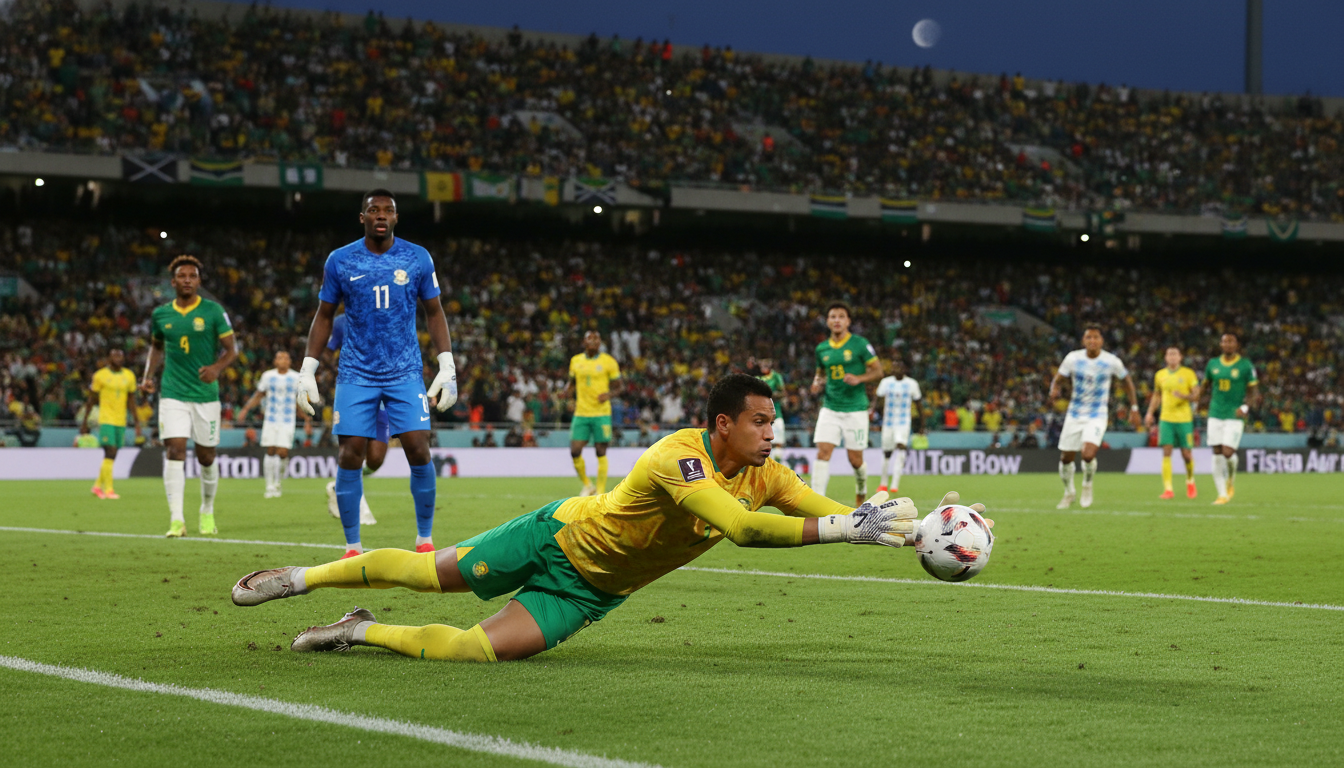
South Africa’s Bafana Bafana goalkeepers section remains unsettled ahead of the 2026 FIFA World Cup, with captain Ronwen Williams the only confirmed starter as teams must submit final lists by June 2. The uncertainty leaves a narrow window for contenders to press their case through training performances and final friendlies. Coach Hugo Broos has framed the tournament as an invaluable learning opportunity for a team returning to the World Cup for the first time since 2010.

Selection deadline and what it forces coaches to decide
The FIFA deadline of June 2 for final squad submissions concentrates decisions for all 48 participating nations into the coming weeks. For South Africa, that timeline compresses assessment periods, forcing technical staff to weigh recent form against experience when confirming the goalkeeping trio. With limited time for reversals, every training session, medical clearance and tactical evaluation carries outsized importance.
The compressed timetable also highlights the risk-reward trade-offs inherent in finalizing a World Cup roster. Coaches must balance the stability of established personnel with the potential upside of in-form challengers, while ensuring adequate cover for injury or suspension. Those choices will shape not only starting line-ups but also the dressing-room hierarchy and emergency contingencies.
Ronwen Williams’s role and the case for continuity
Captain Ronwen Williams stands as the clear anchor in South Africa’s goalkeeping plans, his selection all but assured barring unforeseen injury. His leadership on and off the pitch has been central to recent national-team strategies, and his presence gives Hugo Broos a known quantity in a tournament environment where composure is at a premium. Williams’s experience will be particularly valuable facing Group A opponents that include co-host Mexico, South Korea and Czechia.
Continuity with a proven captain can reassure a defensive unit and simplify communication under pressure. That said, continuity does not remove the need for tactical clarity about distribution, set-piece organization and how the goalkeeper will be used to initiate attacks. The final selections must align with Broos’s game plans and the specific challenges posed by South Africa’s group-stage opponents.
Contenders and the profiles selectors are weighing
Behind the captain, selectors are evaluating goalkeepers on a mix of technical, physical and psychological criteria rather than reputation alone. Coaches typically look for shot-stopping consistency, command of the penalty area, ability to play from the back and performance in high-pressure scenarios such as penalty situations. Form in domestic competitions and performance during recent national-team camps and friendlies are being weighed heavily.
Selection panels also consider versatility and how backup choices complement the starter. A second-choice keeper who excels at sweeping and distribution offers a different tactical option than one whose strengths lie in traditional shot-stopping and aerial dominance. Those nuanced differences can determine who earns the remaining spots in the match-day 18 and who travels as third-choice insurance.
Broos’s public stance and selection philosophy
Hugo Broos has repeatedly framed the World Cup as an opportunity for growth and learning, accepting the underdog label while emphasizing preparation and resilience. The coach’s public comments suggest he values experience and team cohesion, but he has left room for decisions based on current form. That blend of pragmatism and long-term thinking will be central to his final calls on goalkeepers and the wider squad.
Broos’s selection philosophy appears to prioritize players who can adapt to specific tactical demands and who will sustain performance under tournament pressure. His tenure since 2021 has been marked by attempts to rebuild confidence and competitiveness across the squad, and the goalkeeping picks will be judged on how well they support that broader project. Trust in key figures like Williams is evident, but flexibility in the bench structure could be decisive if form or fitness fluctuates.
Tactical consequences for Group A matchups
Goalkeeper choices carry direct tactical consequences for South Africa as it prepares for matches against Mexico, South Korea and Czechia in Group A. Opponents with quick transition play or aerial threat profiles require different risk assessments when it comes to goalkeeper positioning and distribution. A keeper comfortable with playing out from the back may enable a higher defensive line, while a more conservative profile could prompt a compact defensive shape.
Set pieces and crosses are another critical area where personnel choices matter, as small margins in aerial duels and timing can decide tight World Cup games. The coaching staff must consider not only individual attributes but also how the goalkeeper’s style integrates with the defensive unit’s strengths and vulnerabilities. Those tactical alignments may ultimately influence both match-day selection and in-game substitutions.
Health, preparation and the final stretch before submission
Medical fitness and late training form will play an outsized role as the June 2 deadline approaches, with even minor knocks capable of altering the pecking order. Technical teams must complete final fitness evaluations and contingency planning within days, ensuring that any last-minute changes comply with FIFA protocols. Clubs and national staff will need close coordination to prevent avoidable absences or setbacks before travel.
Preparation plans typically include scenario work for penalties, set-piece coordination and emergency replacements, all of which take on additional urgency in the closing days before the squad list is locked. For players on the fringe, strong performances in the final friendlies and training sessions can create momentum; for coaches, those same displays can provide objective evidence to justify a selection gamble or a conservative choice.
South Africa returns to the World Cup stage for the first time since hosting in 2010, and final choices in the goalkeeping department will influence not only match outcomes but also the broader trajectory of the national program. The June 2 deadline forces clarity, and with Ronwen Williams as the lone guaranteed starter, the coming days will decide who joins him on football’s biggest stage.
The selectorate now faces a narrow window to translate scouting reports, training observations and medical assessments into a coherent roster. When FIFA’s deadline passes, the composition of Bafana Bafana’s goalkeeping unit will be fixed, and those decisions will be scrutinized through the lens of performance, resilience and tactical fit across the group stage.