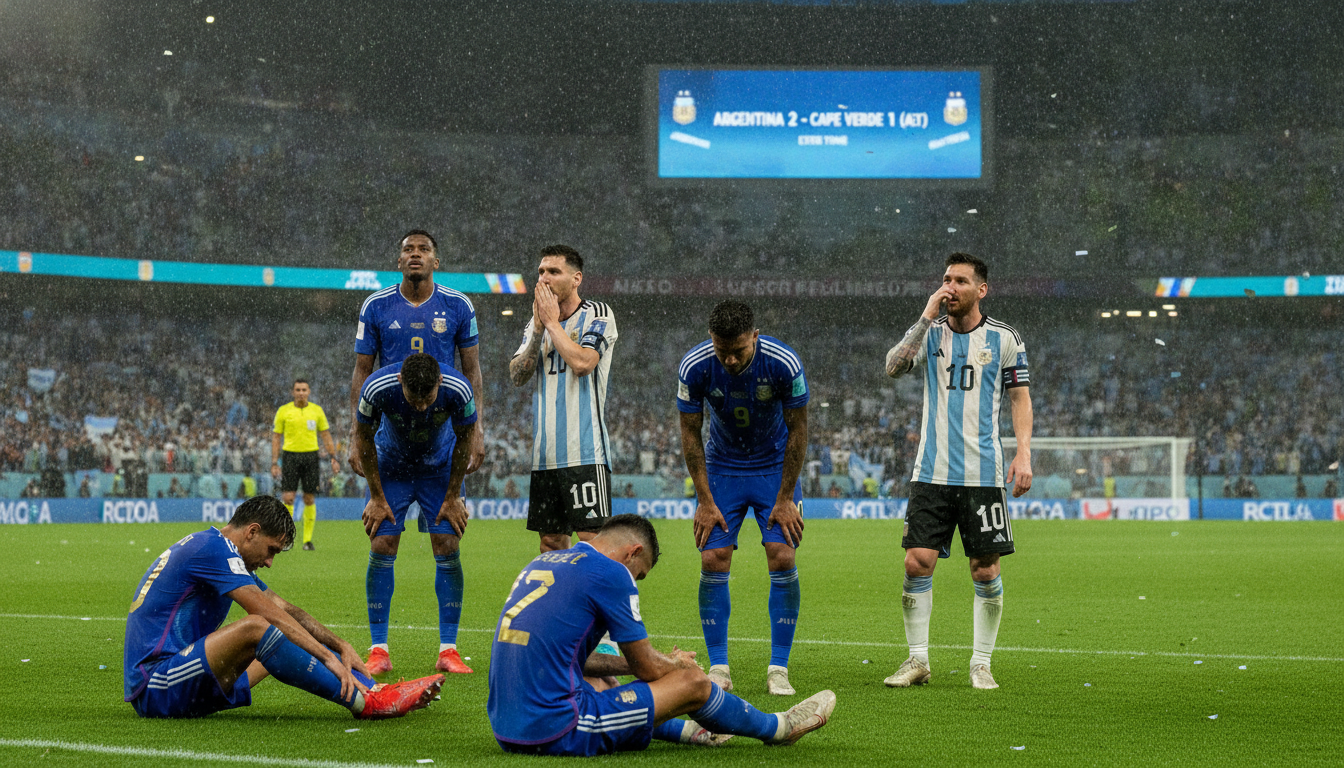
Cape Verde vs Argentina: Blue Sharks’ historic run ends 3-2 in extra time after own goal in Miami thriller
Cape Verde vs Argentina ended 3-2 after extra time in Miami as the debutants twice fought back and fell to a late own goal from Diney Borges following a Lionel Messi corner. The result ended Cape Verde’s remarkable World Cup campaign and sent Argentina into the round of 16.


Cape Verde pushed the defending champions to the very edge of elimination in a tense round-of-32 encounter that showcased disciplined defending, sharp counterattacks and moments of individual brilliance. Lionel Messi opened the scoring in the first half and later forced the decisive sequence, while Deroy Duarte and Sidny Lopes Cabral produced goals that repeatedly revived the Blue Sharks’ hopes. The match ultimately turned in the 111th minute when Borges diverted a corner into his own net, ending one of the tournament’s most inspiring debut stories.
Early pressure and Messi’s opener
Argentina started the match on the front foot, using patient possession and probing runs to unsettle the Cape Verde backline. Lisandro Martinez played a searching pass in the 29th minute that put Messi through, and the captain controlled and lifted the ball over Vozinha to give the holders the lead.
That goal was a familiar script for Messi, who once again produced a decisive moment on a big stage, reinforcing his impact on Argentina’s progression. Despite the early setback, Cape Verde remained compact and rarely allowed Argentina to generate the clear, sustained chances their possession statistics suggested.
Duarte restores parity and shifts momentum
Argentina’s control after half-time invited risk, and Cape Verde seized the initiative with a measured response that combined calm buildup and direct finishing. In the 59th minute, a well-worked move down the right created space in the box and Deroy Duarte finished low through Lisandro Martinez to equalise and silence large pockets of the Miami crowd.
The equaliser altered the tone of the game: Cape Verde grew in belief while Argentina faced the unfamiliar pressure of defending a narrow advantage. The Blue Sharks’ selection and shape allowed quick transitions, forcing the champions to chase the ball and adjust their defensive posture as the contest opened up.
Vozinha’s important saves and Cape Verde’s resilience
Vozinha was a consistent presence between the posts, producing several crucial saves that kept Cape Verde in the contest as the match slipped toward extra time. The goalkeeper’s reactions, positioning and command of his area denied Messi and other attackers at critical moments, preserving the tie for the island nation.
Beyond individual interventions, Cape Verde’s defensive organisation and collective discipline made them hard to break down for long spells. They defended with numbers behind the ball, closed passing lanes and relied on swift counters to exploit spaces when Argentina committed players forward.
Extra time swings and Cabral’s spectacular equaliser
Extra time began with Argentina striking early when Lisandro Martinez reacted quickest to a loose ball from a set piece, slotting home at the near post to make it 2-1 within minutes. The goal again tested Cape Verde’s resolve and left the underdogs facing the prospect of an exit.
Cape Verde answered with a moment of pure quality as Sidny Lopes Cabral curled a stunning strike from the edge of the area past Emiliano Martinez to level the tie once more. Cabral’s goal captured the spirit of the Blue Sharks’ campaign: technically assured, fearless and executed at a time when the stakes were highest.
The decisive own goal and emotional aftermath
With both sides appearing to target penalties, Argentina continued to press and earned a corner that sparked panic in the Cape Verde penalty area. In the 111th minute, a sequence from Lionel Messi’s delivery resulted in Diney Borges turning the ball into his own net, the final act in a dramatic, emotionally charged encounter.
The own goal ended Cape Verde’s tournament dream in a cruel fashion, but the players left the field to sustained applause and recognition for their performance. Argentina moved on to face Egypt in the round of 16, while Cape Verde’s players, staff and supporters could take pride in a campaign that exceeded expectations.
Tactical read and lessons for debutants
Cape Verde’s approach combined compact defensive lines with calculated forays forward, a blueprint that allowed them to neutralise many of Argentina’s attacking threats. Coach Bubista’s emphasis on shape, discipline and quick transitions maximised his squad’s strengths and exposed the occasional complacency in the champions’ game management.
For Argentina, the match highlighted the need for sharper control in moments when possession dominance does not translate into clinical finishing. The holders were forced to defend deeper at times and required late composure to find the set-piece that settled the tie, suggesting that even elite teams can be stretched by well-organised underdogs.
Player performances and standout moments
Deroy Duarte’s equaliser and Sidny Lopes Cabral’s spectacular strike were the defining offensive contributions for Cape Verde, each goal reflecting different aspects of the team’s attacking repertoire. Duarte’s finish rewarded a collective move that created space, while Cabral’s effort combined technical finesse with opportunism.
Vozinha’s goalkeeping was central to Cape Verde’s competitiveness, producing saves that prevented the match from being decided earlier. On Argentina’s side, Messi’s influence persisted throughout the tie, his set-piece delivery ultimately precipitating the decisive moment and his earlier strike setting the tone.
Cape Verde leave the World Cup having rewritten expectations for a debutant nation, combining tactical intelligence with moments of individual brilliance that captured global attention.
The Blue Sharks emerged unbeaten from a challenging group that included Spain and Uruguay, then carried that momentum into a knockout tie that pushed the defending champions to the limit. Their performance in Miami will be remembered as one of the tournament’s most compelling underdog stories, and it may influence how smaller nations approach major competitions in coming cycles.
Argentina advance to the next round but were tested in a way that will prompt tactical reflection ahead of their match with Egypt. For Lionel Messi and his teammates, the victory came at the cost of a hard-fought contest that required late concentration and a fortunate outcome.
Cape Verde’s campaign has broader significance for African football, demonstrating that disciplined structures and belief can yield results on the world stage. The Blue Sharks’ showing offers a blueprint for similar nations seeking to make an imprint at major tournaments through organisation, set-piece preparation and decisive counterattacking.
The match in Miami will live on in tournament memory not for a single act but for the cumulative drama of two teams that refused to concede before the final whistle. Cape Verde’s players depart with enhanced reputations, the coaching staff with tactical validation, and the nation with a sporting moment that will be celebrated for years.
Cape Verde’s World Cup story ended in heartbreak, but it also announced a new contender on the global stage and left a legacy of courage, tactical discipline and memorable goals that will inspire both fans and future squads.