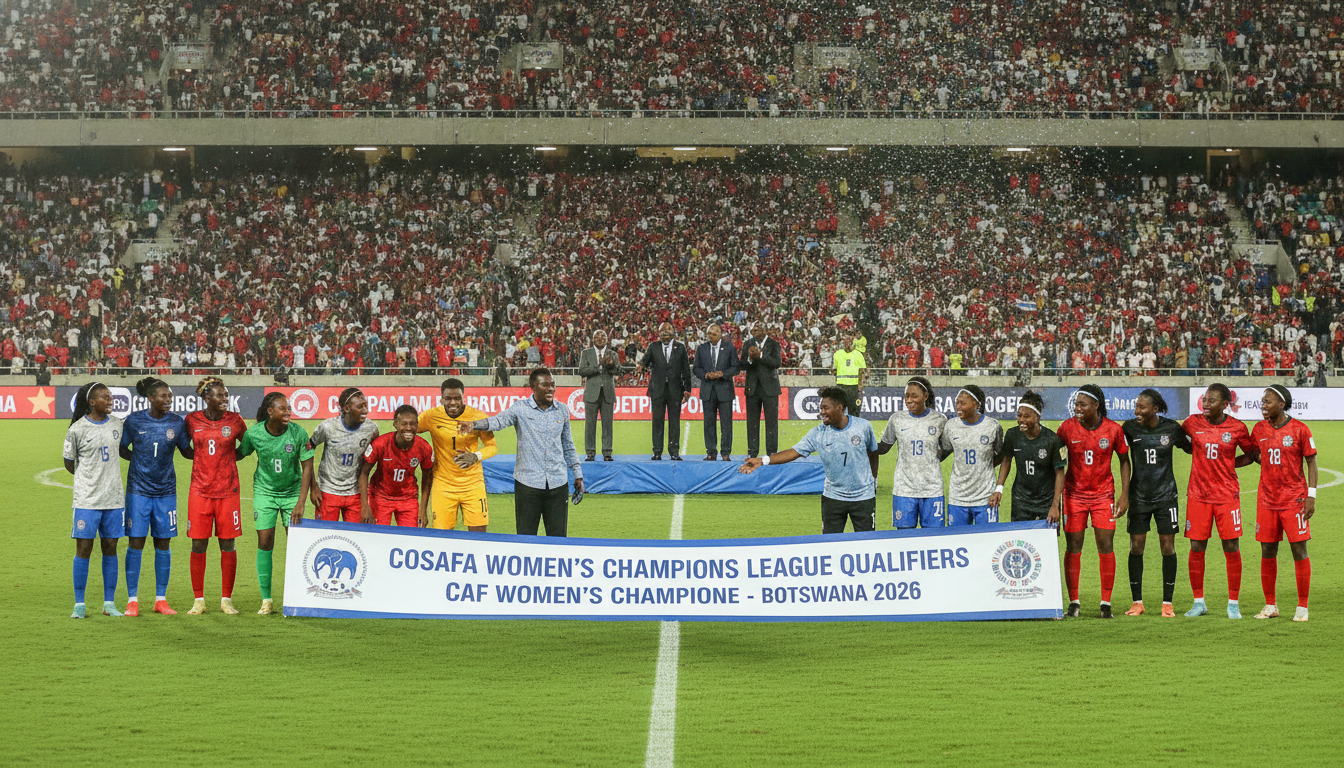
Botswana to host 2026 COSAFA Qualifier for CAF Women’s Champions League from August 6-15
Botswana to host the 2026 COSAFA Qualifier for the CAF Women’s Champions League from August 6-15; Gaborone United Ladies will defend regional title at home.


Botswana confirmed as host for 2026 COSAFA Qualifier
The Council of Southern Africa Football Associations (COSAFA) and the Botswana Football Association (BFA) have confirmed Botswana as the host nation for the 2026 COSAFA Qualifier for the CAF Women’s Champions League. The tournament is scheduled to run from August 6 to August 15 and will bring together the leading women’s clubs from across the Southern African region. This designation returns a major COSAFA event to Botswana for the first time since the 2011 COSAFA Under-20 Championship, underlining the significance of the assignment for local football. Organisers say the event will be a focal point for regional competition and club development ahead of the continental finals.
Gaborone United Ladies to defend regional crown on home soil
Reigning COSAFA champions Gaborone United Ladies FC will defend their title in front of home supporters in Botswana. The club secured the 2025 regional trophy after defeating Zambia’s ZESCO Ndola Girls on penalties following a 1-1 draw in the Johannesburg final. Hosting the Qualifier offers Gaborone United the rare advantage of contesting a regional title on familiar pitches, with the potential to translate home support into a competitive edge. The prospect of a title defence at home also carries symbolic weight for the country’s football ambitions.
BFA leadership and COSAFA partnership for tournament delivery
BFA President Tariq Babitseng, who was recently elected as COSAFA President, said the association is proud to partner with COSAFA in staging the 2026 Qualifier. Babitseng highlighted the progress of women’s football in Botswana and framed the hosting role as a chance to showcase national organisational capacity. He emphasized the potential impact on participation and visibility for girls and women across Botswana, while promising a tournament that reflects local hospitality and professionalism. Both COSAFA and the BFA have committed to close collaboration with stakeholders to ensure the event runs smoothly.
Record participation and the evolving competitive landscape
The COSAFA Qualifier has expanded rapidly since the launch of the CAF Women’s Champions League in 2021, with the 2025 edition featuring a record 10 teams. That growth has broadened the competitive field, with four different clubs having won the regional prize since inception: Mamelodi Sundowns Ladies, Green Buffaloes, the University of the Western Cape, and most recently Gaborone United. Sundowns not only claimed the inaugural COSAFA Qualifier in 2021 but also went on to win the continental title that year, demonstrating the pathway’s importance. The increasing depth of competition underscores the rising standards in Southern African women’s club football.
Impact on domestic leagues and player development
Regional qualification tournaments like the COSAFA Qualifier play a measurable role in strengthening domestic women’s leagues by creating higher-stakes competition and incentivising club investment. Clubs gain exposure, coaching staff refine tactical systems, and players face opponents with diverse styles, improving technical and mental readiness for continental play. For smaller domestic programs, the event provides an aspirational benchmark and concrete targets for youth development and recruitment. Organisers and national associations view the Qualifier as a catalyst for sustainable growth in women’s football infrastructures.
Pathway to the CAF Women’s Champions League finals
The winner of the 2026 COSAFA Qualifier will earn the right to represent the Southern African region at the CAF Women’s Champions League finals later in the year. That single continental berth raises the stakes, concentrating regional ambition into a short, high-intensity competition. Past COSAFA winners have used the qualifier as a springboard to greater exposure on the African stage, with club scouting and sponsorship opportunities often following strong regional performances. For clubs such as Gaborone United, success in August would provide both prestige and a platform to test themselves against Africa’s elite.
Operational timeline and information to follow
COSAFA and the BFA have indicated that further details on participating teams, match venues, fixtures, and tournament logistics will be announced in due course. The organisers will need to finalise accreditation processes, match officiating appointments, medical protocols and broadcast arrangements ahead of the August start date. Local organising committees typically work with regional federations to coordinate travel, accommodation and training facilities for visiting teams. Fans and media are advised to await official releases from COSAFA and the BFA for confirmed schedules and ticketing information.
Significance for Botswana football and regional profile
Hosting the 2026 COSAFA Qualifier offers a platform for Botswana to elevate its footballing profile regionally and internationally. The event represents an opportunity to demonstrate operational capacity, stimulate local interest in women’s sport and attract investment into facilities and grassroots programmes. A successful tournament can also leave a legacy in terms of improved stadia, referee development and volunteer experience that benefits future events. For the players and young aspirants, seeing top-level regional club football at home has potential to inspire participation and ambition.
Commercial and broadcast considerations for the Qualifier
As the tournament grows in prestige, commercial partnerships and broadcast arrangements become increasingly valuable to organisers and participating clubs. Wider media coverage brings sponsors and increases the visibility of players, potentially creating new revenue streams for clubs and federations. COSAFA and the BFA will likely prioritise broadcast and digital access to maximise reach across the region, while negotiating commercial terms to support tournament costs. Enhancing the commercial model will be essential to ensure the Qualifier’s financial sustainability and to fund development initiatives tied to the event.
Coaching, refereeing and technical programmes tied to the event
Major regional tournaments also typically incorporate coaching workshops, refereeing clinics and technical seminars designed to upscale standards across the member associations. These ancillary programmes help build capacity by exposing coaches and match officials to contemporary training methods and interpretations of the laws of the game. Investing in technical development around the Qualifier aligns with COSAFA’s broader objectives to raise the standard of competition and professionalise the women’s game in Southern Africa. The BFA has indicated its intention to leverage the event for broader development outcomes.
Expectations for participating teams and scouting impact
Clubs entering the 2026 COSAFA Qualifier will arrive with varying tactical approaches and competitive histories, creating a dynamic tournament environment. Scouts and talent evaluators increasingly monitor regional qualifiers for emerging players who can progress to higher levels, including national teams and professional leagues. A strong showing in August could accelerate player careers and catalyse transfer opportunities within the African football ecosystem and beyond. For coaches, the condensed schedule presents a test of squad depth, rotation strategies and match management under pressure.
Community engagement and legacy planning
Beyond competition, the organisers are likely to emphasise community engagement activities, school outreach and fan programmes to maximise the tournament’s social impact. Hosting matches in accessible venues and integrating community events can boost attendance and ensure the Qualifier resonates with a broad audience. Legacy planning—aimed at creating lasting benefits such as pitch improvements, coaching resources and youth programmes—remains a key objective for federations when staging tournaments. COSAFA and the BFA have publicly stated their commitment to using the event to advance visibility and opportunities for women’s football.
The 2026 COSAFA Qualifier in Botswana represents a convergence of competitive ambition, development objectives and national pride, setting the stage for a pivotal chapter in Southern African women’s club football. With Gaborone United Ladies defending their crown and a regional field keen to claim the sole CAF Women’s Champions League slot, August’s tournament promises high stakes and intense competition. As COSAFA and the BFA finalise organisational details, stakeholders across the region will be watching closely for the teams, venues and fixtures that will define the pathway to continental play.