Assan Ouédraogo Called into Germany Squad as Replacement for Injured Lennart Karl
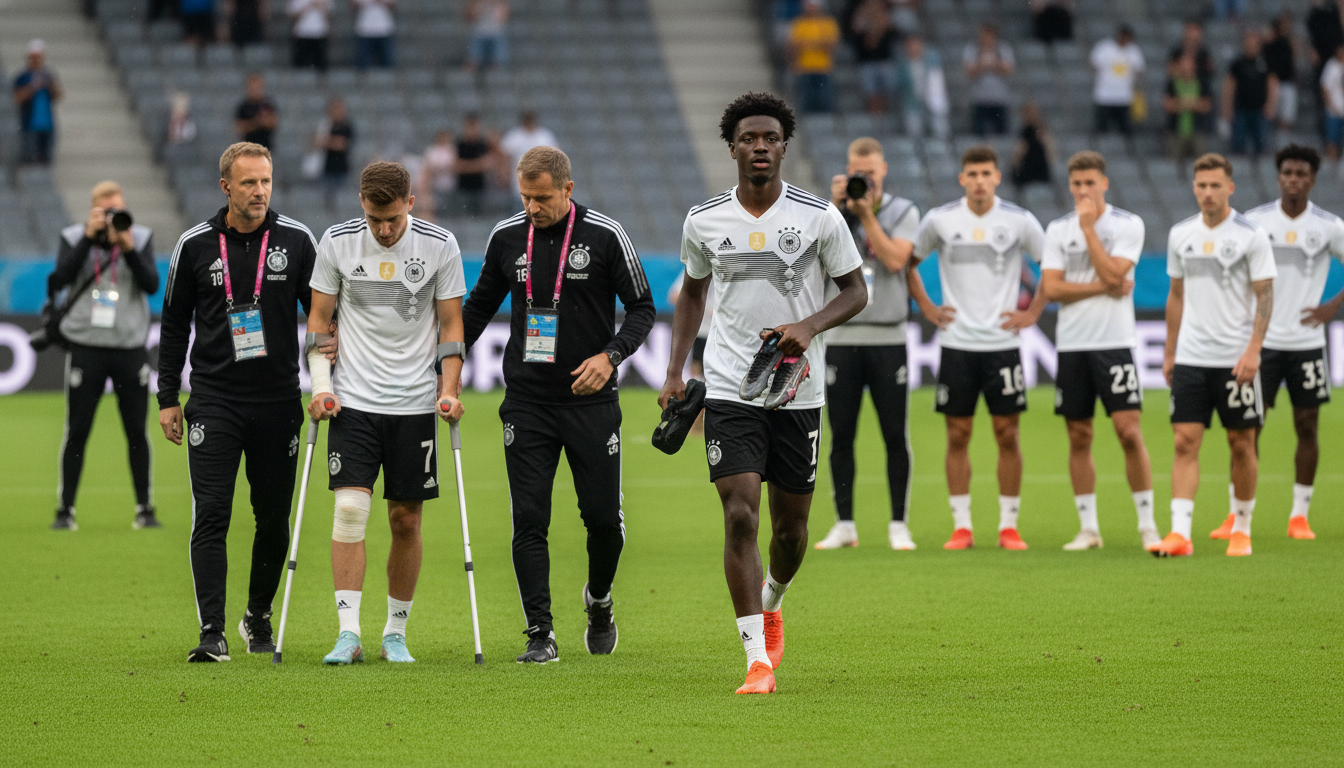
Germany boss Julian Nagelsmann has called up Assan Ouédraogo to replace the injured Lennart Karl, adding the 20-year-old RB Leipzig midfielder to the squad ahead of the final World Cup friendly. Ouédraogo, who scored on his senior debut in November, returns to the national fold after a knee problem curtailed his season. The selection reflects Nagelsmann’s preference for incoming youth with prior exposure to the senior setup.

Nagelsmann explains Ouédraogo call-up
Julian Nagelsmann framed the decision as a like-for-like response to Lennart Karl’s late injury, emphasizing continuity in profile and potential. He highlighted Ouédraogo’s strong start with the national team and stressed that the midfielder’s temperament and technical qualities fit the group’s current needs. Nagelsmann also expressed confidence that Ouédraogo could approach the tournament environment with “confidence, courage and freedom,” signaling trust in the player’s readiness despite limited minutes this season.
The coach’s remarks were shared by the German Football Association and underline a pragmatic selection philosophy ahead of the World Cup. Nagelsmann has balanced experienced heads with emerging talents throughout his tenure, and this call-up follows the same pattern of promoting young players who have already made an impression. The immediate priority for the staff is to ensure the replacement integrates quickly both on and off the pitch.
Ouédraogo’s international debut and injury comeback
Assan Ouédraogo made a memorable entrance to senior international football when he scored off the bench in Germany’s 6-0 victory over Slovakia in November. That debut goal helped establish him as a promising option in central midfield and demonstrated his capacity to contribute in the final third. However, a knee injury sustained later in the season kept him sidelined for a significant period and denied him further opportunities to build momentum with both club and country.
The injury absence limited Ouédraogo’s minutes during the second half of the domestic campaign, leaving questions about match sharpness heading into the national team camp. Still, his earlier showing for Germany and ongoing training at RB Leipzig provided the coaching staff with a basis to assess his technical and tactical suitability. Medical and performance staff will now monitor his recovery closely during the final preparations ahead of the tournament.
Tactical fit in Germany’s midfield structure
Ouédraogo brings a blend of ball-carrying ability and positional versatility that suits several of Germany’s midfield templates. He can operate in deeper linking roles or step into more advanced positions when the game demands forward impetus, giving Nagelsmann tactical flexibility. That adaptability is particularly valuable in tournament settings where injuries or suspensions can force quick tactical adjustments.
Nagelsmann’s system often values midfielders who combine composure on the ball with the willingness to progress play vertically, and Ouédraogo’s style aligns with those demands. His familiarity with high-intensity training at RB Leipzig — a club known for its pressing and transitional focus — should help him adapt to Germany’s deliberate but aggressive approach. The coaching staff will assess exact deployment options during the remaining warm-up fixtures.
Consequences of Lennart Karl’s World Cup exit
Lennart Karl’s injury and subsequent withdrawal represent a setback for Germany’s squad depth, particularly given the late timing ahead of the tournament. Karl had been part of the plans and his absence forces Nagelsmann to re-evaluate balance across the middle third. Replacements in a tournament squad are always about more than like-for-like positions; they influence training dynamics, matchday selection and contingency planning.
The medical team’s update on Karl confirmed he will miss the World Cup, prompting the quick call to bring in Ouédraogo as cover. That decision reduces the time available for Berlin and Leipzig staff to coordinate fitness and tactical briefings, and it places pressure on the newcomer to assimilate rapidly. For the wider squad, the change is a reminder of the fine margins of tournament preparation and the necessity for squad players to be ready at short notice.
Final warm-up against the United States shapes selection view
Germany’s last friendly against the United States offers the immediate opportunity to evaluate Ouédraogo under match conditions and to test different midfield combinations. Nagelsmann has described the fixture as the final rehearsal before final tournament deployment, making minutes in that game particularly valuable for any late addition. The staff will use the match to gauge Ouédraogo’s physical readiness and his fit alongside established starters.
For Ouédraogo, the friendly is a chance to show coaches that he can translate training intensity into competitive influence over 60 to 90 minutes. Even if he does not start, impactful substitute minutes would strengthen his case for staying with the squad and contributing if called upon during the World Cup. The encounter with the United States also gives Nagelsmann a benchmark to compare Ouédraogo directly with other midfield options in a live setting.
Implications for RB Leipzig and the player’s development
The recall is a vote of confidence in Ouédraogo from both the national setup and his club environment, and it carries implications for his long-term trajectory. Being part of a World Cup camp, even as an injury replacement, exposes a young player to high-performance standards and international scrutiny that cannot be replicated at club level alone. That learning experience could accelerate his development, provided he manages workload and recovers fully from his knee issue.
RB Leipzig will monitor his involvement carefully, balancing club commitments with national duties and prioritizing his long-term fitness. The club’s coaching staff have a stake in how much playing time Ouédraogo receives in the coming days, given the value of controlled minutes after a sustained absence. For the player, the call-up is both a reward for earlier progress and a responsibility to consolidate that progress under intensified pressure.
The selection also signals to other young prospects that the pathway to the senior national team remains open for those who make an early impact and demonstrate resilience. Germany’s midfield pipeline has been refreshed in recent seasons, and opportunities such as this underline the federation’s willingness to trust youth when circumstances demand.
Germany’s coaching and medical teams will now finalize their assessments over the next 48 hours, with training sessions and the warm-up match taking on heightened significance. Players who can show immediate readiness will strengthen their standing, while the squad must adapt to the late personnel change without disrupting broader tactical preparation. The coming friendly versus the United States will offer the clearest snapshot of how Nagelsmann plans to deploy his midfield resources in the tournament ahead.