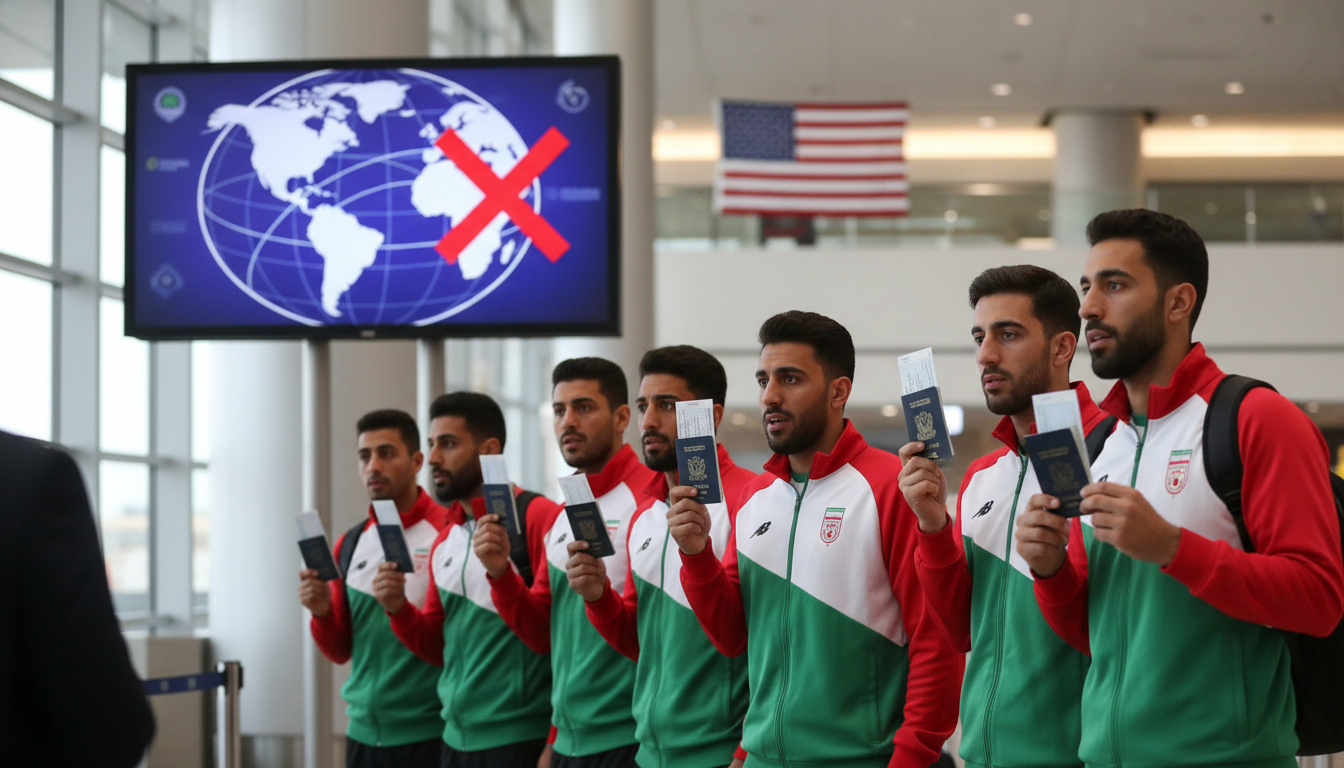
Iranian World Cup visas row: Tehran accuses US of discriminatory treatment after staff denials
Iran accuses the United States of discriminatory treatment after members of its World Cup delegation were denied visas, escalating tensions around the tournament. The dispute over Iranian World Cup visas centers on denials affecting managers, security and federation officials while players were reportedly cleared to travel. Tehran has publicly criticised the visa decisions and called for explanations as the team prepares for competition abroad.


Iranian Embassy Denounces Visa Decisions
The Iranian embassy in Turkey said a large portion of the managerial and executive staff, technical advisers and other essential personnel were refused entry, framing the refusals as deliberate and discriminatory. The embassy questioned why official statements had focused on players while omitting the wider delegation it said is integral to any national football team.
Iran’s complaint noted that visas were reportedly granted to the squad’s players, a contrast the embassy called striking given the number of non-playing staff listed as denied. The post, published on the social media platform X, demanded clarity and protested what it described as an escalation of unfair treatment.
Officials and Roles Reportedly Affected
Reports from Iranian outlets identified several categories of delegation members who did not receive visas, including the team manager, representatives from the Foreign Ministry and security officers assigned to accompany the squad. Media coverage also listed the federation’s head and the team’s press officer among those who submitted passports but had not been issued visas according to the Iranian accounts.
Those denied entry are typically responsible for logistics, tactical support, security arrangements and media coordination, functions that federations argue are vital to a national team’s performance and welfare at a major tournament. Federation officials say the absence of these staff could complicate daily operations, player safety protocols and accredited media access.
US Embassy and Envoy Statements
United States officials in Ankara were publicly praised by a U.S. envoy for processing visas for Iran’s national team players, a statement that preceded Tehran’s complaint about the wider delegation. The envoy’s comment acknowledged consular work on player paperwork, but did not address the status of managerial or executive applicants, according to the U.S. statement that circulated via official channels.
U.S. mission spokespeople have not issued detailed public responses listing the reasons for any individual visa denials, citing privacy and security protocols that commonly govern consular decisions. Visa adjudications can be influenced by a range of legal and security considerations, but Washington’s public messaging to date has emphasized that player visas were being handled through the embassy in Ankara.
Reactions from Iran’s Football Authorities
Iran’s football federation moved quickly to register delegation members and submit passports for visas, with the federation president reported to have been among those who presented documentation. Federation officials have publicly expressed frustration and warned that the partial issuance of visas undermines the team’s preparation and the delegation’s ability to operate fully at the tournament.
Sports media outlets inside Iran amplified the federation’s statements and reported that team analysts and executive members remained in limbo, awaiting decisions. Officials reiterated that the functional gap created by absent staff could affect match-day analysis, post-match media duties and essential liaison with tournament organizers.
Potential Impact on Team Operations and Security
Missing members of a World Cup delegation can complicate routine but critical elements of tournament participation, including tactical briefings, opposition scouting and secure movement between training sites and stadiums. The absence of security personnel also raises operational concerns for how the team will travel and coordinate safe accommodation and access to training venues.
Press officers and communications staff denied visas may impede the Iranian federation’s capacity to manage media relations, handle accreditation issues and protect players from misinformation or hostile environments. Officials say these roles are not ceremonial; they are practical components of modern tournament logistics and player welfare.
Legal, Sporting and Diplomatic Implications
Under international football governance, hosts and participating nations typically coordinate to ensure delegation members receive necessary entry documents and accreditations, with federations expected to submit lists well in advance. When disputes arise, federations can seek clarification from tournament organizers or bring matters to FIFA for mediation, especially if the issue threatens the integrity of competition or the safety of participants.
The Iranian government framed the denials as part of a broader pattern of discriminatory treatment, elevating what might otherwise be a consular disagreement into a bilateral diplomatic complaint. That framing increases the likelihood the issue will be addressed at higher diplomatic levels, potentially involving embassy channels and foreign ministry exchanges in addition to sporting authorities.
Next Steps and Calls for Clarification
Iranian officials have called on U.S. authorities to explain the basis for the denials and to reconsider decisions seen as punitive or arbitrary, while insisting the team’s preparations should not be disrupted. Federation representatives say they will continue to press for expedited visa approvals for the missing delegation members and are monitoring the situation closely ahead of scheduled fixtures.
Tournament organizers, if engaged, may be asked to intervene to ensure compliance with international sporting norms and to facilitate accreditation and entry for necessary staff. Observers note that swift resolution is in the interest of both sporting integrity and diplomatic de-escalation.
The dispute over Iranian World Cup visas underscores how international sport intersects with diplomacy and security policy, creating pressures that extend beyond the pitch. With time sensitive ahead of the team’s matches, both sides face practical and reputational incentives to resolve the matter.