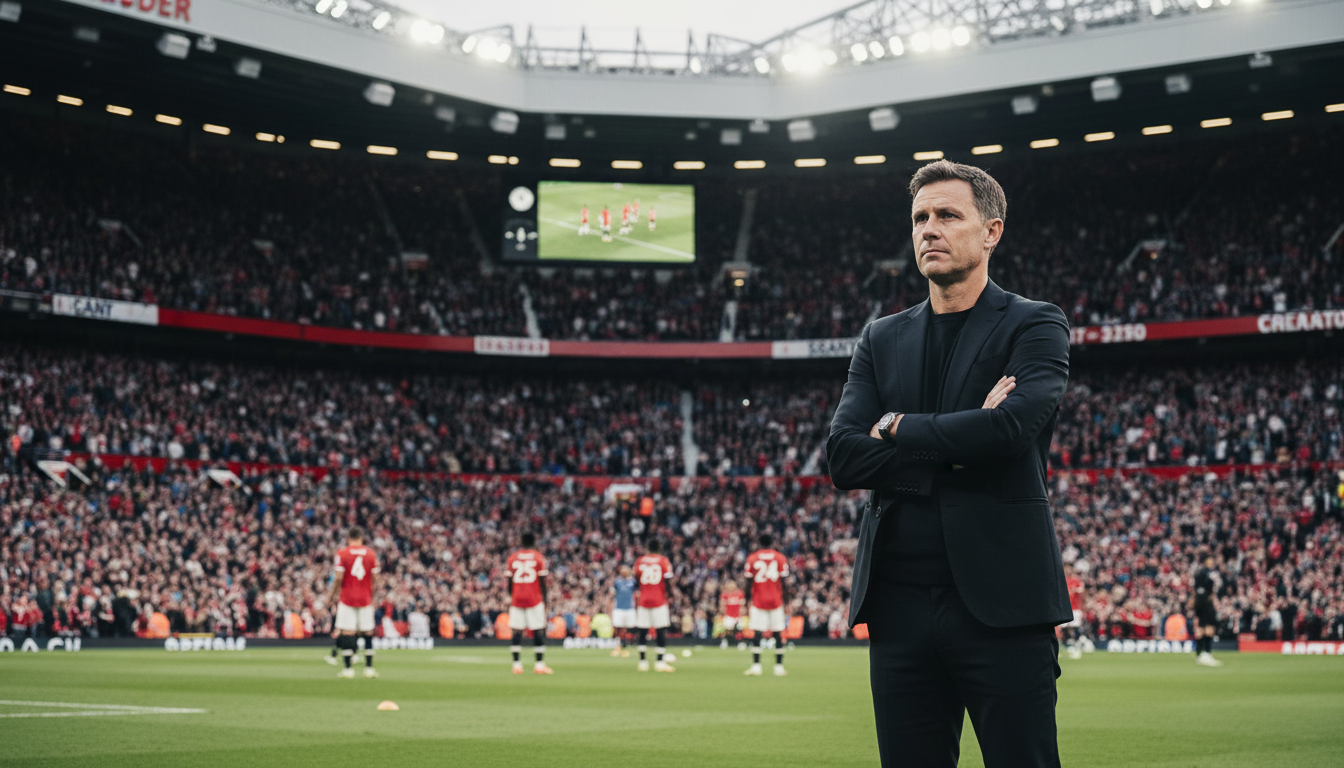
Manchester United vs Liverpool remains a “standout” fixture, says Michael Carrick as United chase Champions League spot
Michael Carrick calls Manchester United vs Liverpool a ‘standout’ clash as United chase Champions League qualification; a win this weekend would clinch a place.


Manchester United v Liverpool is once again centre stage as Michael Carrick described the fixture as a “standout” game ahead of the clash on Sunday, May 3, 2026. Carrick, who has overseen a clear turnaround since taking charge in January, underlined the fixture’s history and emotion while United sit third in the Premier League with Champions League qualification within touching distance. The first paragraph sets the tone: this match represents more than three points for both clubs, and Carrick’s remarks reflect the weight of the rivalry as United prepare for a high-stakes weekend.
Carrick labels the fixture ‘one of my favourite games’
Carrick told reporters that Manchester United v Liverpool ranks “right up there” among the biggest fixtures in English football, citing the history and emotions those matches generate. He noted that it is not only the quality on the pitch but the entertainment and emotion surrounding the two clubs that make the fixture special. Carrick’s views draw on his 12-year playing career at Old Trafford and reflect a manager who understands the cultural significance of the rivalry to players and supporters alike.
Carrick added that, for him, the past produces both “ups and downs” that have defined these encounters across generations. He described the match as containing “excitement and entertainment” alongside the inevitable emotional intensity that comes with contests between England’s most successful clubs. Those comments underline why, regardless of league positions, the fixture draws attention beyond routine match coverage.
Champions League stakes sharpen the weekend’s spotlight
With United occupying third place heading into the weekend and holding a three-point advantage over Liverpool, the match carries immediate table implications. A victory for Manchester United would mathematically secure a place in next season’s UEFA Champions League, transforming what is normally a rivalry narrative into a direct qualification decider. Liverpool, meanwhile, cannot afford to drop points if they are to preserve hopes of overturning the deficit and reclaiming a top-four finish.
Carrick acknowledged the tightness of the table but said the team’s preparation had not been preoccupied with league permutations. He described the contest as a “one-off game” in approach, implying that the focus remains on performance and execution rather than numerical scenarios. That stance signals a desire to treat the fixture with the intensity it merits while allowing players to concentrate on the immediate tasks rather than the arithmetic.
Statistical turnaround since Carrick’s appointment
Since Carrick’s first match in charge in January, Manchester United have accumulated more points than any other Premier League side, taking 29 points in that span. The interim manager has recorded nine wins from 13 matches, alongside two draws and two defeats, numbers that outpace the results under Ruben Amorim earlier in the season. Amorim’s record in 20 games this term stood at eight wins, seven draws and five defeats, a tally Carrick has already eclipsed in far fewer outings.
Those figures have been central to the narrative of a mid-season revival, reflecting improved consistency and a sharper edge in big moments. Carrick’s record also offers an immediate barometer for the squad’s response to managerial change and underscores the progress United have made in recent months. The statistical lift has translated into optimism within the dressing room and greater belief that the club can finish the campaign among Europe’s elite.
Old Trafford form provides a solid platform
Home form has played a significant part in United’s resurgence, with the club registering the third-most home points in the Premier League this season at 36. That represents a marked improvement on last year’s campaign, when United were 14th in the home table with 24 points. The Red Devils have won six of their last seven matches at Old Trafford, losing only once in that spell, a defeat to Leeds United.
The difference in home performance highlights a renewed resilience at Old Trafford and a capacity to convert home advantage into consistent results. Carrick’s side have found ways to close out games and secure three points from the stadium that has often felt volatile in recent seasons. Those home results will be central to United’s hopes of preserving a top-three finish and entering the summer on a positive note.
Historical context: two clubs at the summit of English honours
Manchester United and Liverpool are tied as England’s most successful top-flight clubs, each with 20 league titles, and that shared pedigree intensifies their rivalry. Matches between the two sides have produced defining moments across decades, from title runs to cup finals, and carry a cultural resonance that extends beyond current standings. Carrick invoked that history when describing the fixture’s special nature, pointing to the long record of “ups and downs” that shape perceptions of the game.
That lineage also sets a high standard for players who step into the fixture, where personal legacies are often shaped by performance in high-profile fixtures. For the current Manchester United squad, the encounter is an opportunity to add a positive chapter to the club’s recent history and to measure themselves against one of their principal rivals on a consequential weekend.
Tactical focus and Carrick’s match preparation
Carrick stressed that while the surrounding context is significant, the team’s preparation has emphasized match-specific details rather than league arithmetic. He framed the clash as a “one-off game,” suggesting tactical plans and player roles will be tailored to the opposition rather than influenced by long-term scenarios. That approach implies a focus on immediate strengths, defensive organisation and exploiting transitional moments that have defined United’s recent wins.
The manager’s emphasis on treating the fixture in isolation can also be read as an attempt to reduce external pressure on players and prompt them to concentrate on familiar principles. That mindset seeks to marry the emotional weight of the encounter with a disciplined, match-by-match footballing blueprint that has delivered results since January. How Carrick balances risk and caution against Liverpool’s threat will be one of the weekend’s key tactical narratives.
Player morale and momentum heading into the derby
The run of positive results under Carrick has helped stoke belief within the squad, translating into confidence that United can deliver when it matters most. Players have responded to a clearer collective identity and more consistent selection, and that cohesion may prove decisive in a fixture where small margins determine outcomes. Carrick’s ability to maintain a calm, focused environment has been repeatedly cited as a factor in the team’s recent upswing.
Momentum is not only about points but also about the tone and temperament displayed by the team in crunch moments, and United’s recent home performances have shown an ability to withstand pressure. Whether that resilience will be sufficient against a Liverpool side determined to regain ground remains a central question for neutral observers and supporters alike. The psychological edge in a fixture of this nature often tilts towards the side that can combine belief with composure.
Wider implications for both clubs beyond May
Beyond the immediate prize of Champions League qualification, the outcome will have ramifications for recruitment, financial planning and the shape of each club’s summer agenda. Securing a top-four finish would bring the financial and reputational benefits associated with Europe’s premier competition, while failure to qualify would rebalance objectives and potentially influence transfer strategies. For Manchester United, a win would consolidate a season of recovery and offer a platform for summer reinforcement.
For Liverpool, overturning the deficit would preserve their European ambitions and affirm their capacity to recover in a tight league run-in. The result will therefore influence not only the mood at each club as the campaign concludes but also the strategic conversations that shape the coming months. That is why both boards and managers will watch this match as more than a derby — it is a hinge point for immediate and mid-term planning.
The fixture on Sunday presents both clubs with a clear set of objectives and a highly visible stage on which to pursue them.
Carrick’s remarks capture the historic gravity of Manchester United v Liverpool while foregrounding the practical aim: secure a result and build on the progress shown since January. The match will test United’s home form, tactical discipline and the resilience that has driven their recent climb, with a Champions League place in clear view should they prevail.