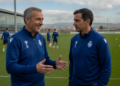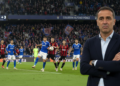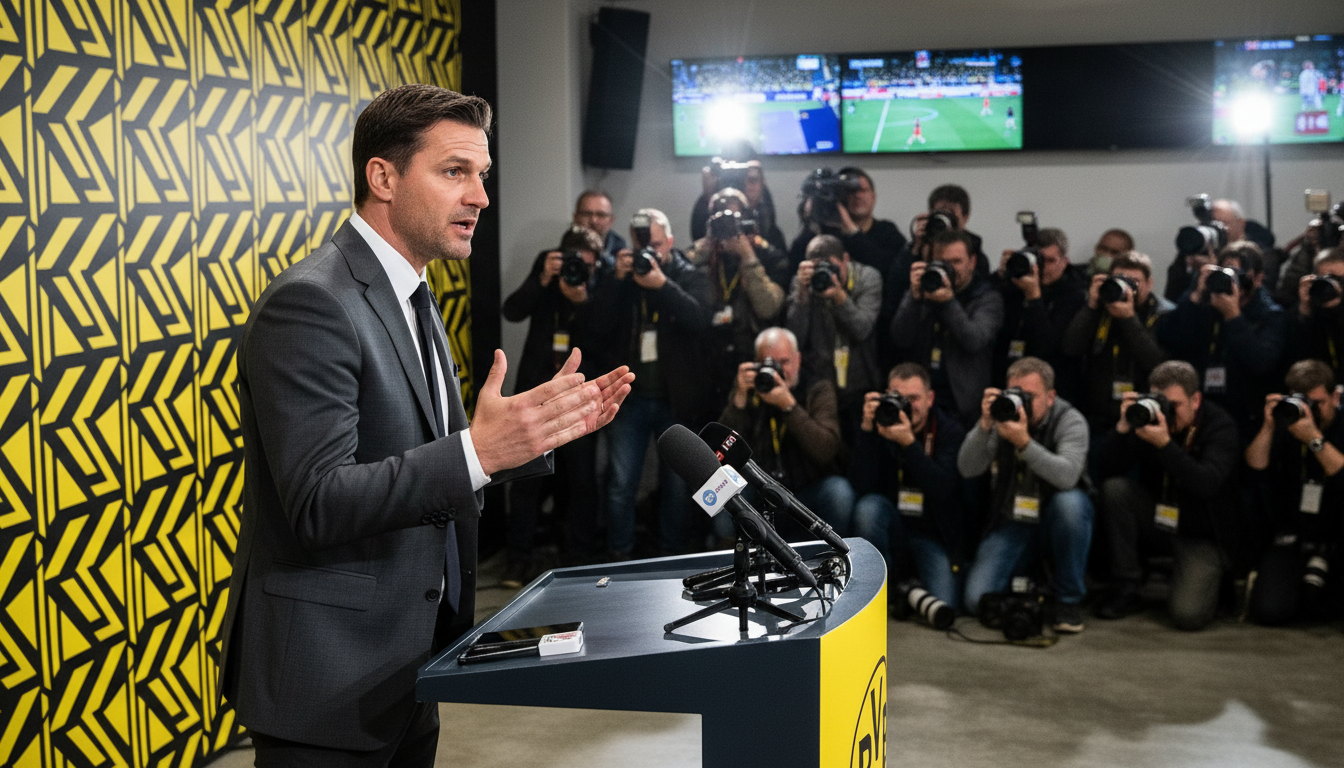
Niko Kovač defends Dortmund style as he rebukes critics and compares squad to Bayern
Niko Kovač defends Borussia Dortmund’s approach, rejecting criticisms of his style while highlighting squad differences with Bayern as BVB pursue a strong season finish


Niko Kovač has publicly rejected criticism of his footballing approach at Borussia Dortmund, arguing that expectations of constant, high-octane attacking play are unrealistic across the Bundesliga. In an interview he questioned which clubs besides Bayern Munich play consistently "attractive" football, and he framed Dortmund’s campaign in terms of pragmatic balance rather than theatrical spectacle. The coach pointed to squad depth and individual quality at Bayern as a major factor in their ability to combine entertainment with exceptional goal output this season.
Kovač Confronts Critics Over Playing Style
Kovač pushed back against narratives that have portrayed Dortmund’s matches as insufficiently entertaining, saying the league’s competitive structure makes weekly fireworks unlikely for most clubs. He insisted that attractiveness and results are not always synonymous, and that his priority remains building a side capable of delivering points and defensive solidity. The coach’s remarks were aimed at tempering expectations and reframing how supporters and commentators evaluate the team’s performances.
The interview gave Kovač a platform to stress context rather than concede to stylistic judgments, noting that supporters experience football differently depending on club resources and personnel. Rather than retreating from the charge that his teams sometimes appear conservative, he sought to explain the tactical trade-offs that inform match-day choices. That defensive-first improvements have yielded results, he argued, indicates a deliberate and defensible approach.
Comparisons with Bayern Munich’s Resources
A central element of Kovač’s response was a direct comparison with Bayern Munich, whom he singled out as the only consistent producer of both goals and spectacle in the Bundesliga this season. He noted Bayern’s extraordinary scoring figures as evidence of the challenge Dortmund faces when evaluating entertainment on a season-to-season basis. The coach framed Bayern’s output as the product of exceptional individual players across a deep squad, rather than a baseline expectation for every club.
Kovač declined to admit that Dortmund should be measured by Bayern’s standards, asserting instead that comparisons must account for differences in personnel and transfer investment. He argued that Bayern’s capacity to combine attractiveness with success is rare and should be acknowledged without resentment. By choosing this line, Kovač shifted the debate from aesthetics to structural realities in German football.
Tactical Reasoning and Squad Composition
Behind Kovač’s public defense lies a set of tactical calculations that have shaped Dortmund’s season: prioritizing defensive organization while seeking offensive moments rather than forcing open play at all costs. The coach signaled that the absence of a single, consistently decisive talisman—an elite goalscorer who changes games week in, week out—affects how the team deploys its resources. As a result, Dortmund have often balanced attack and cover, preferring solidity that produces results even when it reduces the frequency of high-scoring spectacles.
That approach has implications for personnel selection and in-game adjustments, with Kovač emphasizing structure, pressing triggers and transitional decisions as key determinants of outcomes. He has rotated personnel where necessary and tailored tactics to opponents, accepting that some matches will be tighter and less flamboyant. The coach presented those choices as pragmatic, aimed at delivering points across a long campaign rather than moment-to-moment applause.
Season Metrics: Defence, Goals and the Points Push
On the numbers front, Dortmund’s season shows a clear defensive improvement alongside a respectable attacking return, metrics that Kovač used to buttress his argument. The team’s goals conceded tally stands out as one of the best in the division, and their total goals scored places them among the upper tier of Bundesliga attacks despite criticism. Those statistics, Kovač suggested, demonstrate tangible progress and validate a strategy that places a premium on results as well as style.
With a game in hand and a chance to match the club’s best points total since the 2018–19 campaign, Dortmund arrive at the final run-in with clear, measurable objectives. Kovač highlighted that securing a strong points haul would reflect consistency and competitive resilience across the season. He framed the remaining fixtures as opportunities to solidify the campaign’s narrative and to show that balance between defensive strength and attacking effectiveness can deliver success.
What the Remaining Matches Mean for Dortmund
The final stretch of fixtures gives Dortmund a chance to translate narrative into outcome, and Kovač underlined the importance of closing the season on a high note. Winning the remaining league games would not only improve the club’s final position but also strengthen the coach’s wider argument that his methods produce competitive results. Kovač presented those matches as both a sporting test and a rhetorical opportunity to demonstrate the merits of his approach.
For the squad, the closing fixtures will require focus, fitness management and tactical clarity, particularly in games where opponents will target Dortmund’s perceived vulnerabilities. Kovač’s message to players centers on control of the controllables: discipline, concentration and efficient use of chances. How the team performs in the coming weeks will shape debates about style versus substance for months to come.
Reaction from Supporters, Media and Pundits
Responses to Kovač’s comments have been mixed, with sections of the fan base welcoming the coach’s defense while others remain unconvinced that the product on the pitch satisfies Dortmund’s identity. Media reaction has split along similar lines: some analysts point to the pragmatic gains in points and defensive stability, while pundits with an aesthetic focus argue entertaining football is part of Dortmund’s brand. Kovač’s remarks have reopened the conversation about what constitutes success for a club with Dortmund’s history and expectations.
Pundits have also scrutinized squad construction and transfer strategy, debating whether Dortmund should prioritize acquiring a high-volume scorer to unlock a more consistently attacking style. That debate ties back to Kovač’s central claim: clubs with deeper lists of elite attackers can marry spectacle with results more readily than those with narrower options. The conversation will likely guide recruitment plans and tactical planning ahead of the next campaign.
Looking beyond immediate headlines, Kovač’s stance reframes how performance will be evaluated in the short term and how expectations should be set for the club moving forward. His insistence that success cannot be measured solely by the visual appeal of each match pushes stakeholders to consider broader performance indicators. Whether that recalibration proves persuasive will depend on Dortmund’s final results and on subsequent strategic decisions.
As the season reaches its decisive phase, Niko Kovač’s public rebuttal has crystallized the central question facing Borussia Dortmund: is the club’s priority to produce unrelenting attacking spectacle, or to secure consistent success through balanced, defensively reliable football? The coming weeks will provide an answer on the pitch, and that outcome will shape both the coach’s standing and the club’s future direction.