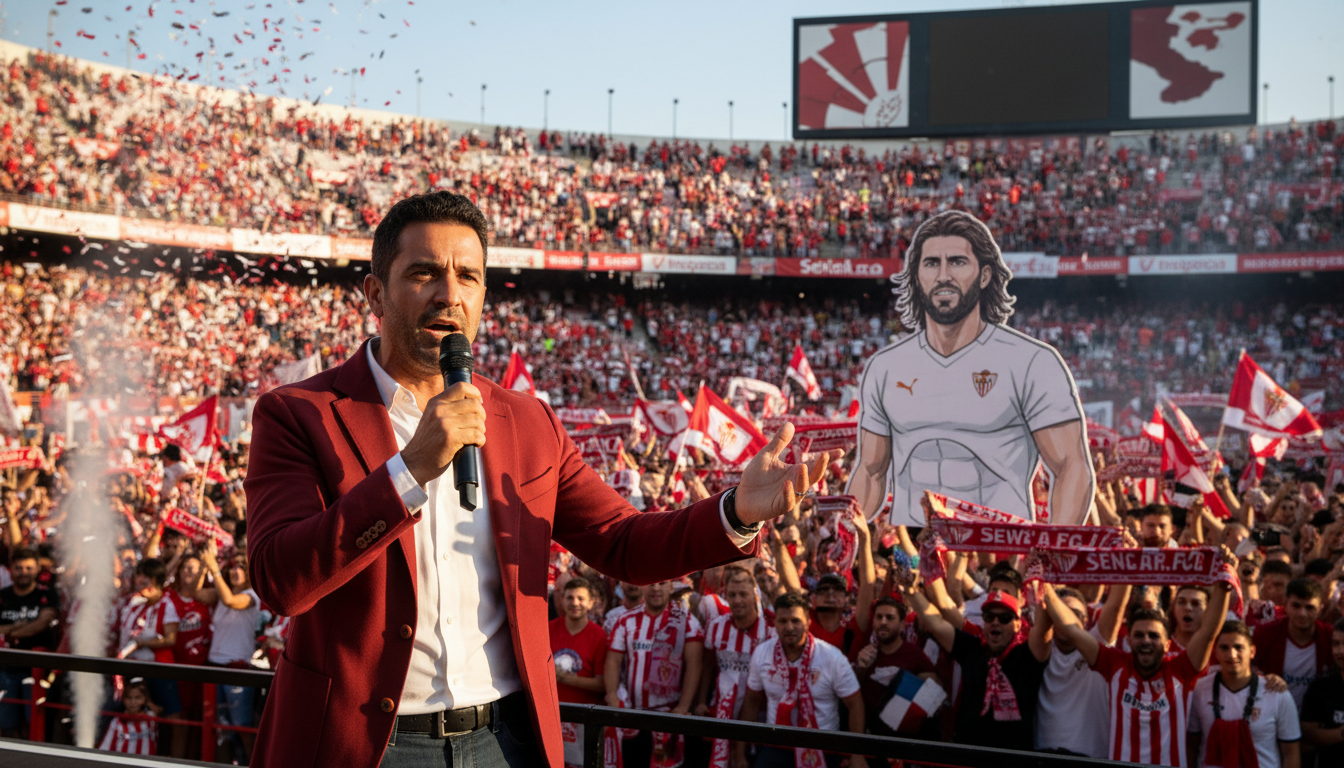
Paco Tous urges Sevilla fans “to the death” as he defends club and praises Sergio Ramos
Paco Tous Sevilla: Actor and lifelong Sevillista urges unwavering support for Sevilla FC while weighing in on Sergio Ramos’ role and club morale.


Paco Tous Sevilla returned to the public conversation this week with an impassioned plea for supporters to stand by Sevilla FC through a difficult period, and a measured endorsement of Sergio Ramos’ involvement at the club. The actor, best known for playing Inspector Miranda on Los Hombres de Paco, spoke with Vicente Ortega on El Programa de Ortega and framed his comments around loyalty, patience and the emotional weight of football in Seville.
Tous calls for unwavering support from Sevilla fans
Paco Tous made a direct appeal to the Sevilla fanbase, saying supporters must attend matches and back the team “until the last day,” language he used to express the kind of loyalty he believes the club needs now. He acknowledged scepticism in the wake of negative headlines but insisted that solidarity, not abandonment, is the correct response when a club faces turbulence.
Tous linked the call for attendance and vocal support to a broader sense of communal resilience, arguing that fans have an essential role in helping the team navigate a testing spell. He framed his plea as both emotional and practical, urging supporters to keep faith with the players and the sporting project rather than surrendering to alarm.
Praise and caution over Sergio Ramos’ involvement
On the subject of Sergio Ramos, Tous struck a conciliatory tone: he said the former Spain captain “wants Sevilla a lot” and called for Ramos to be given a margin of confidence. Tous suggested that Ramos has goodwill within the club and that Monchi — Sevilla’s sporting director figure in public discussions — trusts Ramos’ judgment in any off-field or advisory capacity.
At the same time, Tous allowed that decisions may have been slow, saying the club should perhaps have acted sooner on some fronts. His comments combined personal support for Ramos with a reminder that institutional responsibility and timely management are necessary to address a club’s sporting challenges.
Comic deflection in local rivalry with Betis fans
Tous used humor to deflect jibes from Betis supporters, recounting moments when rival fans teased him about his allegiance. He joked that when confronted by smiling Betis followers he tells them he has taken up badminton and idolizes Carolina Marín, as a tongue-in-cheek way of avoiding on-pitch antagonism while underscoring his identity as a Sevillista.
The anecdote served to illustrate how entrenched local rivalries in Seville are part of everyday life for public figures, and how humor can be a tool for navigating taunts without escalating tensions. Tous’ lighthearted response also reinforced his broader message: fandom should remain spirited but not destructive.
Television legacy: Inspector Miranda and lasting public affection
Tous’ remarks carried extra resonance because of his public profile as Inspector Paco Miranda in the long-running series Los Hombres de Paco, a role that established him with national audiences. Two decades after the show’s debut, Tous still speaks about the series with affection and uses the platform to discuss issues beyond entertainment, including his connection to Sevilla FC.
The actor’s identification with the city and its football culture is reinforced by the longevity of his media presence, which allows him to bring attention to local sporting matters in a way that few entertainers can. That cross-domain visibility — between television and football — helps explain why his comments drew notice in sports and mainstream media alike.
Anecdote about the Betis radio interview and on-set reactions
Tous recounted a story in which Betis radio producers invited him for an interview because his character on television was a Betis fan, even though Tous himself is a Sevilla supporter. He described how colleagues on set, such as the actor Juan Diego, would make subtle gestures during filming to steer his public presentation, conscious of the potential for local controversy.
The anecdote also included a humorous aside about Manuel Ruiz de Lopera, a figure long associated with Betis, who Tous said would have been displeased had he fully embraced the rival identity. The story underlined the sometimes surreal intersections between fictional roles and real allegiances in a city where club identity shapes social and professional interactions.
Implications for Sevilla’s short-term morale and management
Tous’ public endorsement of supporter loyalty and cautious backing of Ramos reflects a wider conversation about morale and strategy at Sevilla FC. The actor’s message may resonate with fans fatigued by repeated cycles of criticism, while also signaling to club leadership that public figures are calling for both patience and clearer action where needed.
If supporters heed Tous’ appeal and fill the stadium with tangible backing, the short-term boost in atmosphere could offer players greater confidence and buy the club space to implement longer-term corrective measures. Conversely, Tous’ admission that the club might have reacted late suggests an expectation among observers that management will need to demonstrate decisive stewardship in the coming weeks.
Sevilla’s trajectory this season will be observed closely by local media, supporters and former players turned advisors, and comments from respected public figures like Tous can shape the tone of that scrutiny. His combination of humor, nostalgia and firmness — calling for loyalty while urging accountability — exemplifies the kind of balancing act that public debate around the club has required.
Tous’ appeal also highlights the emotional economy of football in Seville: fans, personalities and club officials are enmeshed in a cultural ecosystem where sporting fortunes influence civic mood. The actor’s intervention serves less as tactical football analysis and more as a civic nudge toward solidarity, with a reminder that patience must be matched by meaningful responses from those in charge.
Paco Tous Sevilla remains a succinct emblem of this dynamic, showing how cultural figures can influence sports discourse without displacing the technical decisions that fall to professionals within the club. His comments, delivered on a national programme, are likely to be quoted in local discussions and may be referenced by commentators assessing both supporter behaviour and the club’s next steps.
His mixture of lighthearted rivalry anecdotes and pointed calls for institutional responsibility creates a narrative that is both familiar and timely to Seville’s civic life. As Sevilla navigates its immediate challenges, Tous’ public statement underscores the continued importance of fan engagement and the potential impact of unified support from the stands.
The actor’s remarks closed with a clear, simple line of encouragement: keep going, attend matches and stand by the team — advice that is as much about civic solidarity as it is about football.