Schalke 04 set to sign Satoshi Tanaka after reduced release clause activated
Schalke 04 are preparing to sign Satoshi Tanaka from Fortuna Düsseldorf after the midfielder’s release clause fell to €1m following Düsseldorf’s relegation, with a medical to be scheduled.


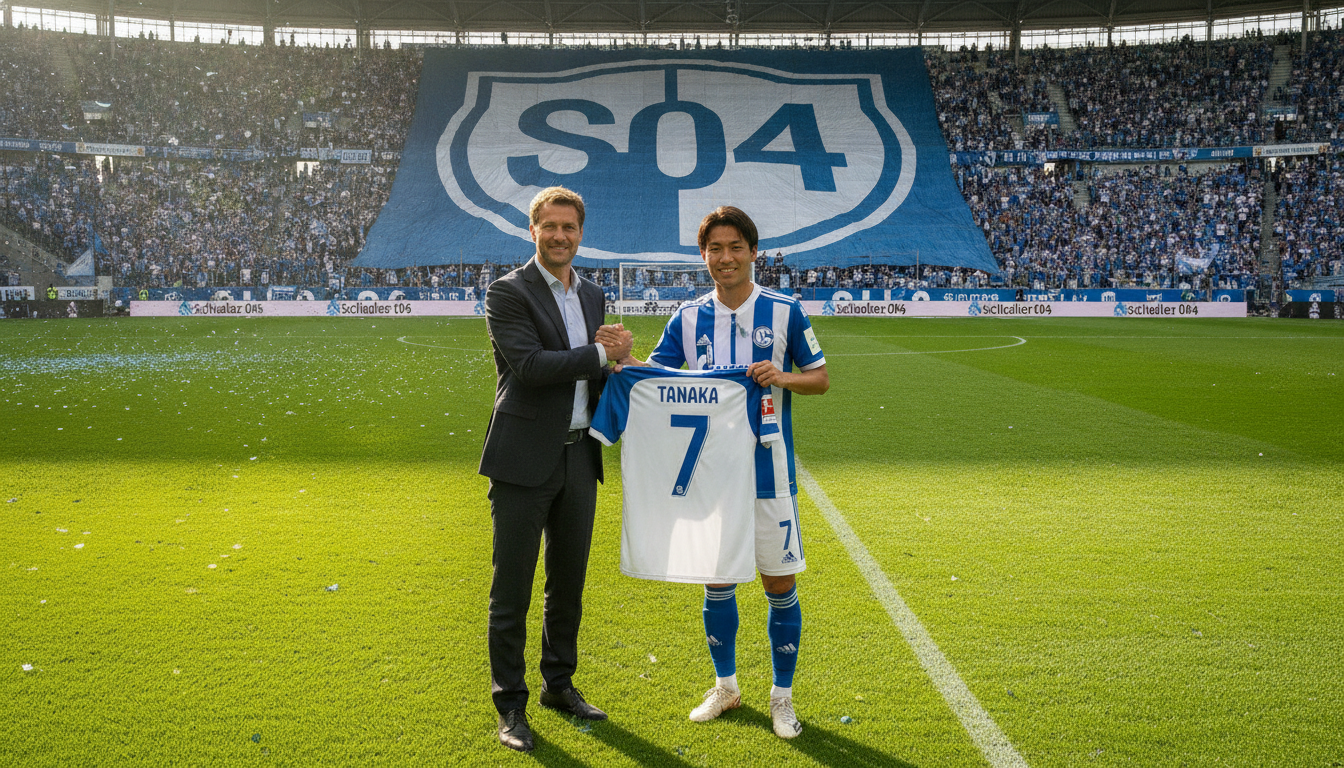
Satoshi Tanaka is on the verge of completing a move to newly-promoted Bundesliga side Schalke 04 after the club informed Fortuna Düsseldorf it will activate a reduced release clause, sources say. The decision follows Düsseldorf’s drop to the 3. Liga, a development that automatically lowered the buyout figure embedded in Tanaka’s contract. Schalke’s approach marks the club’s first major recruitment step of the summer as they ready their squad for next season.
Schalke activate reduced release clause
Schalke confirmed to Düsseldorf on Saturday that they would trigger the player’s release clause, according to reporting cited by Sky and correspondent Florian Plettenberg. The clause, which had been set at €10 million under certain conditions, has reportedly been reduced to €1 million as outlined in the player’s contract. Club officials are now arranging administrative and medical steps required to finalise the transfer.
The activation comes as Schalke rebuild a squad that secured promotion and must quickly bolster its midfield depth ahead of Bundesliga competition. Sporting directors and recruitment staff saw an opportunity to acquire a young defensive midfielder with experience in Germany at a nominal cost. The club expects to announce the completion of formalities after Tanaka completes a scheduled medical examination.
Schalke’s move for Tanaka represents a low-cost piece of transfer business but one with immediate sporting intent, and the club appears intent on integrating the 23-year-old into pre-season work. The timing of the purchase gives Schalke some runway to assess Tanaka’s fitness and role in training before competitive matches begin. Officials will balance short-term needs with longer-term planning as they prepare the squad for higher-level opposition.
Medical checks and timing for the transfer
Schalke plans to set a date for Tanaka’s medical as the next formal step in the transfer process, with the club and player expected to agree timetables in the coming days. Medicals in such circumstances typically include fitness assessments, scans and baseline tests that determine whether any conditioning work is required before the player joins group sessions. Completion of those checks would pave the way for a formal announcement and Tanaka’s registration with the German football authorities.
The club has signalled urgency but also caution; few details have been given about the exact timeline beyond the intention to schedule the medical shortly. Once the medical is cleared, Schalke will need to finalise registration windows and ensure compliance with league rules governing new signings for the upcoming season. If cleared, Tanaka could feature in pre-season friendlies as Schalke tests combinations and clarifies the depth chart in central midfield.
For Tanaka personally, the medical represents a crucial step toward settling into a new environment after a season disrupted by Fortuna Düsseldorf’s struggles. The player and his representatives will use the process to assess the club’s facilities, support staff and proposed role, while Schalke’s technical team will evaluate how rapidly he can be integrated into tactical plans. Both sides have incentives to complete the process swiftly so preparations for the Bundesliga campaign can proceed.
Tanaka’s background and recent performances
Satoshi Tanaka joined Fortuna Düsseldorf in the winter transfer window from J1 League side Sanfrecce Hiroshima, a move completed under sporting director Sven Mislintat. The 23-year-old defensive midfielder signed a contract with Düsseldorf that runs until 2030, providing his former club with contractual certainty before relegation triggered the clause reduction. Tanaka made 13 appearances in the 2. Bundesliga last season and registered two assists in those outings.
Tanaka has been viewed as a young, adaptable midfielder capable of shielding the back line and initiating transitions from deep positions. While he was omitted from Japan’s World Cup squad, his performances in Germany attracted notice for their composure on the ball and positional discipline. Coaches who worked with him during his stint in the J1 League and in Germany have underlined his potential to develop with consistent playing time at a higher level.
His move to Schalke will represent a step up in profile and pressure, as the newly-promoted club will face more intense fixtures and scrutiny in the Bundesliga. Tanaka’s winter arrival at Düsseldorf offered him mid-season exposure to German football, and Schalke’s recruitment team appears to have valued his adjustment to the country’s pace and physicality. The transfer gives the player a platform to continue his progression under increased expectations.
Deal terms, contract notes and financial impact
Sources close to the negotiations indicate Schalke will pay the reduced €1 million release clause, a figure that reflects the contractual clause activated by Fortuna Düsseldorf’s relegation. That nominal fee represents a relatively small outlay for a club preparing for top-flight competition and allows Schalke to allocate financial resources across other positions. Düsseldorf’s contractual arrangement illustrates how relegation triggers can materially alter a club’s transfer negotiating position.
Tanaka’s existing contract with Düsseldorf runs to 2030, which secures certain protections and future value for the selling club in circumstance where escalation clauses are not triggered. The reduced fee will still produce a net transfer income for Düsseldorf, albeit far lower than the initial clause amount. For Schalke, the fee will be absorbed as part of summer spending plans that must align with financial fair play and the club’s broader budgetary control.
Beyond the transfer fee, Schalke will need to agree personal terms with Tanaka, including salary, bonuses and potential performance-related incentives, before the move is registered. Those figures and contract length have not been publicly disclosed, and Schalke typically keeps such details private until all paperwork is complete. The financial structure of the deal is likely to reflect Tanaka’s age, upside and the fact that the move is a bargain by market standards.
Midfield fit and competitive implications for Schalke
Schalke arrive in the Bundesliga with a clear incentive to strengthen central midfield, an area that often dictates control over matches at the top level. Satoshi Tanaka projects as a defensive midfield option who can relieve pressure on the back four and offer passing options from deep positions, potentially complementing more attack-minded teammates. His profile fits a club that must balance defensive solidity with moments of controlled possession.
Competition for places is expected to intensify as Schalke finalise further additions and return existing players from loans or injury. The addition of Tanaka gives head coach a tactical alternative — a player who can operate in a two-man pivot or as a single destructive shield, depending on the system chosen. Integrating him successfully will depend on Schalke’s ability to provide clarity on his role and ensure he receives sufficient minutes to develop confidence and chemistry with teammates.
Schalke’s promotion means each recruitment decision will be scrutinised by supporters and the media, with expectations high for sustained top-flight status. A low-cost, potentially high-upside signing like Tanaka alleviates some transfer-market risk while offering a chance to cultivate talent internally. For Schalke, the wider challenge will be to assemble a balanced squad where new arrivals and existing assets together create a team capable of competing through the season.
Context of release clauses and sporting regulations
Release clauses tied to relegation are a common contractual feature that protect players while providing clubs with contingency plans if sporting circumstances change. In Tanaka’s case, the clause reduction from €10 million to €1 million was triggered automatically by Fortuna Düsseldorf’s descent to the third tier, a contractual mechanism designed to allow players an exit in the event of severe sporting setbacks. Such clauses are negotiated at the time of signing and reflect a balance between player mobility and club protection.
The activation by Schalke is straightforward from a regulatory standpoint when a clause is properly documented and the purchasing club meets the conditions. Football authorities generally require clear evidence of clause terms and timely communication between clubs to process transfers. While fans may debate the ethics or optics of signings facilitated by relegation-triggered clauses, they remain an accepted part of modern contract law in football.
Clubs facing relegation often accept reduced fees as part of broader survival planning, and the transfer market after a club falls through the divisions can be active as squads recalibrate. For the player, a move to a higher division can offer career progression and renewed development opportunities. For Schalke, exploiting a release clause is a pragmatic sporting decision aimed at strengthening the squad quickly and efficiently.
Schalke’s confirmation of intent to sign Satoshi Tanaka closes an early chapter of what promises to be an active summer window for the club as it moves to reinforce its squad ahead of the Bundesliga campaign. The next milestones are the medical and the paperwork required to register the player for competitive fixtures, after which Schalke’s technical staff will set about integrating him into training and tactical preparation. The deal underlines how contractual mechanisms and timely scouting can produce strategic gains during a condensed transfer period.
Looking ahead, Schalke’s recruitment team will continue to balance short-term needs with sustainable squad building, while Tanaka will face the immediate task of adapting to higher-level opposition and expectations inside a club eager to consolidate its return to Germany’s top flight.