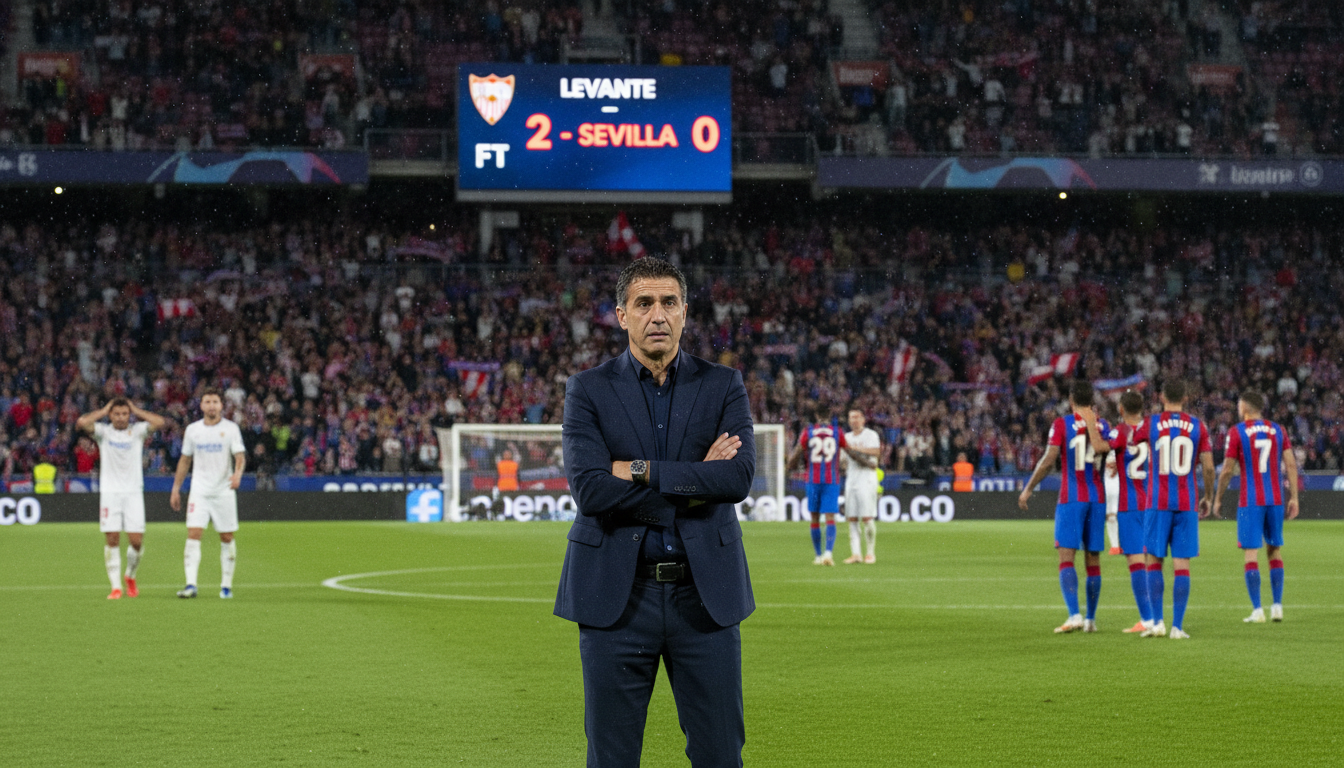
Luis García Plaza slams Sevilla players after Levante defeat and demands full 90-minute fight
Sevilla coach Luis García Plaza criticized his players vocally after the club’s defeat to Levante, saying they must “play 90 minutes” and show more courage and possession to escape the relegation fight.


García Plaza delivers blunt assessment at full-time
Luis García Plaza offered a stark appraisal of Sevilla’s performance following the loss to Levante, identifying the first half as particularly damaging to the team’s cause. He told players at half-time that he did not recognise the way they were playing and said several were fearful with the ball, avoiding responsibility in midfield. The coach framed the opening 45 minutes as a self-inflicted handicap that included conceding a goal through avoidable errors.
García Plaza described the display in blunt terms and labelled it the worst performance since his arrival, acknowledging he has had only a short time to work with the group. He made clear that the second half showed the reaction he expects, but insisted the recovery came too late to alter the result. The warning was both tactical and psychological: Sevilla must rediscover the confidence to control possession and take the initiative.
Second half offered signs but finishing and timing were costly
Sevilla’s response after the interval provided the senior staff and supporters with evidence the team can rally, but the improvement arrived after the game had been put beyond immediate reach. García Plaza highlighted a 20-minute spell in which his side dominated possession and created openings, yet the final pass and finishing lacked precision. That lack of cutting edge meant opportunities went unconverted and the margin of error for the visitors grew.
The coach also pointed to the second goal as a consequence of the earlier situation rather than a separate collapse, arguing that once you fall behind after a poor first period the match dynamic shifts against you. He emphasised that courage alone is not enough; the side must translate greater possession and forward intent into concrete chances and goals across the full 90 minutes. Consistency from kickoff to the final whistle is what García Plaza said will determine Sevilla’s immediate future.
Tactical message: demand for possession and purposeful play
A recurring theme in García Plaza’s comments was the need for players to want the ball and to play with intent when they have it. He criticised a conservative approach that prioritised “security” over creation, urging midfielders and attacking players to remove the fear that prevents them from receiving and progressing the ball. The manager argued that football is won through controlled aggression — taking on responsibility with the ball rather than retreating into overcautious passing.
That tactical prescription touches on both mentality and structure: Sevilla must be prepared to press and to build through the middle, while also committing players forward in support of attacks. García Plaza’s remarks underline a preference for a proactive, possession-oriented framework rather than reactive defending that relies on grit alone. He made clear that training and match management will focus on instilling this approach so the team can both dominate and finish.
Relegation battle context and comparisons with last season
García Plaza placed the defeat into the broader context of a congested relegation fight, noting that many teams remain involved and that margins are slim. He reminded players and fans that Sevilla experienced a tense scrap last season and warned the campaign could follow a similar arc if results do not improve. His tone mixed realism with an appeal to the club’s identity and history, stressing the need to confront the run-in with determination.
The coach also pointed out the strange perspective of current standings — saying that if the league were to finish now Sevilla would be outside the drop zone — but he used that observation to argue against complacency. The central message was clear: statistical safety at one moment does not substitute for sustained performance across the remaining fixtures. With several clubs bunched close together in points, any lapse can be decisive.
Short tenure, immediate demands and internal accountability
García Plaza repeatedly referenced the limited time he has been in charge, noting he has been at the club for only a few weeks and asking for patience while also demanding immediate standards. He told players there will be no external saviours on the pitch for them and that responsibility starts with their everyday performance. That appeal for internal accountability extended to a call for recovery and preparation for the next match, with the manager stressing a quick return to focus.
The coach’s mix of frank criticism and urgent coaching reflects a dual strategy: identify and confront flaws quickly, while building a clearer identity and work ethic in training. He has set short-term, measurable expectations — more possession, more decisive actions in the final third, and greater concentration for all 90 minutes. Players, he signalled, must lift themselves daily and respond on the pitch to alter the club’s trajectory.
What Sevilla must change to reverse the trend
Turning the current trend will require practical adjustments across several areas, starting with mentality and extending to tactical discipline. Sevilla need midfielders willing to accept responsibility to progress play, attackers who convert the chances created, and defenders who minimise avoidable errors that hand opponents openings. The union of personality and technique García Plaza demands can be reinforced through targeted training and clearer in-game leadership.
Game management is another crucial element: Sevilla must avoid the pattern of conceding early and having to chase matches, which exposes them to counter-attacks and second-goal vulnerabilities. Improving transitions, tightening concentration in build-up phases, and sharpening the final ball will reduce the risk of gifting results away. Leadership on the field — from experienced players to emerging figures — will be pivotal in translating García Plaza’s message into consistent performance.
Sevilla face a stretch of fixtures that will test the durability of the coach’s message and the players’ willingness to adopt it. Whether the squad can sustain improved possession, generate more quality chances, and maintain focus for 90 minutes will determine if they climb away from danger or remain embroiled in a fight to the end.
Sevilla’s coaching staff and squad now have a clear, public benchmark from their manager: cease the timid approach, claim the ball, and deliver football with conviction for the full match. The consequences of failing to meet that benchmark were articulated with rare bluntness after the Levante defeat, and the club must respond quickly if it is to change course.