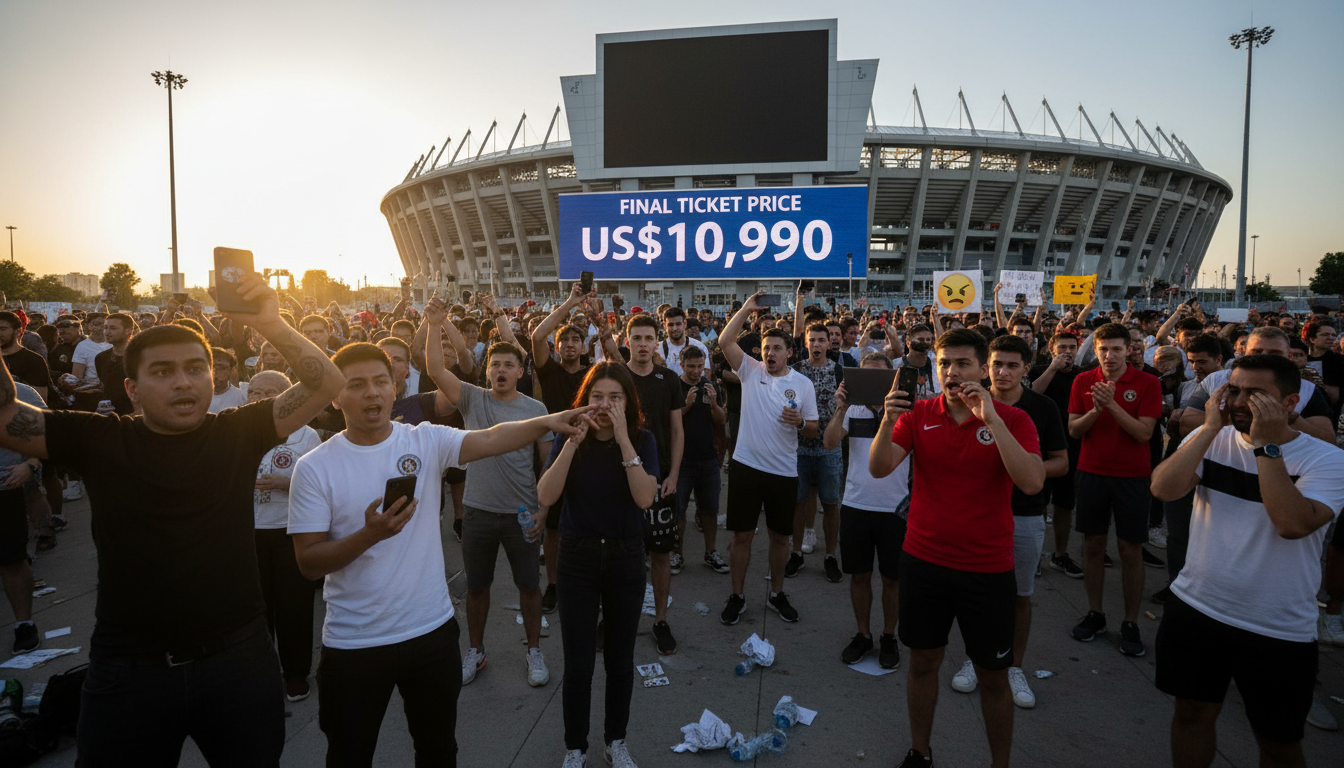
World Cup ticket prices jump as FIFA raises final to US$10,990 during glitch-hit reopening
FIFA raised World Cup ticket prices during a glitch-hit reopening of sales, sending the final’s top price to US$10,990 and prompting fan concern over access and pricing policy.


FIFA’s restart of ticket sales on Wednesday produced one of the sharpest single increases in World Cup ticket prices ahead of the 48-team tournament in the United States, Canada and Mexico.
Supporters logging on to purchase saw the top category for the July 19 final at MetLife Stadium listed at US$10,990, a rise from the US$8,680 top price set after the December draw.
The price change came as FIFA listed tickets for only a fraction of scheduled matches and acknowledged technical problems that interrupted parts of the reopening.
FIFA confirms price changes after sales restart
FIFA confirmed in its ticketing notices that prices had been adjusted when sales reopened following the completion of qualifying and the finalisation of the 48-team field.
Officials said the highest-priced seats for the MetLife Stadium final increased from US$8,680 to US$10,990, while Category Two and Category Three tickets were also raised to US$7,380 and US$5,785 respectively.
Those Category Two and Three figures mark notable jumps from the previous December prices of US$5,575 and US$4,185, underlining a broader upward shift across seating bands.
Technical glitches mar ticketing platform during reopening
The reopening of sales was described by several fans and outlets as glitch-hampered, with intermittent site errors and slow page loads reported during peak traffic periods.
FIFA’s public materials indicated tickets were available only for some group-stage fixtures by Wednesday evening, with 17 of the tournament’s 72 group games listed and no knockout-stage tickets visible.
The partial availability, combined with software strain, left many supporters unable to complete purchases and raised fresh questions about the robustness of FIFA’s ticketing infrastructure.
Dynamic pricing applied across venues in three countries
FIFA is employing dynamic pricing for the tournament, a system that allows prices to change in response to demand, inventory and other variables.
The 2026 World Cup will be staged across 16 host cities—11 in the United States, three in Mexico and two in Canada—giving FIFA a broad array of market conditions to manage with the new pricing model.
Dynamic pricing means individual match prices, including for marquee fixtures such as the opener and the final, can rise after initial allocations are released.
Impact on the US opening match and other marquee fixtures
Tickets for the United States opener on June 12 at SoFi Stadium in Inglewood were limited by evening to only the highest-priced seats, with those top seats unchanged at the Singapore-dollar equivalent of S$2,735.
That limited availability for the U.S. opener contrasted with the more substantial uplifts seen for the final and middle-tier categories, signaling selective price movement across specific fixtures.
Observers noted the pattern suggests FIFA’s pricing engine is distinguishing value between high-demand, broadly appealing matches and those with more localized interest.
Fan access, transparency and secondary market risks
Consumer groups and supporters’ organizations often warn that steep, last-minute price increases and dynamic pricing can squeeze average fans and encourage speculative buying on the secondary market.
The combination of elevated official prices and a partial, glitch-affected sale creates fertile conditions for resellers to list seats at premiums, which can further restrict affordable access for ordinary supporters.
Experts in event commerce say stronger transparency around ticket allocations and real-time inventory would help temper speculation and reassure consumers that increases reflect market demand rather than scarcity engineered by the sales process.
FIFA’s messaging and potential adjustments ahead of summer
FIFA has defended dynamic pricing as a way to capture fairer market value for premium matches while offering a range of price points for different fans.
The governing body has also pointed to staged ticket releases that seek to manage demand and provide multiple buying opportunities across the sale period.
But with sales reopening complicated by technical problems and with headline price increases for the final, FIFA may face pressure to clarify how its pricing algorithm operates and whether any caps or protections exist for ordinary supporters.
What fans should watch for next in the ticket rollout
Supporters planning to buy should monitor further ticket releases closely and prepare for staggered allocations across group and knockout stages.
Fans are advised to use official FIFA platforms and verified resale channels, keep payment details ready to streamline purchases, and follow official FIFA announcements for additional release dates or remedial measures after the glitch-affected sale.
Consumer advocates also recommend setting spending limits in advance and coordinating group purchases carefully to avoid fragmented allocations.
The reopening of sales that pushed World Cup ticket prices higher for the final highlights the intersecting challenges of high demand, dynamic pricing technology and the necessity of resilient online infrastructure.
How FIFA responds in the coming days — whether through expanded allocations, clearer communication on pricing mechanics, or technical fixes for its platform — will shape whether fans can reasonably access tickets at scale for football’s flagship event.