Eugen Polanski under pressure as Gladbach weigh summer coaching change
Eugen Polanski faces mounting doubts at Borussia Mönchengladbach after a string of dull results, with the coach addressing persistent speculation over his future. (156 characters)


Borussia Mönchengladbach head coach Eugen Polanski publicly addressed rumours about his job security following a goalless draw that intensified talk of a summer managerial reshuffle. Polanski, who rose from the club’s U23s and was made permanent head coach last November, said he was surprised by speculation that he will be dismissed at the end of the season. The keyword Eugen Polanski remains central to the debate as Gladbach prepare for their final league fixtures and a likely decision on the club’s direction.
Polanski answers questions after Wolfsburg stalemate
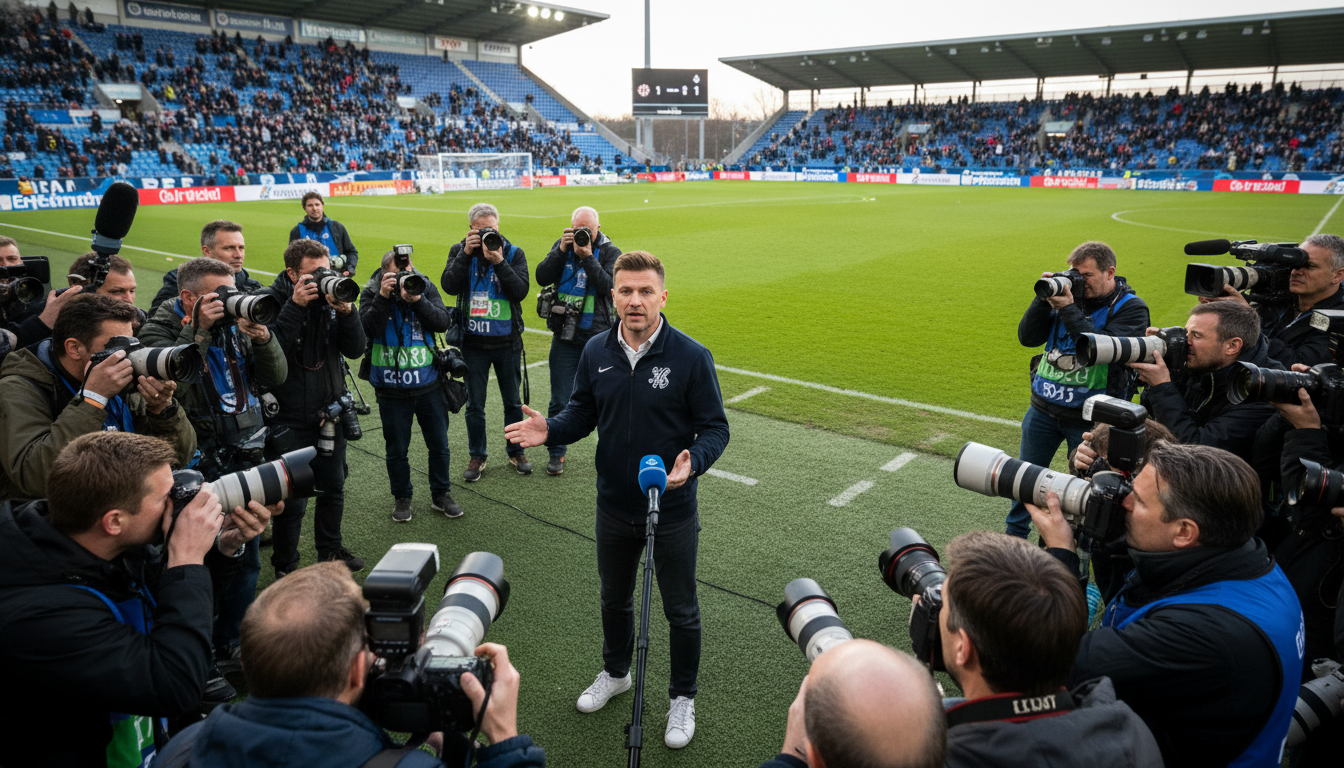
Polanski spoke at the post-match press conference after a 0-0 draw with VfL Wolfsburg, insisting he had not been following the stories about his future and describing the rumours as unexpected. He stressed that his focus remains on keeping the club in the Bundesliga and on the immediate fixtures still to come this season. The coach expressed confidence in his methods and suggested that continued work would determine whether he stayed in charge.
The draw renewed scrutiny of Gladbach’s form and intensified media and fan discussion about whether the club requires a more experienced coach for next season. Sporting director remarks after the match were widely read as a warning shot, feeding assumptions that the club’s hierarchy may prefer a fresh start. Polanski pushed back on the narrative by pointing to the team’s principles and the task he was appointed to complete.
Rapid rise from reserve coach to permanent boss
Eugen Polanski’s ascent to the first-team job was swift and unconventional, moving from managing Borussia Mönchengladbach’s U23 side to taking interim charge of the senior team. That initial interim appointment was extended amid turmoil in the club’s sporting office, with the board eventually offering him a longer-term contract in mid-November. The decision reflected an appetite for stability at a time of internal uncertainty.
The brevity of Polanski’s managerial résumé at senior level has become a focal point for critics who argue Gladbach need a more seasoned figure to navigate the run-in and the post-season rebuild. Supporters of the coach point to the circumstances of his appointment and the relative continuity he offers. The debate highlights the difficult balance clubs face when elevating promising internal candidates into high-pressure roles.
On-field performances that have raised alarm bells
A sequence of subdued displays has left Gladbach’s supporters frustrated and increased pressure on the coaching staff to produce more attacking intent and consistent results. Matches marked by low creativity and few clear scoring opportunities have reinforced narratives that the team lacks momentum and that tactical adjustments are overdue. The 0-0 result against Wolfsburg epitomised those concerns and gave critics fresh material.
Statistically, Gladbach’s recent games have shown trouble in breaking down organised defences and creating high-quality chances from open play. That trend has prompted questions about selection, formation, and whether the squad’s current make-up suits Polanski’s preferred approach. With three league games remaining, the window to change perceptions is small and outcomes in those fixtures will carry outsized weight.
Signals from the front office and Schröder’s remarks
Club sporting director Rouven Schröder’s comments after the Wolfsburg draw were widely interpreted as indicating that the coaching position is under review, fueling speculation that a change could be imminent. The tone of public statements from the club’s leadership has been seen as cautious, leaving room for different interpretations about the level of trust in the current coach. Observers say that explicit backing — or the lack of it — from the sporting director will be decisive.
Boardroom turbulence earlier in the campaign played a role in Polanski’s extended opportunity, and that background now colors expectations about what the club might do this summer. Some within the organisation and among the fanbase favour bringing in a manager with a proven Bundesliga track record, arguing fresh impetus is needed. Others warn that a mid-year overhaul could destabilise a squad already focused on survival.
Polanski’s demeanour and relationship with the squad
On several recent occasions Polanski has appeared guarded and restrained in public, prompting commentators to remark on a coach who seems cautious under pressure. That body language has been read variously as professional composure, inexperience in dealing with sustained external scrutiny, or a personal preference for a lower-profile role. Internally, teammates have publicly defended the work being done, though there are questions about whether the manager can extract more from certain players.
Polanski’s experience as a former midfielder and his background within the club’s academy structure are often cited as reasons for believing he understands Gladbach’s identity and long-term project. But when results are narrowly positive or neutral, those qualifications carry less weight in broader conversations about the need for tactical nous and leadership in big moments. The personal readiness of the coach to remain in the spotlight will likely form part of the evaluation.
Possible scenarios for the summer and what the club must decide
With only a small number of league fixtures left, Borussia Mönchengladbach face a binary window: keep faith with Polanski to finish what he started, or appoint a new coach to prepare for a reset ahead of next season. If Gladbach secure safety in the Bundesliga, the club still must decide whether continuity offers the best path to progress or whether a more experienced manager is required to revive the team’s ambitions. Sporting and financial considerations will inform that verdict.
A decision to retain Polanski would signal a commitment to internal development and could preserve stability for player recruitment and youth integration. Conversely, bringing in an external figure would be a clear signal of intent to change style and expectations, even if it carries transitional risk. The club’s assessment will consider recent form, fan sentiment, available candidates, and the projected transfer budget for the summer window.
Implications for players, recruitment and season planning
Who leads the team next season will influence recruitment strategy and squad planning, particularly in areas where Gladbach have struggled to produce consistent attacking output. A manager with defensive pragmatism would approach transfers differently than one prioritising high-tempo, possession-based football. Players close to the end of contracts or those seeking more minutes will weigh managerial certainty heavily in their decisions.
The outcome will also shape pre-season preparations, training philosophy, and how the club positions itself in a Bundesliga landscape that increasingly rewards tactical clarity and recruitment savvy. Youth prospects from the academy could either be entrusted more quickly under a coach who knows the internal pathway, or they may face stiffer competition if the club pursues experienced reinforcements. Financial prudence is likely to remain a factor regardless of the coaching choice.
Eugen Polanski’s statements this week were unequivocal in one sense: he remains focused on the immediate objective of keeping Gladbach in the top flight and believes steady application can secure his position. Whether that confidence is persuasive to the club’s hierarchy will depend on performances in the closing fixtures and the broader strategic appetite for change.
The coming weeks will provide clarity on whether Borussia Mönchengladbach entrusts its Bundesliga future to a young coach who rose through the ranks or opts for a more proven name to lead a summer rebuild. The resolution will have ramifications for the squad, the club’s transfer plans, and how supporters measure success in the next campaign.