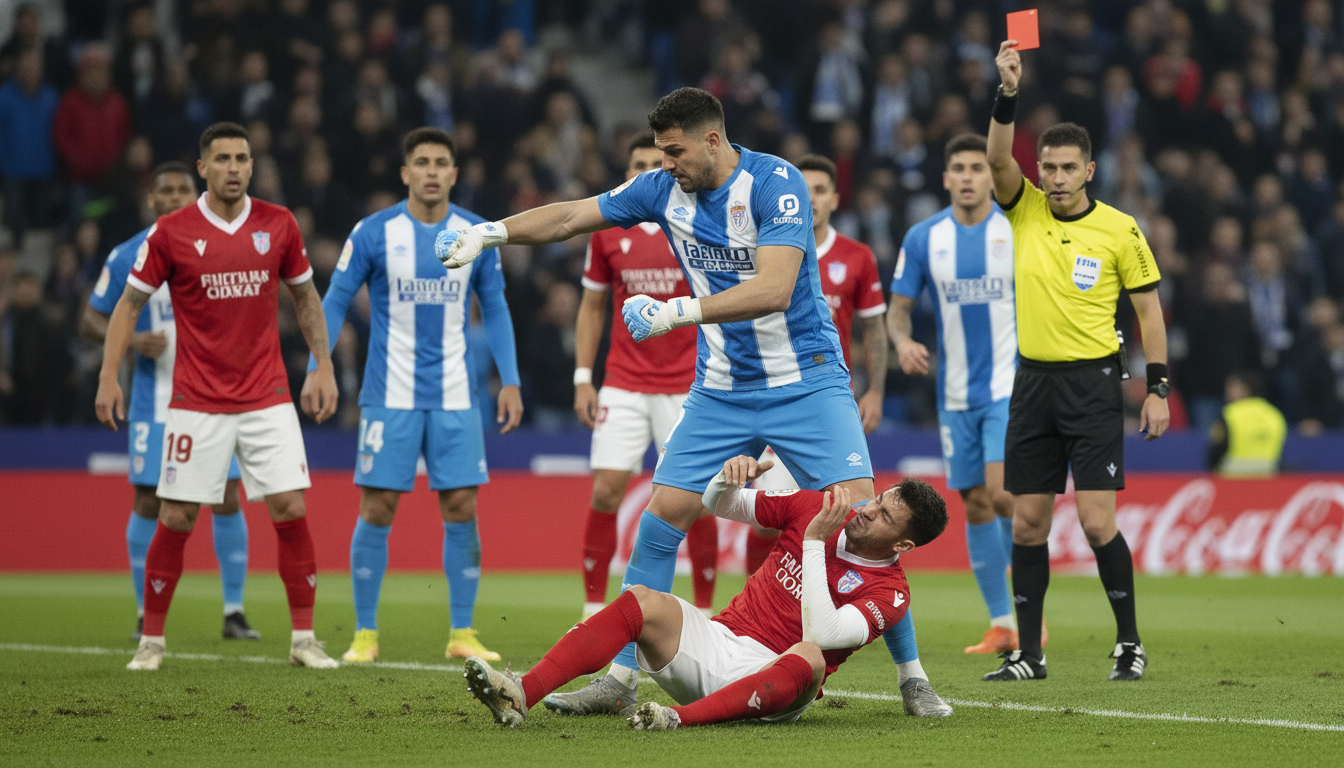
Esteban Andrada Faces Potential 12-Match Ban After Punch Sparks Huesca–Zaragoza Brawl
Esteban Andrada could face a lengthy suspension after punching Huesca defender Jorge Pulido in the face during stoppage time, an incident that followed his red card in Sunday’s Segunda División derby. The Argentina international’s actions sparked a mass confrontation late in the match that ended 1-0 to Huesca and left three players dismissed.

Red card and punch ignite stoppage-time brawl
Esteban Andrada was first sent off after an on-field altercation in the closing minutes, having shoved Jorge Pulido to the ground earlier in the sequence. As play continued into stoppage time, the sequence escalated when Andrada ran toward Pulido and struck him in the face, which immediately provoked a larger on-pitch brawl.
The melee drew reactions from players on both benches and required intervention from match officials to restore order. Huesca goalkeeper Dani Jiménez and Zaragoza defender Dani Tasende were also dismissed in the aftermath for their roles in the confrontation.
Referees issued the initial red card to Andrada for violent conduct before the punch that intensified the incident. The stoppage-time escalation left the stadium in shock and overshadowed what was otherwise a tightly contested local derby.
Disciplinary outlook: potential 12-match ban for Andrada
Under competition rules for violent conduct, Andrada faces more than the standard one-match suspension that follows a red card. Football authorities have scope to impose extended bans for deliberate physical assault on an opponent, and reports indicate a sanction of up to 12 matches is possible in this case.
The process will involve a disciplinary investigation by the league’s committee, which will review the referee’s report, match footage and any club submissions. If the committee finds aggravating factors such as premeditation or injury, the upper range of the penalty could be applied.
Beyond the formal ban, additional fines or sporting sanctions may be considered depending on the committee’s findings. Andrada’s status as a player on loan from Monterrey in Mexico could complicate contractual and club-level disciplinary discussions.
Club statements and internal reviews
Real Zaragoza issued a statement condemning the scenes, calling them “unbecoming of this sport” and saying the club would analyse the events and take appropriate disciplinary measures. The club emphasized that the incident tarnished a match of significant regional importance and vowed to address the matter internally.
Huesca confirmed the 1-0 victory and the match result stood despite the late disorder, while the host club did not immediately issue a detailed comment on any demands for additional sanctions. Both clubs are expected to file their observations with the competition’s disciplinary body in the coming days.
The disciplinary committee’s timetable will determine when a hearing or ruling takes place, but precedent suggests a resolution could arrive within weeks. In the meantime, both clubs must manage the immediate sporting fallout and potential media scrutiny.
Match facts: Huesca hold on amid derby intensity
The derby concluded with Huesca emerging 1-0 winners, a result that gained added importance given the relegation positions both teams occupy. Although the late incidents dominated headlines, the match itself was a hard-fought encounter with both sides aware of the stakes in the Segunda División table.
Several key moments earlier in the match set the tone for a tense finale, but neither side could convert chances enough to produce a more decisive scoreline. The dismissal of Andrada and the subsequent sendings-off altered the closing moments, but Huesca managed to preserve their lead until the final whistle.
With both clubs entrenched in the relegation battle, every point is critical and the result has immediate implications for the fight to avoid demotion to the third tier. The emotional intensity of a local derby and the pressure of the standings likely contributed to the volatility witnessed in stoppage time.
Squad and tactical implications for Zaragoza
Zaragoza now face the prospect of losing their first-choice goalkeeper for a substantial spell if the maximum suspension is applied. That would force the club to turn to a backup keeper or to seek short-term reinforcements, complicating a season already under pressure near the foot of the table.
Managerial decisions in the coming days will need to balance squad morale, tactical stability and the immediate need for reliable goalkeeping. The club’s internal disciplinary action may also affect selection choices if they opt to withhold the player from matchday squads while the investigation proceeds.
Beyond the lineup, the incident may have a psychological effect on the dressing room, which will need steady leadership to refocus on results. With a relegation battle looming, Zaragoza cannot afford prolonged disruption from disciplinary uncertainty.
Wider discipline debate in Spanish football
The Andrada incident reignites questions about how violent conduct is policed in Spanish football, particularly in the highly competitive Segunda División. Leagues and refereeing authorities regularly review sanctions to deter off-the-ball assaults, and this episode will likely prompt renewed scrutiny of preventative measures.
Previous cases of violent behaviour have led to multi-match bans when governing bodies judged the conduct to be particularly egregious. Those precedents provide a framework for what the disciplinary committee may consider when evaluating intent, provocation and the severity of the physical act.
Officials may also assess whether additional education or stricter enforcement is needed to prevent similar flare-ups, especially in fixtures with regional rivalry and heightened stakes. The outcome of this case could influence future disciplinary practice and club-level behavior policies.
The league will publish the referee’s official report and any subsequent committee ruling, which will clarify the sanction and the rationale behind it. Supporters, pundits and club officials will closely watch that process for indications of consistency in punishments across comparable incidents.
Esteban Andrada’s future availability and Zaragoza’s immediate plans will hinge on the disciplinary committee’s timetable and findings, while both clubs prepare for the next round of fixtures amid continued pressure at the bottom of the table.