PSG vs Bayern delivers Champions League semi-final classic as nine goals light up Parc des Princes
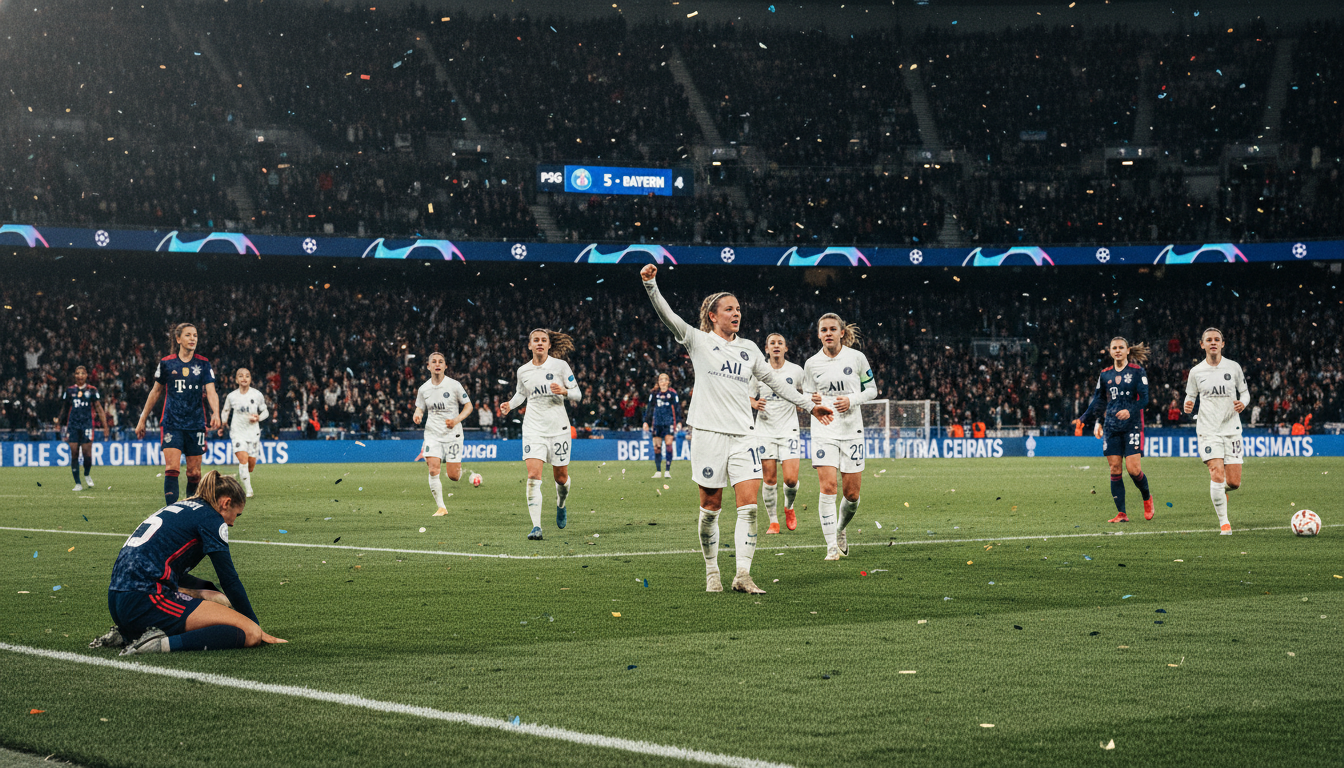
A nine-goal thriller at the Parc des Princes left fans and pundits stunned as PSG vs Bayern produced one of the most entertaining Champions League semi-finals in living memory. The match, punctuated by giant tifos that declared "the conquest of Europe" and urged visitors to "give everything," saw both sides trade leads and a sequence of breathtaking goals. Paris Saint-Germain held a slim advantage at full-time after a bout of end-to-end football that showcased attacking firepower on both flanks.

End-to-end first half produces five-goal spectacle
The opening 45 minutes set a fevered tone as both teams committed to attack with little regard for caution. Harry Kane put Bayern ahead from the penalty spot before Khvicha Kvaratskhelia responded with a clinical finish to level the score. Joao Neves then nodded a header to restore Bayern’s edge, only for Michael Olise to answer with a moment of individual brilliance that drew the sides level once again.
Play swung from box to box as chances arrived at a relentless rate, and the half concluded in controversy when a handball in the area was punished with a spot-kick. Ousmane Dembele calmly converted that penalty to hand PSG a 3-2 lead at the break, capping what many have described as an extraordinary 45 minutes of open football.
Controversial Davies handball sparks debate
The decision to award the penalty was immediately debated by pundits and supporters, with some suggesting the call was harsh on Bayern defender Alphonso Davies. Video replays and crowd reaction amplified the controversy, though match officials stood by their decision and the goal remained. The incident became a focal point for discussion as commentators weighed the fine margins that often decide high-stakes European encounters.
Despite the debate, the penalty’s impact on the overall spectacle was limited by the sheer quality and frequency of goalmouth action from both teams. Observers quickly returned to praising the football on display rather than dwelling solely on the refereeing decision, describing the half as one of the most open and entertaining they could recall.
PSG extend lead before Bayern’s dramatic response
After the interval, PSG continued to press and extended their advantage through further strikes from Kvaratskhelia and Dembele, at one point leading by three goals. The quickfire scoring appeared to put the match beyond reach and forced questions over whether Bayern could respond to such an onslaught at the Parc des Princes. The home supporters began to sense a potentially decisive cushion as PSG controlled much of the attacking momentum.
Bayern, however, showed resilience and a refusal to concede the contest. Dayot Upamecano and Diaz pulled goals back in quick succession, silencing the home crowd and setting up a tense, frenetic close to the tie. The visitors’ revival underlined Bayern’s capacity to fight back and turned the encounter into a genuine test of nerve for both dugouts.
Historic statistical landmarks in Champions League context
The match produced rare statistical landmarks in the competition’s history, underscoring its extraordinary nature. It marked the first time in any major European semi-final that both sides had scored at least four goals, a testament to the attacking philosophies on display. The fixture also became only the second Champions League knockout match to feature such a high-scoring outcome, following the 2008–09 quarter-final between Chelsea and Liverpool that ended 4-4.
Both clubs entered the game with prodigious scoring records this season and left no doubt about their offensive potency. PSG took their campaign tally to 43 goals while Bayern finished with 42, creating the first instance of two teams each surpassing 40 goals in a single Champions League campaign. Those numbers reflect sustained attacking efficiency across multiple rounds and positioned this semi-final as a showcase of elite forward play.
Manager and pundit reactions underline the spectacle
Reactions from managers and commentators captured the mix of exhilaration and tactical concern the match produced. Bayern’s coach praised the entertainment value, calling the encounter among the most exciting he had overseen, even as he bemoaned the defensive lapses that allowed four goals to be conceded. His comments highlighted the tension coaches face when balancing attractive, high-tempo football with the need for defensive stability in knockout competition.
Pundits watching the match were similarly effusive, noting the open nature of play and the confidence both teams displayed in committing resources forward. One former England captain described the game as a challenge to anyone who prefers caution in big matches, citing the willingness of both sides to outscore rather than sit back. Those assessments reinforced the view that the contest will be remembered as a high point for entertainment in Europe’s premier club competition.
Implications for the tie and what comes next
The narrow advantage for PSG leaves the semi-final finely poised ahead of the return leg, with little margin for error for either side. Both teams have demonstrated they can score freely and quickly, which suggests the tie could remain volatile and open to late twists. Coaches will now face difficult decisions about whether to adjust tactics, shore up defenses, or continue prioritizing attack in the decisive match.
Beyond the immediate consequences for this semi-final, the fixture has wider ramifications for the Champions League narrative this season. It reaffirmed the competition’s capacity to produce dramatic, unpredictable football and highlighted the depth of attacking talent available at Europe’s top clubs. Supporters and neutrals alike can expect a frenetic second leg given how readily both sides found the net.
The Parc des Princes provided a fitting stage for a contest that combined raw emotion, technical quality and dramatic swings of fortune. Paris Saint-Germain emerged with a slim lead, while Bayern Munich left with the comfort of having proved their Championship credentials remain compelling. The second leg now promises to be a decisive chapter in what has already become a memorable European tie.