


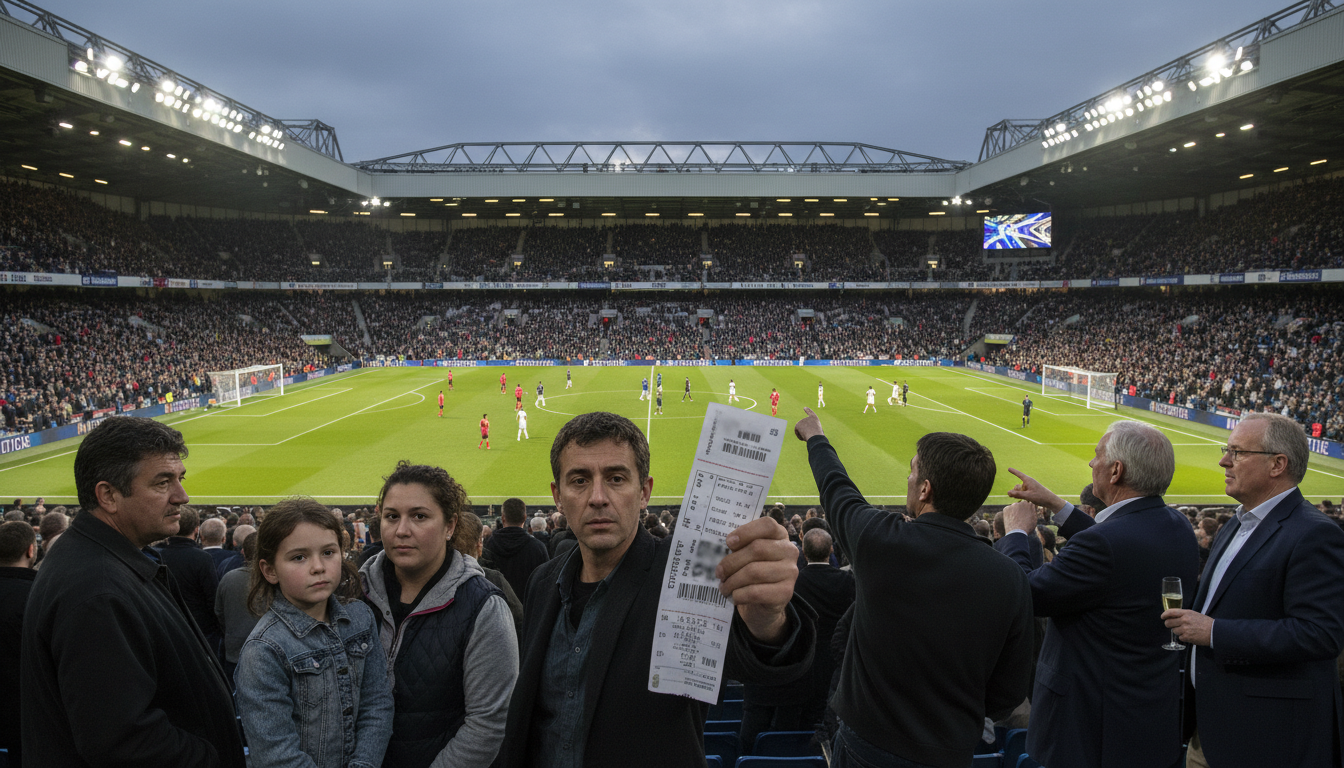
Premier League ticket prices surge as clubs chase matchday revenue
Premier League ticket prices have risen sharply as top clubs increased matchday income in the 2024/25 season, a shift that is heightening affordability concerns for local supporters and reshaping fan access.


Big Six ticket revenue jumps in 2024/25
A recent UEFA report shows that England’s so‑called Big Six — Arsenal, Chelsea, Liverpool, Manchester City, Manchester United and Tottenham — saw nearly a 20 percent rise in home match ticket revenue in 2024/25 compared with the previous year. This jump outpaced overall league averages and reflected stronger demand, higher average prices and expanded commercial hospitality at high‑profile fixtures.
The increase in ticket takings came despite the Premier League’s long‑standing dominance of broadcast and sponsorship income, which still account for the majority of club revenues. Clubs have nonetheless signalled a strategic pivot toward maximising matchday earnings as other income streams have become less certain in their growth trajectory.
Broadcast growth slows, clubs turn to matchday income
Industry figures show that the rapid expansion of television rights money that characterised the previous decade has moderated, leaving clubs to search for alternative revenue channels. With global broadcast deals stabilising, club executives have prioritised monetising the physical matchday experience to protect transfer budgets and cover rising operational costs.
That strategy has meant a renewed focus on pricing strategies for tickets, hospitality packages and premium seating, often targeting visitors prepared to pay more for a one‑off experience. The result is a tiered market in which standard season‑ticket holders face squeeze points as clubs reconfigure stadium offers to favour higher‑margin sales.
Stadium upgrades and premium hospitality reshape pricing
Many clubs have invested heavily in stadium refurbishments and expanded hospitality suites, arguing that upgraded facilities justify higher prices for premium seats. Improvements range from enhanced catering and padded seating to purpose‑built corporate boxes and exclusive lounges that carry significantly higher tariffs than general admission.
Fulham’s redeveloped hospitality areas, which now include high‑end catering and experiential features, have become a notable example of this trend. The club’s top hospitality and season‑ticket packages are among the most expensive in the country, with some season tickets priced at up to £3,000, a level that underscores how premium offerings are being leveraged to lift matchday revenue.
Local supporters shoulder affordability burden
The move toward premiumisation is having direct consequences for local fans, many of whom report increasing difficulty in sustaining regular attendance. As clubs prioritise tourists and occasional visitors who can pay top prices, long‑standing community supporters face reduced access or higher costs to maintain their places in the stands.
Advocates for supporters point to season‑ticket hikes, the reallocation of seats into hospitality, and the emergence of dynamic pricing models as mechanisms that progressively marginalise lower‑income fans. For households on tight budgets, the calculus of attending a match now often requires sacrifices that were once uncommon for traditional local followers.
Tourists and global demand fuel premium pricing
Premier League clubs are betting that international visitors and one‑off attendees will absorb higher prices, especially for marquee fixtures against traditional rivals and European nights. The league’s global profile has created a steady stream of tourists who prioritise the matchday spectacle and are willing to pay premiums for seats, tours and packaged experiences.
This international demand has given clubs cover to introduce variable pricing and exclusive packages that sit well above average domestic ticket costs. While this approach boosts immediate revenues and widens global brand exposure, it also accelerates the bifurcation of the fan base into higher‑paying visitors and price‑sensitive locals.
Responses from fans, regulators and clubs
Supporter groups and local officials have pushed back against rising ticket costs, calling for measures such as price caps, community allocations and greater transparency around how matchday revenues are reinvested. Fan organisations argue that football clubs retain a social and civic role requiring them to preserve access for local communities as well as pursuing commercial growth.
Clubs defend their decisions by pointing to the financial realities of modern football, including player wages, transfer spending and the costs of maintaining and upgrading stadiums. Many clubs say matchday investments improve safety and comfort, and that revenue derived from hospitality helps subsidise lower‑priced seats elsewhere in the stadium.
Longer‑term implications for stadium culture and club finances
The intensification of matchday monetisation raises questions about the character of stadium atmospheres and the sustainability of fan relationships. If local supporters increasingly lose footholds in home stands, clubs risk diluting traditional matchday cultures that contribute to noise, identity and home advantage on the pitch.
From a financial perspective, diversifying revenue streams beyond broadcasting is a sensible short‑term hedge, but over‑reliance on premium visitors could expose clubs to demand volatility. Economic downturns, travel restrictions or shifts in consumer spending could quickly reduce the pool of high‑value matchday customers, leaving clubs to reassess pricing strategies.
The debate over Premier League ticket prices is now balancing economic necessity against community obligations, with outcomes likely to shape both club planning and supporter campaigns in the seasons ahead.