LaLiga opening weekend divided as Tebas proposes staggered first matchday
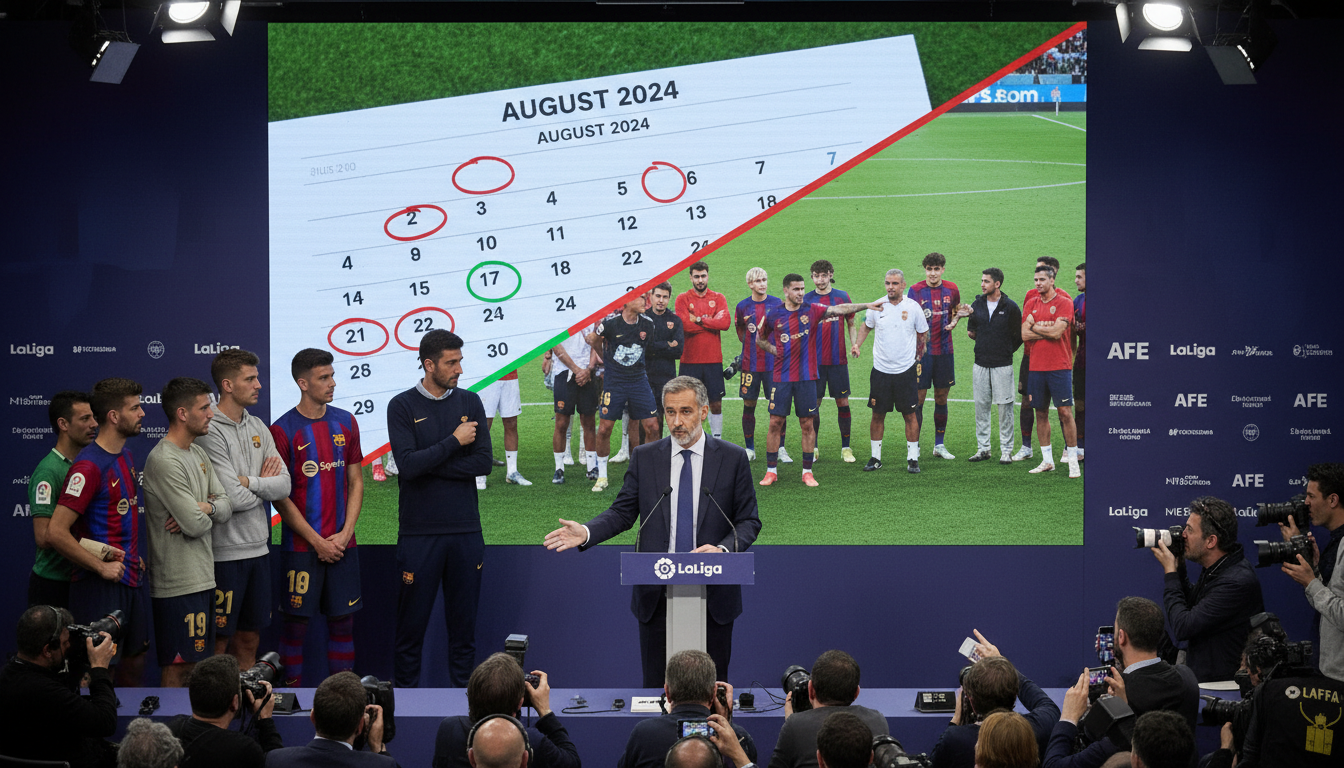
LaLiga opening weekend divided will see the first matchday split across different dates, Javier Tebas announced, creating a dispute with the Spanish Footballers’ Association over player welfare and the start date for the 2026 27 season. The division is proposed for the weekend of August 15 and 16, 2026 with some clubs to play their opening fixtures later between matchday two and three. The move has prompted a formal response from the AFE which wants a single start for all teams on the weekend of August 22 and 23, 2026.


Tebas announces split opening weekend
Javier Tebas told reporters that LaLiga plans to start the 2026 27 campaign on the weekend of August 15 and 16, 2026 and that the first matchday would be divided. He said the split is intended to accommodate clubs with heavy representation at the World Cup and to respect the agreed rest and preparation windows for players. Tebas argued the staggered approach adheres to a framework that provides three weeks of rest and three weeks of preparation for affected teams.
The LaLiga president indicated that clubs with the greatest number of international participants could be allowed to postpone their first fixture until later in the opening weeks. Tebas framed the decision as an attempt to balance fixture integrity with the physical recovery of players returning from extended international duty. He emphasized that the league would still commence in mid August while adapting scheduling to specific club circumstances.
Tebas also suggested that the alternative of a universally later start would introduce wider problems for the domestic calendar. He warned that shifting the entire competition beyond the mid August date would compress the season and complicate scheduling for clubs, broadcasters and competition organizers. His comments set up a direct contrast with the position taken by the players association.
AFE insists on August 22 23 unified start
The Spanish Footballers Association issued a statement saying there is no agreement with LaLiga over the competition start date and calling for all teams to begin on the same weekend of August 22 and 23, 2026. AFE argued that a single unified start would protect players by guaranteeing consistent rest and preparation periods across the board. The association also demanded clarity on which international players might be affected and urged that player health be the primary consideration.
AFE warned that unequal start dates risk creating competitive imbalances and could leave certain squads disadvantaged or overexposed early in the season. The association further proposed that the Segunda Division conclude in step with Primera to avoid calendar mismatches that affect promotion and relegation logistics. Their position makes the dispute not only about timing but also about fairness and athlete welfare.
In its statement AFE made clear it had not consented to Tebas’s plan and called for negotiations to reach a solution that includes the players’ perspective. The union’s intervention ensures that any final calendar will have to be negotiated with a representative body focused on health and contractual protections. That dynamic raises the stakes for upcoming discussions between the league, clubs and the players.
Clubs most likely to be affected
Clubs that supplied the highest number of participants to the last World Cup are expected to be at the center of the staggered scheduling plan. High profile teams with numerous internationals would be those considered for delayed openings so their returning players can complete recovery and training windows. That group is likely to include Spain’s biggest clubs which carry significant numbers of national team members.
For those clubs, a delayed first match could reduce the risk of early season injuries and help ensure competitive readiness for the long campaign. Conversely, opponents required to play them later may face calendar congestion as fixtures are rescheduled, and some clubs will object if they feel disadvantaged by facing fresher or more rested opponents later in the opening weeks. The practical distribution of those fixtures will therefore be closely watched.
Smaller clubs and those with fewer internationals may view a split opening weekend as potentially unfair if replacements or rebalanced fixtures become necessary. The administration must weigh not only player welfare but also perceptions of sporting equity across the league. How LaLiga allocates which clubs will play later will be a central point in negotiations.
Player welfare and regulatory considerations
The dispute has placed player welfare at the forefront of the calendar discussion with the AFE stressing protection of international athletes. The association has asked for transparency on which individuals would be affected and for guarantees that medical and recovery protocols will be respected. Protecting players from rushed returns after extended international duty is a recurring concern in modern calendar planning.
Tebas has referenced an internal convention that provides three weeks of rest followed by three weeks of preparation as a justification for starting mid August with adjusted fixtures. That timeline is intended to create a predictable rhythm for clubs and players returning from late summer tournaments. The interpretation and application of that convention will be scrutinized by the AFE and by clubs seeking clear assurances.
Regulatory questions also emerge about whether an uneven first matchday would raise contractual or competition law issues for broadcasting and commercial partners. Agreements tied to scheduled fixtures often include clauses about timing and availability, so substantial changes could trigger renegotiations or compensatory measures. League officials will need to consult stakeholders to manage legal and commercial fallout.
Calendar logistics and broadcast implications
A split first matchday complicates logistics for match operations ticketing and broadcast planning. Broadcasters typically build schedules and marketing campaigns around a known full fixture list, and staggered starts may force last minute adjustments to production plans. Fans planning travel and ticket purchases could also face uncertainty if their club’s opening fixture is moved.
From a scheduling perspective LaLiga would need to ensure that any postponed fixtures fit into later windows without creating excessive midweek congestion. The need to accommodate European competitions domestic cup ties and international breaks will constrain available dates. Efficient fixture reallocation would require cooperation between clubs the league and competition organizers to preserve fairness and minimize additional strain on squads.
Commercial partners will closely monitor the impact on television ratings and sponsorship visibility because early season matches generate significant attention. Any reduction in marquee matchups during the opening broadcast windows could affect advertising revenue and partner commitments. LaLiga must weigh those financial considerations alongside the practical benefits of protecting players coming from international duty.
Negotiation timeline and likely outcomes
Negotiations between LaLiga AFE and club representatives are expected to intensify in the coming days as calendar deadlines approach. The league will need to present a detailed plan that specifies which fixtures will be moved and establishes medical and training assurances for returning players. The AFE has already signaled it will press for a later unified start if its concerns are not adequately addressed.
Possible outcomes include a compromise that preserves an August 15 and 16 start for most clubs while allowing a limited number of postponements with predefined criteria. Alternatively the parties could agree to the AFE proposal and shift the entire opening to August 22 and 23 2026. A third scenario would involve incremental adjustments coupled with formal guarantees about recovery periods and scheduling protections for Segunda Division teams.
Any final decision will have to balance sporting integrity commercial obligations and the welfare of players. The timeline for finalizing the calendar is narrow so transparency and swift negotiation will be essential to avoid prolonged uncertainty for clubs supporters and partners. League officials have signaled a willingness to discuss options but have not yet secured the players association’s approval.
LaLiga opening weekend divided remains a live issue with multiple stakeholders and competing priorities. The coming days will be decisive as LaLiga AFE and club delegations work toward a resolution that protects player health preserves competition fairness and satisfies commercial commitments. Supporters and media will be watching closely as a final calendar is agreed and the 2026 27 season draw nears.