Patrick Rutamu: The Physiotherapist Behind Rwanda’s National Football Resilience
Patrick Rutamu has served as Rwanda’s national team physiotherapist for over a decade, leading player recovery, match‑day care and sports medicine education.

For more than ten years Patrick Rutamu has worked behind the scenes to keep Rwanda’s national footballers fit and available for selection. His role as Rwanda’s national team physiotherapist spans elite training, on‑pitch emergency care and long‑term rehabilitation, and his influence reaches youth development programs as well as senior squads. Club and country players have come to rely on the protocols and routines he has helped establish across Rwandan football.
From Athletics to Football: Early Career and Training
Rutamu began his professional journey in sports medicine with the Rwanda Athletics Federation before moving into football, where he joined the U17 national setup during a formative period for youth development. He holds advanced training from Real Madrid University and a FIFA certification in football medicine, credentials that underpin the clinical approach he applies to player care. That combination of academic preparation and field experience framed a career that moved quickly from national athletics to the pressures of international football.
His transition into football medicine coincided with a broader push in Rwanda to professionalize support services around elite athletes. Rutamu’s early work focused on injury prevention, screening and preparing young athletes for competition, tasks that required coordination with coaches, fitness staff and medical practitioners. The relationships he built during that time laid the foundation for his later role with the senior national team.
Match-Day Responsibilities and Rapid Decision-Making
On match day Rutamu’s attention is never on tactics or possession statistics; it is trained on contact patterns, impacts and any signs of acute injury that could stop a player from continuing. That observational discipline allows him to form an immediate, evidence‑based diagnosis when a player goes down, often within seconds. Quick, accurate decisions about whether a player can continue or must be withdrawn can alter the course of a game, and Rutamu’s interventions are designed to protect both immediate match outcomes and long‑term player health.
The speed of those decisions requires familiarity with each player’s medical history and a clear communication channel with coaches and captains. When substitutions are forced by injury, those moves carry strategic weight; losing or preserving a key performer can determine whether a team sustains a lead or recovers from a deficit. Rutamu’s role therefore blends clinical judgement with a practical understanding of football management.
Night Shifts and the Anatomy of Recovery
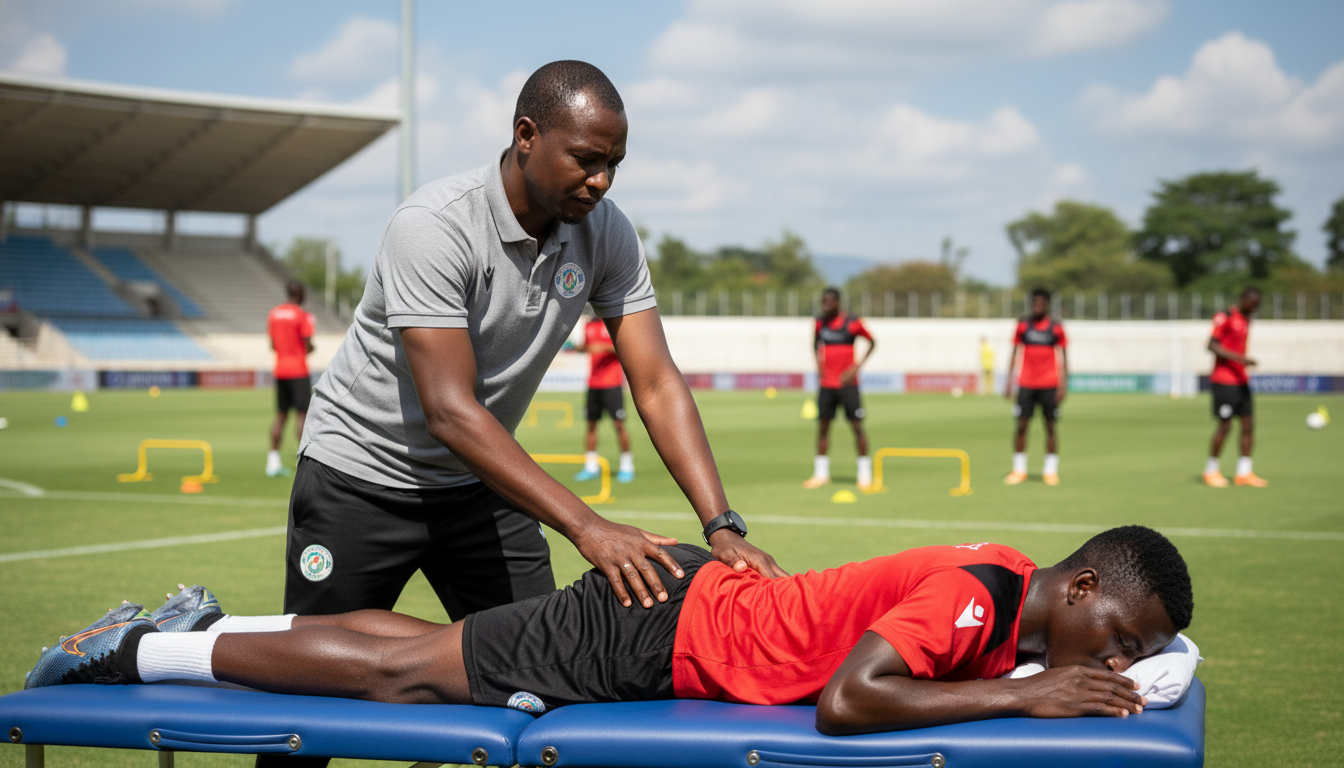
The visible part of Rutamu’s work lasts 90 minutes, but the recovery process extends through the night and across days of rehabilitation. Post‑match treatment frequently involves urgent physiotherapy sessions, soft tissue work, and protocols to reduce swelling and inflammation so players can train the following day. For more serious cases, multi‑phase rehabilitation plans aim to restore strength, mobility and confidence, often requiring regular assessments and adjustments.
Knee injuries, ankle sprains and muscle strains are among the most common problems Rutamu manages, while ligament ruptures and complex joint damage demand prolonged, staged recovery. He emphasizes that rehabilitation has no shortcuts: structured timelines, objective functional testing and gradual reintroduction to competitive training are essential to avoid re‑injury and preserve careers. The cumulative workload — repeated treatments, travel and monitoring — is a central part of the support system he provides.
A Defining Moment: Preparing an U17 Goalkeeper for International Competition
One of the most consequential assignments in Rutamu’s career involved an U17 first‑choice goalkeeper who sustained a knee injury weeks before a major World Cup qualifier. The coaching staff made clear that their preference was to have the starter available, creating a narrow window for effective rehabilitation. Rutamu organized intensive treatment and progressive conditioning, balancing the immediate demand for match readiness with the need to avoid long‑term damage.
That episode exemplified the sacrifices inherent in elite sports medicine: sleepless nights, repeated sessions and an insistence on measurable progress before returning the player to competitive action. The goalkeeper’s recovery and subsequent participation validated the structured approach Rutamu advocates, and the case boosted his standing among coaches and players who saw tangible results from methodical rehabilitation.
Reframing Physiotherapy: Clinical Practice, Trust and Reputation
Rutamu is explicit about a common misunderstanding: physiotherapy in elite sport is not merely massage or comfort care, it is a medical discipline grounded in diagnosis, treatment planning and outcome measurement. He applies clinical evaluation techniques, designs individualized recovery programs and uses functional benchmarks to determine when a player is ready to resume full training. That evidence‑based framework helps align medical priorities with coaching plans.
Over time he has also built a reputation for reliability that spreads by word of mouth within Rwanda’s football community. Players refer teammates and clubs based on results and the trust established through consistent care. That trust is a critical currency in elite sport, enabling candid conversations about pain, performance limits and the risks associated with accelerated returns to play.
Vision for Sports Medicine: Rehabilitation, Performance and Capacity Building
Looking ahead, Rutamu has outlined a broader ambition for sports medicine infrastructure in Rwanda: a dedicated center that combines rehabilitation services with performance monitoring and professional training. Such a facility would offer targeted support for recovery while also serving as a hub for education, research and the development of physiotherapists and sports scientists. Investment in this model would provide pathways for athletes to receive higher‑quality care and for practitioners to access specialized training.
Achieving that vision will require coordination among federations, clubs, health authorities and potential private partners, as well as an emphasis on sustainable funding and skill transfer. Rutamu believes expanding capacity is essential not only to reduce injury rates but to maximize athlete longevity and competitive potential. The proposed center would therefore represent both a clinical resource and a strategic asset for Rwandan sport.
Rwanda’s football journey has been shaped by visible achievements on the pitch and by a quieter evolution in the medical and support services that underpin performance. Patrick Rutamu’s decade of service as a national team physiotherapist reflects both the technical demands of modern sports medicine and the human commitment required to keep players fit and ready.
His succinct answer when asked whether a team can succeed without a physiotherapist — “No” — highlights the integral role medical professionals play in modern football. As Rwanda continues to invest in athlete support systems, Rutamu’s work offers a model of clinical rigor, practical problem‑solving and long‑term development that other programs can study and emulate.