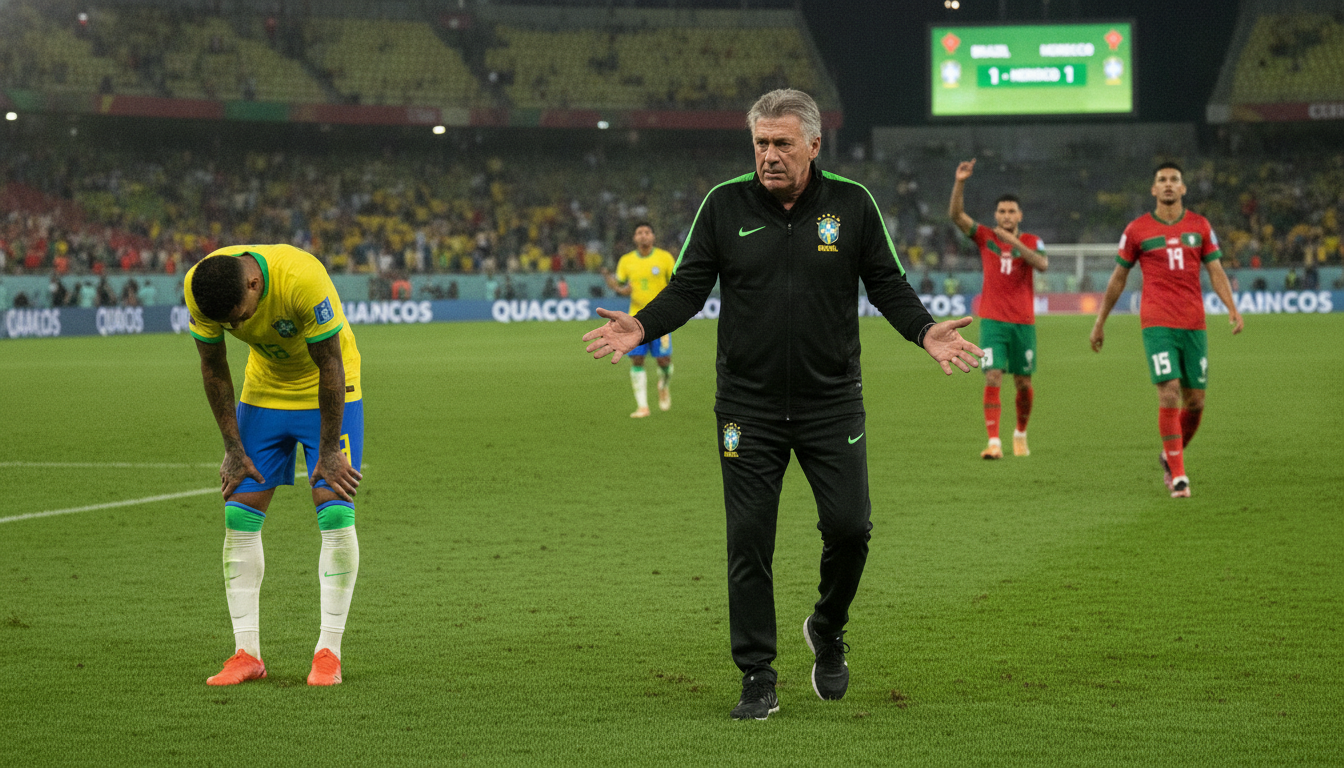
Brazil 1-1 Morocco: Ancelotti Blames Nerves and Loss of Possession After Tense World Cup Opener
Brazil 1-1 Morocco: Ancelotti blamed nerves, loss of possession and lack of balance after a tense World Cup opener; Vinicius Junior rescued a point for Brazil.

Brazil were held to a 1-1 draw by Morocco in their opening match of the 2026 FIFA World Cup, a result Carlo Ancelotti attributed to early nerves, persistent turnover of possession and a lack of balance in the first half. Ismael Saibari gave Morocco the lead before Vinicius Junior struck to level the score as Brazil improved after the interval. The result leaves both sides with a single point and sets up crucial group fixtures this week.
Ancelotti points to nerves and possession problems
In his post-match assessment, Ancelotti said Brazil failed to find composure early and paid the price in midfield exchanges and transitions. He described a team that struggled to control the ball and generate consistent momentum in the first 45 minutes. The coach acknowledged that the side found a more stable shape after the break and expressed confidence that the performance will improve in the next game.
Ancelotti’s remarks underlined a familiar concern for Brazil at major tournaments: when they are disrupted in the middle of the park, the team’s attacking fluency can evaporate. The manager’s diagnosis focused less on individual errors and more on collective balance and tempo. His message to the squad will likely revolve around regaining patience on the ball and tightening the link between defence and attack.
Key moments: Saibari strike and Vinicius equaliser
Morocco took the lead through Ismael Saibari, whose goal came as the African side capitalised on Brazil’s early instability. That strike forced Brazil to chase the game and exposed the Selecao to moments of vulnerability on the counter. Morocco’s disciplined structure and quick transitions made the opening period particularly difficult for the South Americans.
Brazil’s response came after the interval when the team began to string passes together and press higher up the pitch. Vinicius Junior’s equaliser restored parity and shifted momentum in Brazil’s favour. While the match finished level, the second-half sequence demonstrated Brazil’s capacity to recover when they tightened possession and increased urgency.
Tactical imbalance in the opening period
Analysts watching the match noted Brazil’s struggle to maintain compactness between the lines during the early stages. The side’s midfield frequently ceded possession, allowing Morocco to spring forward with purpose and test Brazil’s defensive reactions. That lack of balance left the full-backs exposed and forced the centre-backs into hurried clearances and riskier distribution.
Morocco’s approach, disciplined and opportunistic, amplified Brazil’s shortcomings by closing passing lanes and pressing aggressively in the middle third. The combination of quick pressure and clinical forward play created the conditions for Saibari’s goal. Brazil’s tactical adjustments at halftime addressed some of these problems, but the first-half deficit underlined how fine margins can determine outcomes at this level.
Second-half improvement and Vinicius’ impact
Brazil’s second-half performance showed clearer intent and better ball retention, which helped them create higher-quality chances. The team’s increased tempo and more direct movement off the ball opened spaces that had been absent in the first period. Vinicius Junior, as the natural outlet for Brazil’s attacking impetus, found a way to convert pressure into a goal that put Brazil back on level terms.
The equaliser was emblematic of Brazil’s quality when the side operates with greater balance and fewer unforced errors. From that point, they threatened to take control of the match, though Morocco remained compact and dangerous on the break. The improvement after the break suggested that tactical tweaks and sharper concentration can remedy the weaknesses exposed earlier.
Group-stage impact and upcoming fixtures
The draw leaves Brazil and Morocco level on one point in their opening group standings, creating a scenario where both teams must respond in upcoming fixtures. Brazil now shift focus to their next match against Haiti on Saturday, a game they will view as an opportunity to secure three points and build momentum. Morocco head to face Scotland on Friday, a fixture that offers a chance to consolidate after a solid tactical showing.
The result also alters the calculus for group progression, emphasizing the importance of consistency across the next two matches. For Brazil, recovering a commanding posture in the group stage will be essential to avoid pressure in the knockout rounds. Morocco’s performance, meanwhile, will be judged on whether the team can convert disciplined defensive displays into victories against technically gifted opponents.
Coaching responses and player outlooks
Ancelotti struck an optimistic tone despite the draw, highlighting the team’s better second-half performance and insisting there was room for improvement ahead. He underlined that the match had provided useful lessons on concentration and team balance that can be corrected in training. The coach’s focus now shifts to fine-tuning dynamics and preparing for Haiti with a view to stronger ball control and quicker recovery after turnovers.
From a player perspective, the match offered both warning signs and positive signals: Brazil’s attackers showed ability to change the game once rhythm returned, while the defence must work on responding more cohesively to early pressure. Morocco’s organised defensive system and counterattacking threat earned widespread praise, and the outcome will bolster their belief that they can compete with top-ranked opponents in the group.
Brazil must now regroup, address the turnover issues and sharpen their midfield transitions before Saturday’s match.
The draw with Morocco underlined how even heavyweights can be tested when balance and possession break down, and it served as a reminder that tournament football demands concentration from kick-off until the final whistle.