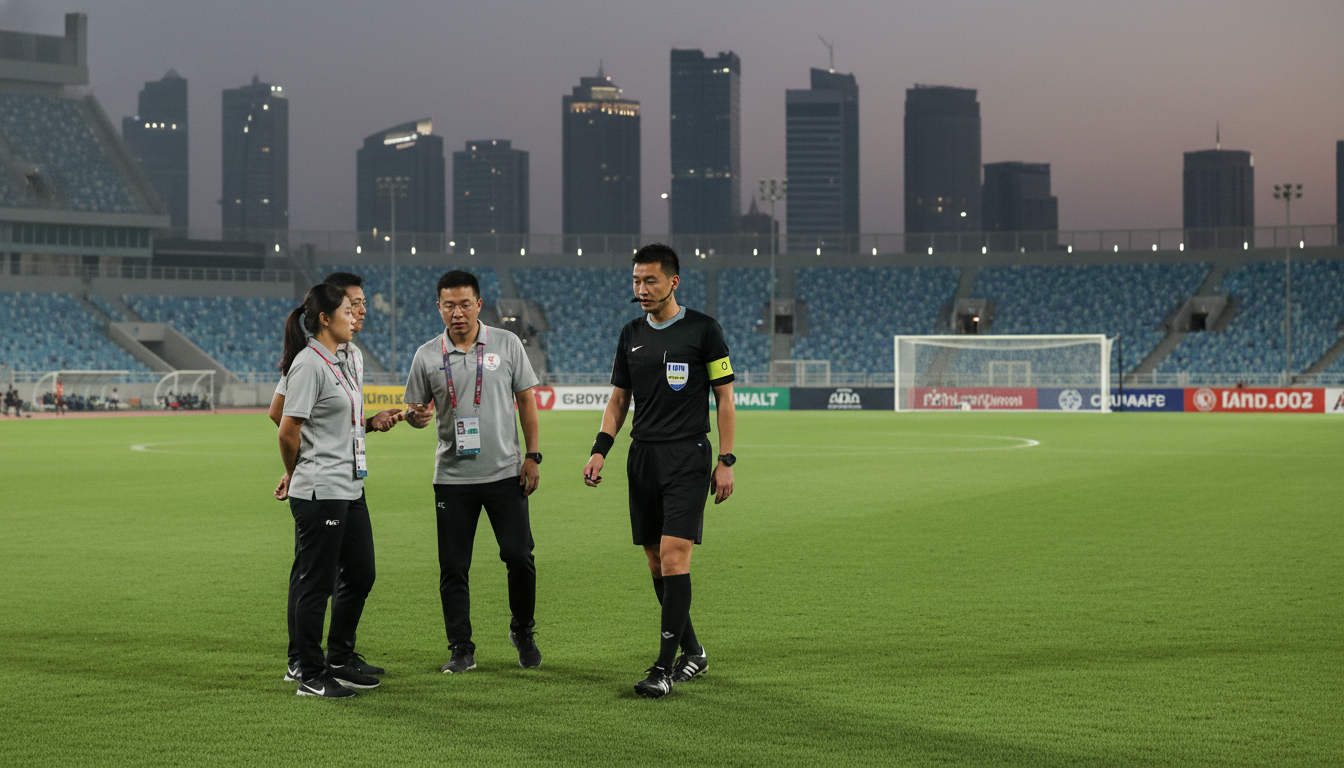
Ma Ning Remains in Jeddah After AFC Clears Referee Over Controversial Al-Ittihad Calls
Ma Ning cleared by AFC referees committee and remains in Jeddah after disputed Al-Ittihad vs Machida Zelvia quarter-final; VAR decisions fuel controversy.


Chinese referee Ma Ning remained in Jeddah on Wednesday after the Asian Football Confederation’s referees committee reviewed a string of contentious decisions from Al-Ittihad’s 1-0 quarter-final defeat to Machida Zelvia. Reports from Saudi media had claimed Ma was removed from the AFC Champions League Elite tournament and had left the country, but Beijing Youth Daily and AFC officials said the committee found no officiating errors. The episode has intensified scrutiny of VAR interventions and match official assignments as the competition advances to the semi-finals.
AFC Review Finds No Clear Refereeing Errors
After the match in Jeddah sparked sharp reaction from the home side, the AFC referees committee convened to examine the disputed incidents involving Ma Ning and his officiating team. Beijing Youth Daily reported that the panel reviewed the footage and determinations, concluding that Ma’s performance did not include demonstrable errors or missed calls. The newspaper also said Ma remained in Jeddah pending further logistical decisions by the AFC following the semi-final second leg.
The committee’s rapid review reflects the governing body’s effort to manage controversy in a high-profile knockout fixture while preserving the integrity of referee appointments. Officials indicated that any decision on releasing match officials from the tournament would be taken after the conclusion of the semi-final second leg between Machida Zelvia and Shabab Al Ahli. The process underlines how confederations balance transparency with procedural caution in contested match situations.
Two Decisions at the Center of the Dispute
Al-Ittihad’s anger focused on a pair of incidents that directly affected the match’s course: a 60th-minute challenge on goalkeeper Predrag Rajkovic by Machida’s Kuryu Matsuki and an 86th-minute Danilo Pereira goal that was ultimately disallowed for handball after VAR review. Saudi reports argued both decisions were mishandled, alleging the goalkeeper challenge should have prompted sterner action and that the disallowed goal overturned a decisive moment. Those perceptions contributed to immediate post-match protests and vocal criticism from the club and its supporters.
Match footage and available reviews show the referee issued a yellow card for the Matsuki challenge and allowed play to continue before later consulting VAR for the handball call that annulled Pereira’s strike. The combination of on-field judgment and video review outcomes is now the focal point for debate, with club officials insisting the balance of those interventions changed the match result. For many observers, the sequence highlighted the fine margins VAR can introduce at the business end of a continental competition.
Al-Ittihad’s Reaction and Club-Level Concerns
Al-Ittihad described the outcome as deeply unfair and expressed strong dissatisfaction with the match officiating in public and private channels after the game. The club’s reaction extended to calls for explanations and a formally lodged dissatisfaction, reflecting rising tensions between leading Gulf clubs and refereeing bodies over high-stakes match control. That level of complaint is not uncommon in knockout football, but it has added pressure on the AFC to demonstrate procedural rigor and clear communication.
Club officials and supporters argued the decisions undermined the home side’s prospects and demanded clarity on how VAR was used in the critical moments. Those complaints will likely be followed by internal AFC correspondence and a formal review of match control procedures, although the confederation’s preliminary review has already cleared Ma of any immediate fault. The dynamic now shifts toward how the AFC will publicly explain its conclusions and whether further transparency measures will be offered to calm stakeholders.
AFC Refereeing Procedures and VAR Protocols Explained
The AFC referees committee’s work in this case drew attention to the organization’s established process for handling disputed match incidents, which typically involves rapid playback reviews and consultation with on-field officials. VAR protocols allow for certain on-field decisions to be reviewed and, where clear and obvious errors are identified, overturned; the threshold for intervention is purposely high to avoid overreach. The committee’s statement, as reported by Chinese media, emphasized that the panel found no clear evidence that would meet that threshold in Ma Ning’s handling of the match.
Officials familiar with confederation procedures stressed that review outcomes rest on technical interpretations of handling, contact intensity, and the sequence of events leading to any potential infraction. The neutral audit of decisions is intended to both protect referees from unfounded blame and to reassure clubs that there is a clear mechanism for accountability. In this instance, the AFC’s rapid assessment and decision to keep Ma in the tournament for the time being signaled a preference for process over reactive personnel changes.
Implications for Referee Appointments and Tournament Integrity
The decision to retain Ma Ning in Jeddah through the semi-final period sets a precedent for how the AFC might manage official assignments amid controversy. Whether the referees committee opts to rotate match officials or to maintain existing appointments will be watched closely by clubs, national associations, and broadcasters. The outcome could shape perceptions of fairness and the confederation’s willingness to shield match officials from partisan backlash during crucial fixtures.
The broader implication extends to how VAR is perceived in Asian competitions, particularly when high-profile clubs feel disadvantaged by technology-aided reversals. Tournament organizers face the dual task of supporting referees while offering transparent explanations that satisfy stakeholders. In the short term, the AFC’s actions will be evaluated by the conduct of remaining fixtures and by how clearly it communicates the rationale behind its refereeing decisions.
Ma Ning’s Standing and the Wider Refereeing Context
Ma Ning is widely regarded as a senior referee within the Asian game, and his involvement in a high-stakes quarter-final underscores the level of trust placed in experienced match officials. His presence in Jeddah, even amid controversy, reflects the confederation’s initial judgment that his performance did not cross into the territory warranting immediate removal. That posture also highlights the scarcity of elite referees whose appointments carry weight in continental competitions.
The incident will inevitably factor into discussions about referee training, VAR education, and support structures across member associations. Observers note that controversies of this type often prompt calls for clearer on-screen explanations of VAR interventions and more consistent messaging from governing bodies. Those calls are likely to grow louder if influential clubs continue to challenge officiating outcomes without finding satisfactory redress through existing review channels.
The AFC’s handling of Ma Ning’s case and the club backlash it generated will be a test of institutional resilience and communication under pressure. The coming days, particularly the semi-final second leg and any subsequent AFC statements, are likely to determine whether the episode resolves quietly or becomes a flashpoint for broader change. Fans, club officials, and refereeing bodies will all be monitoring how transparency and accountability are balanced in elite Asian football.
Al-Ittihad and regional stakeholders will be watching for any formal explanations or procedural changes that arise from this review, as the club prepares to refocus on domestic and continental priorities. For Ma Ning, the immediate future rests with the AFC’s decisions and the tournament schedule, while for Asian refereeing, the episode is another reminder of the complex interplay between human judgment and video technology.