US says Iran will be welcome at World Cup as visa limits target IRGC-linked delegates
US Secretary Marco Rubio says Iran World Cup team will be welcomed in the United States, while the government may bar delegation members linked to the IRGC from entering.


Lead: US position on Iran World Cup attendance
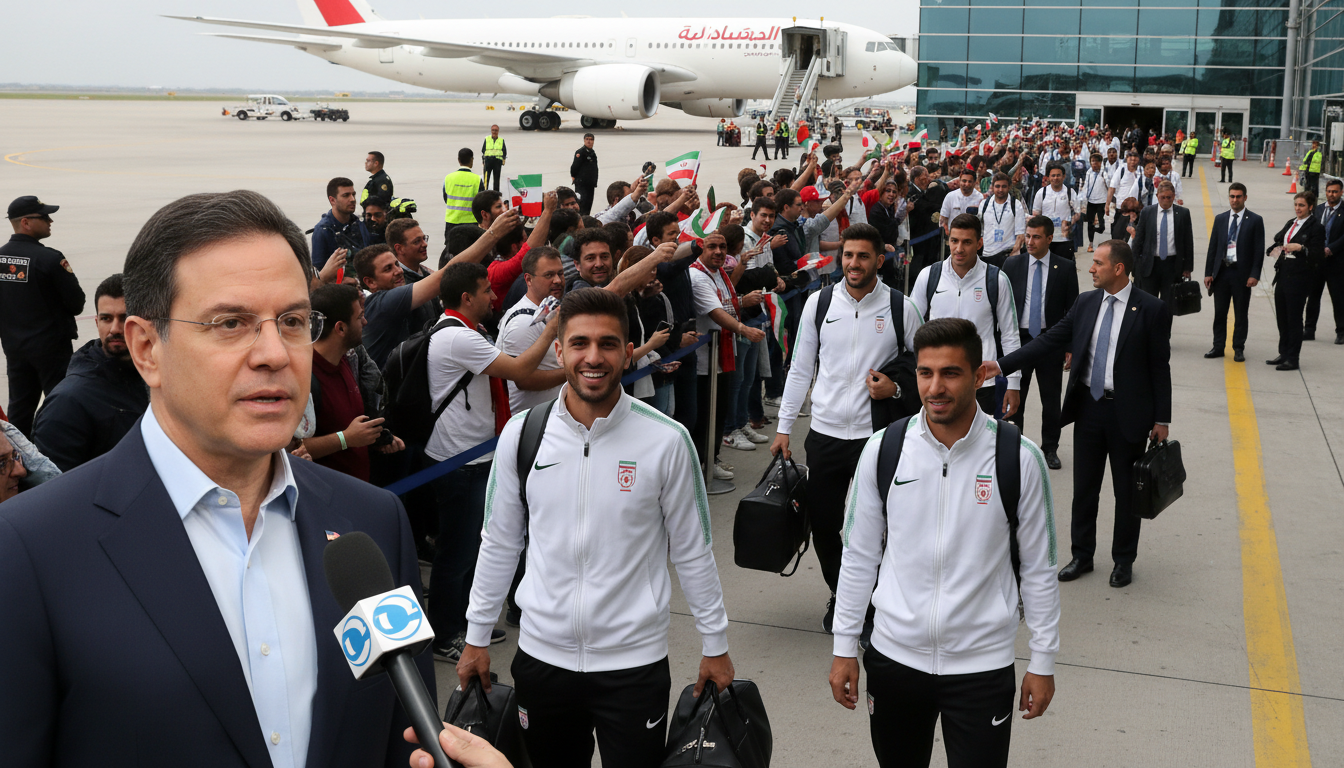
The United States made clear on April 24, 2026, that Iran’s national team will be welcome at this year’s World Cup, according to Secretary of State Marco Rubio. Rubio told reporters that Washington has not asked Iran to withdraw and emphasized that any travel restrictions would target non-athlete delegation members with suspected ties to the Islamic Revolutionary Guard Corps. The statement followed reports that an Italian envoy had suggested Italy could take Iran’s tournament place, a proposal that was promptly dismissed by Italian officials.
Rubio’s clarification on athletes versus delegation members
Rubio underscored a distinction between the athletes and other members of Iran’s contingent, saying the team itself would not be barred from participation. He made clear that U.S. policy focuses on security vetting for individuals who accompany national teams, particularly those with possible affiliations to organizations designated as terrorist groups by Washington. The secretary indicated visa decisions could be made on a case-by-case basis if background checks revealed connections to the IRGC.
Potential visa restrictions tied to IRGC links
U.S. officials said they could deny entry to individuals judged to have ties to the IRGC, which the United States and several allies classify as a terrorist organization. Such denials would rely on immigration and national security authorities assessing delegation members’ backgrounds before curtailing travel. Rubio’s comments suggest that while sporting competition will be accommodated, security protocols remain in place and could affect coaches, officials, or support staff rather than the athletes.
Italian proposal to replace Iran quickly dismissed
The remarks came after reports that Paolo Zampolli, an Italy-born U.S. special envoy, had floated the idea of Italy taking Iran’s World Cup spot, a claim he said was raised with both the U.S. president and football’s governing body. Italian government and sports officials moved swiftly to reject the notion, calling the proposal inaccurate and distancing Rome from any effort to substitute teams in the tournament. The swift rebuttal closed off a diplomatic route that could have escalated tensions between sporting bodies and national governments.
Fifa’s role and the intersection of sport and diplomacy
Fifa, as the sport’s global governing body, retains authority over tournament entries and team eligibility under its rules and the competition’s regulations. Any change to participating teams would normally require Fifa procedures and justification grounded in sport governance, not political pressure. The episode highlights the recurring challenge for international sports organizations when geopolitical disputes intersect with major events and raises questions about how governing bodies balance competitive integrity with host-country security measures.
Logistics and practical implications for Iran’s participation
Should visa restrictions be applied selectively, Iran’s delegation may need to submit lists for pre-clearance or adjust travel plans to comply with host-country requirements. National teams typically travel with technical staff, federation officials, medical personnel, and media liaisons; exclusions among those groups could complicate preparations. Organizers, federations and the team itself would need to coordinate closely to ensure athletes receive necessary support without contravening host-nation security determinations.
Regional and international political reactions
Regional actors and international stakeholders are likely to monitor any implementation of visa restrictions closely, given the broader tensions surrounding Iran and its foreign policy apparatus. Sporting events often become platforms for diplomatic signaling, and measures targeting delegation members could prompt formal responses from Tehran or debates within multilateral forums. Conversely, allowing athletes to compete while restricting select officials may be viewed as a pragmatic approach that shields the sport from full politicization.
Precedents and legal frameworks guiding decisions
Governments and sporting bodies have navigated similar dilemmas in past tournaments when security concerns or sanctions regimes overlapped with competition. Legal authorities governing visa adjudication rest with host states, while eligibility and on-field matters remain under Fifa’s remit. Any action taken against delegation members would need to align with existing immigration law and provide procedural checks to avoid arbitrary exclusions that could provoke legal challenges or diplomatic disputes.
What comes next for the Iran World Cup question
In the coming days, federation representatives and tournament organizers are expected to clarify processes for accreditation and travel, and national teams will likely be asked to provide delegation rosters well in advance. Fifa and the host country will need to coordinate security vetting and access controls to minimize disruptions to the sporting schedule. Stakeholders including players’ unions, confederations and neutral observers will be watching for transparent application of rules to ensure that competition proceeds smoothly.
The immediate outcome is that Iran’s national team remains slated to participate in the World Cup while host-country authorities reserve the right to refuse entry to non-athlete delegates judged to have ties to the IRGC, a stance intended to balance sporting access with national security concerns.