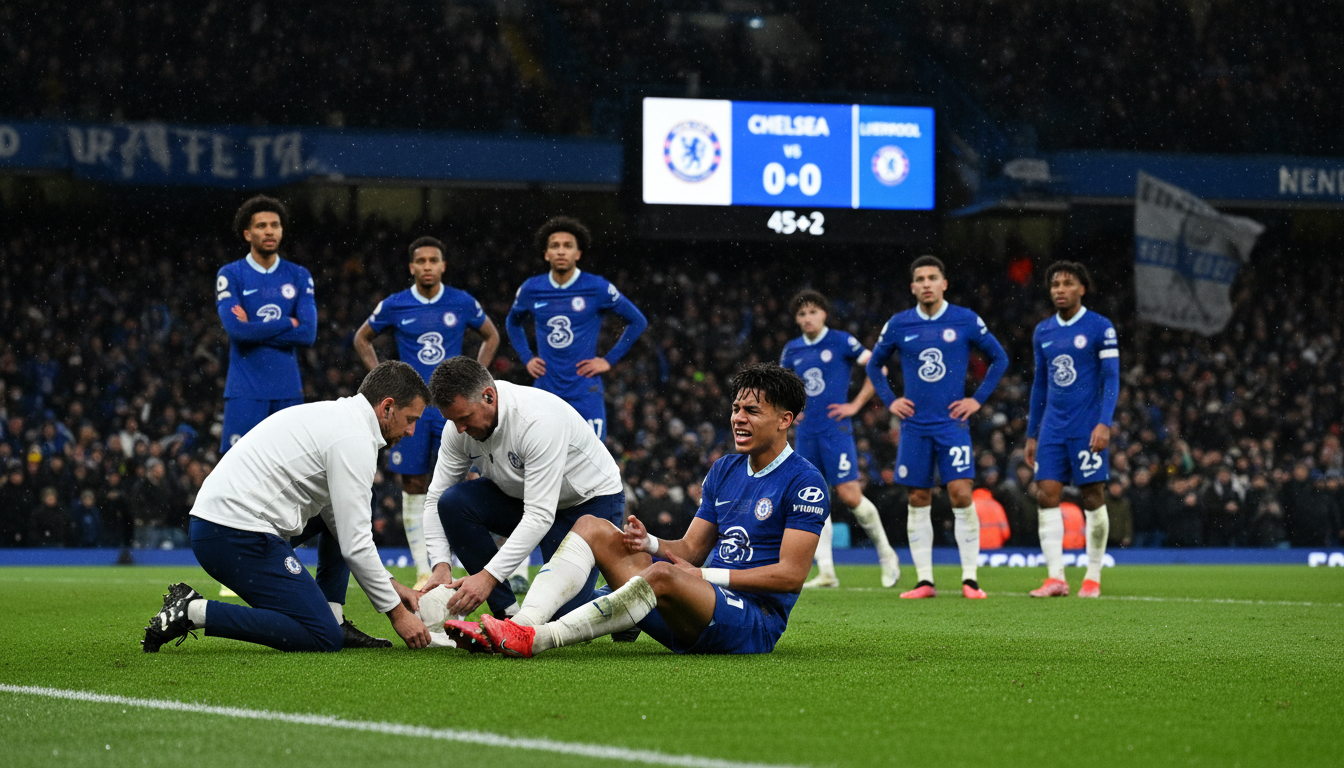
Estevao Ruled Out for Remainder of Season as Chelsea Confirm Injury
Chelsea confirm 19-year-old winger Estevao will miss the rest of the season after suffering a muscle injury, putting his Brazil World Cup hopes in doubt.


Immediate confirmation from Chelsea
Calum McFarlane, serving as Chelsea’s interim head coach, confirmed that Estevao will not feature again this season after sustaining a muscle problem in the club’s recent loss to Manchester United. The 19-year-old was forced off in the first half following a sprint down the flank, prompting scans and medical assessment. McFarlane described the situation as unfortunate for a player of Estevao’s age and ability and said the club will support him during recovery.
McFarlane also acknowledged uncertainty over Estevao’s participation at the World Cup, adding that while the player will be hopeful, the medical timeline makes selection unclear. The timing of the injury complicates both Chelsea’s late-season plans and Brazil’s preparations ahead of their Group C opener on June 13 against Morocco. The club has not provided a precise return date, but officials indicated the player will be sidelined for a “little bit of time.”
Medical history and current diagnosis
Estevao’s latest setback is a muscle injury, the same general issue that had sidelined him earlier in the campaign. He missed matches in both December and March with muscular problems, and the recurrence raises concerns about his conditioning and load management. Chelsea’s medical team will coordinate a rehabilitation plan aimed at full recovery, though muscle injuries can be unpredictable and require careful progression to avoid recurrence.
The club has opted for a conservative public stance, citing the need to protect the player’s long-term fitness and career development. That approach typically entails phased physiotherapy, targeted strengthening work, and gradual return-to-play protocols that prioritize tissue healing and reconditioning. For a teenager who has played regular senior minutes this season, managing training load and rest becomes especially important.
Season contribution and playing profile
Estevao has been one of Chelsea’s most-used attacking prospects this campaign, registering 36 appearances across all competitions. He contributed eight goals and provided three assists, figures that underline the impact he has made after breaking into the first team. In FA Cup play specifically, Estevao has directly influenced three goals—two scored and one set up—as Chelsea progressed to the semi-finals.
The young winger’s game is built on pace, direct running, and an eye for goal, attributes that made him a fixture on the right flank and a regular choice during rotation. His ability to influence knockout ties has been particularly valuable to Chelsea, who leaned on youthful energy amid a turbulent season.
Implications for Brazil’s World Cup selection
Estevao’s absence places a cloud over his selection for Brazil’s World Cup squad, with the national team’s first group match scheduled for June 13 against Morocco. Brazil’s coaching staff will monitor his recovery closely, but selection committees commonly prefer players who are fully fit and have recent minutes under their belt. Given the short window between club fixtures and the tournament, the likelihood of his inclusion will depend on the pace of rehabilitation and medical clearance.
Brazil possess depth in wide attacking positions, which complicates the prospect of fast-tracking an injured youngster into the tournament roster. If Estevao cannot demonstrate full match fitness in time, coaches are expected to prioritize ready alternatives to ensure tactical continuity. The final squad decision will reflect both medical reports and competitive considerations.
Squad and tactical adjustments for Chelsea
With Estevao ruled out, Chelsea’s options on the wings and in wide attacking rotations are reduced at a critical juncture of the season. Interim manager McFarlane must weigh formation tweaks and personnel choices ahead of the FA Cup semi-final against Leeds United. The club could rely more heavily on other young attackers and established senior wingers, while also considering midfielders who can provide width.
Chelsea’s recent form has been inconsistent; they have managed only one win in their last eight games across competitions, a sequence that precipitated managerial change earlier in the season. The team’s cup performances, including a 7-0 win over Port Vale and victories against Wrexham, Hull City and Charlton Athletic, indicate a capacity to perform in knockout football. McFarlane has emphasized correcting recent lapses and expects a response at Wembley.
Managerial context and club momentum
The club dismissed Liam Rosenior amid the poor run of results, appointing McFarlane on an interim basis as Chelsea seek stability during the run-in. McFarlane has been candid about the squad’s recent standards, noting a subpar display in midweek against Brighton and promising internal adjustments for the semi-final. The FA Cup represents a tangible chance for silverware and a morale boost, and the managerial staff will be tasked with steadying the group while navigating inevitable selection headaches.
Historically, Chelsea have a strong presence in the FA Cup’s latter stages, having reached the semi-finals 28 times; only Manchester United and Arsenal have appeared more often. That history puts additional pressure on the current squad to deliver a performance befitting the club’s tradition at Wembley. The upcoming tie against Leeds will be viewed as both a test of resilience and a barometer for the team’s short-term trajectory.
Youth development and long-term considerations
Estevao’s trajectory exemplifies Chelsea’s continued reliance on academy and young-signee integration amid squad turnover. His breakthrough season has delivered tangible returns, but his recent injury history raises questions about long-term management of young players’ minutes and physical demands. The club may reassess monitoring systems and individualized recovery plans to protect emerging talents from repetitive soft-tissue issues.
Long-term player development often requires balancing immediate competitive needs with graduated exposure to first-team intensity. Ensuring that Estevao completes rehabilitation and returns without recurrence will be important not only for his own development but also for Chelsea’s future planning. The club’s medical and sporting directors will likely review workload data and conditioning protocols in the summer.
What to expect in the coming weeks
Chelsea will provide regular updates on Estevao’s progress as further scans and consultations take place, though the exact timeline remains deliberately guarded. McFarlane has emphasized collective support for the player and insisted the squad will prepare without him for the remainder of the season. Tactical work and rotations will adapt to his absence, with an eye on securing triumphs in remaining cup fixtures and stabilizing league performances.
Brazil’s national setup will also issue their own fitness assessments in due course, and the player’s availability for the World Cup will be subject to their medical evaluation. Supporters can expect incremental public bulletins rather than definitive timelines until the club’s medical staff complete their rehabilitation roadmap. The focus for now is recovery and avoiding rushed returns that could exacerbate the injury.
Estevao’s case highlights recurring challenges across elite football where promising youngsters must navigate intense schedules and physical expectations. The coming weeks will determine whether he can rejoin competitive action in time for international duty or if the emphasis will switch entirely to full rehabilitation ahead of next season. The club, the player and national team staff will all need to coordinate closely to prioritize long-term welfare and performance readiness.