Czechia World Cup 2026: Underdogs in Group A Face Altitude, Travel and Tactical Questions
Czechia World Cup 2026 preview: Group A test with Mexico, South Korea and South Africa — tactical limitations, altitude concerns and the experienced spine that must deliver.

Czechia drawn into a challenging Group A
Czechia World Cup 2026 preparations now confront a compact reality: the side must navigate a Group A that includes co-host Mexico, South Korea and an improved South Africa. The draw sets up a mix of home advantage, quick-turnaway travel and contrasting playing styles.
The grouping immediately frames Czechia as the outsider with opportunities to spring surprises, yet it also amplifies logistical and tactical tests the team will need to solve before the tournament proper. Early planning and squad management will be decisive in determining whether they can exceed expectations.
Style of play: physicality, set-pieces and limited technical depth
Czechia enters the finals with a profile built on physical strength, collective work rate and set-piece proficiency rather than an abundance of high-end technical creators. That blend has served them well in qualifying and playoff scenarios where organisation and resilience were paramount.
Coaches and analysts point to a shortage of players who can consistently unlock compact defences through dribbling or precision passing. As a result, Czechia often channels attacks into direct routes, second-ball battles and structured set-piece routines where margins are smaller but repeatable.
Play-off resilience underlined by penalty victories
The path to the finals underlined Czechia’s resilience: two playoff ties that required nerve and discipline, ultimately resolved in penalty shootouts. Those matches highlighted the team’s capacity to sustain intensity across tight encounters and to execute defined defensive tasks when under pressure.
While winning on penalties speaks to mental toughness, it also underscores a recurring theme: Czechia frequently finds itself in low-scoring, tightly contested games rather than dominant performances. That pattern will be tested against Mexico’s home-based rhythm and South Korea’s technical tempo.
Altitude, travel and base camp choices complicate match preparation
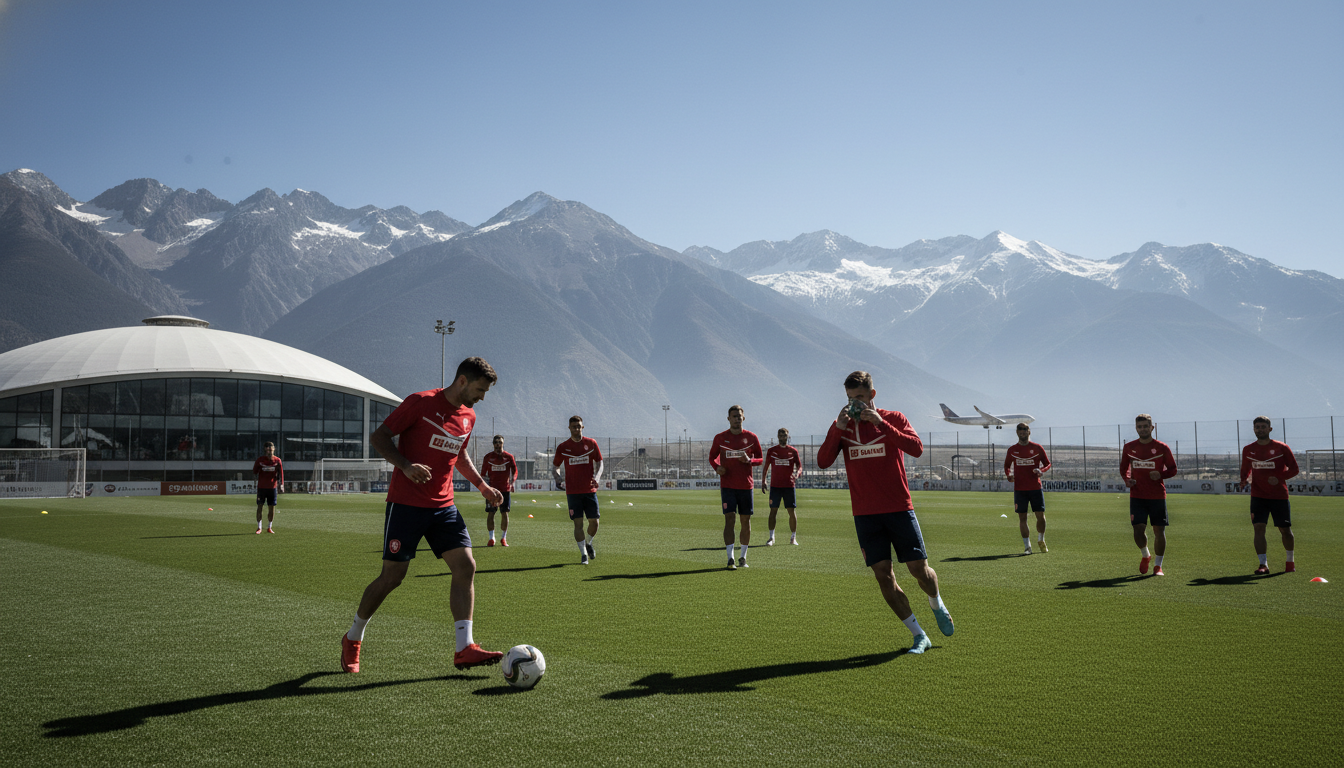
Logistics are likely to be as influential as tactics in this edition of the World Cup. Two of Czechia’s fixtures are scheduled in Mexico at elevations around 2,000 metres, a condition that demands specific physical preparation and acclimatisation protocols.
Compounding altitude is the long-distance travel and time-zone changes players must negotiate, particularly with the reported team base in Dallas. That decision introduces frequent long-haul transfers and compressed recovery windows, creating a premium on rotation, medical planning and sleep management to maintain performance levels.
Leadership and the spine of the team
Czechia’s core is anchored by experienced figures who have a clear leadership burden heading into the tournament. Midfield anchor Tomas Soucek remains the central on-field leader, setting the tone through his pressing, aerial presence and organisational influence.
The squad has not been without off-field controversy. The national association publicly criticised player conduct after a celebratory incident, and leadership responsibilities were adjusted as a result. Such episodes test internal cohesion and demand strong captaincy to align standards and public expectations ahead of high-stakes matches.
Defensive profile and personnel questions
Defence for Czechia has traditionally relied on discipline, aggression and the capacity to win duels rather than flamboyant ball-playing from the back. That approach fits well against teams that seek to dominate possession but can feel vulnerable if opponents combine technical midfield control with quick vertical transitions.
Selection dilemmas will centre on balancing experienced campaigners with younger players who offer mobility and recovery speed. The coaching staff faces a trade-off between fielding a combative backline that retains the team’s defensive identity and integrating more technically assured individuals to handle pressure from teams like South Korea.
Midfield balance and attacking options
Midfield balance will be critical; Czechia must reconcile Soucek’s combative style with partners who can help progress the ball under pressure. Without a surplus of natural creators, the team may rely on wing play, long diagonals and set-piece routines to fashion chances.
Upfront, Czechia’s attack is unlikely to produce a high volume of goal attempts from open play, meaning finishing and chance conversion in limited opportunities will define their scoring output. Coaches will emphasise clinical decision-making in the final third and timing of runs to punish transitional moments.
Game plans against Mexico, South Korea and South Africa
Each opponent in Group A presents a distinct tactical puzzle. Mexico combines home-field advantage, tactical discipline and the ability to control tempo through midfield possession. Czechia will need to absorb pressure and exploit counter opportunities while managing altitude-related physical constraints.
South Korea typically offers fast, technically adept attackers and pressing intensity. Czechia’s plan against them is likely to prioritise compactness, minimising space between lines and seeking to make the game as physical and direct as possible.
South Africa arrives with renewed confidence after recent improvements at continental level, bringing athleticism and counter-attacking intent. The Czech approach versus South Africa will mix set-piece targeting with tighter marking of transition outlets to limit swift breakaways.
Fitness, rotation and tournament timeline
The tournament’s compressed schedule increases the importance of squad depth and smart rotation. Czechia must plan minute management carefully, especially with high-altitude fixtures that can accelerate fatigue accumulation.
Medical and conditioning staff play outsized roles in tournaments where recovery windows are narrow. Proactive load management, targeted nutritional strategies and staged acclimatisation sessions for players arriving in Mexico will be necessary to mitigate the effects of altitude on power output and concentration.
Realistic objectives and measures of success
Given the draw and Czechia’s profile, realistic targets are clear: remain competitive in every match, maximise points against peers, and look to advance from the group if form and circumstances align. Progression would be a notable achievement that hinges on disciplined defending, opportunistic scoring and effective management of non-football variables.
Beyond results, success can also be measured by performance consistency, the team’s ability to control matches’ emotional tempo and the emergence of younger players who can future-proof the national side. The tournament offers both immediate tests and long-term evaluation of squad development.
Coaching adjustments and tactical flexibility
The coaching staff must display tactical flexibility to navigate Group A. Rigid adherence to a single system risks predictability, so modular plans that allow transitions between a compact, defensive block and a more expansive counter-attacking shape will be valuable.
Set-piece innovation could provide a practical edge, given Czechia’s historical emphasis on dead-ball situations. Detailed opponent scouting and bespoke routines to exploit individual matchups will be essential components of match preparation.
Public expectation and national context
Public and media expectations often swell around major tournaments, especially when fixtures take place on home soil for opponents or in neighbouring time zones. The national federation’s messaging about standards, conduct and focus has been explicit in recent weeks, reflecting a desire to shield the squad from distraction.
For Czechia, managing the external narrative will be as important as on-field preparation. A coherent public posture combined with quiet internal focus can protect performance margins in a competition where small details decide outcomes.
Czechia arrives in Group A as an established underdog with a clear identity rooted in collective effort, defensive solidity and set-piece proficiency. The team’s immediate challenges—altitude, travel logistics and a limited creative pool—are concrete but not insurmountable.
Ultimately, the squad’s trajectory in the World Cup will depend on disciplined execution of a pragmatic game plan, timely rotation to preserve energy, and the leadership of experienced figures to steady younger teammates. If Czechia can harmonise those elements, they stand a genuine chance of making the most of a testing but winnable group schedule.