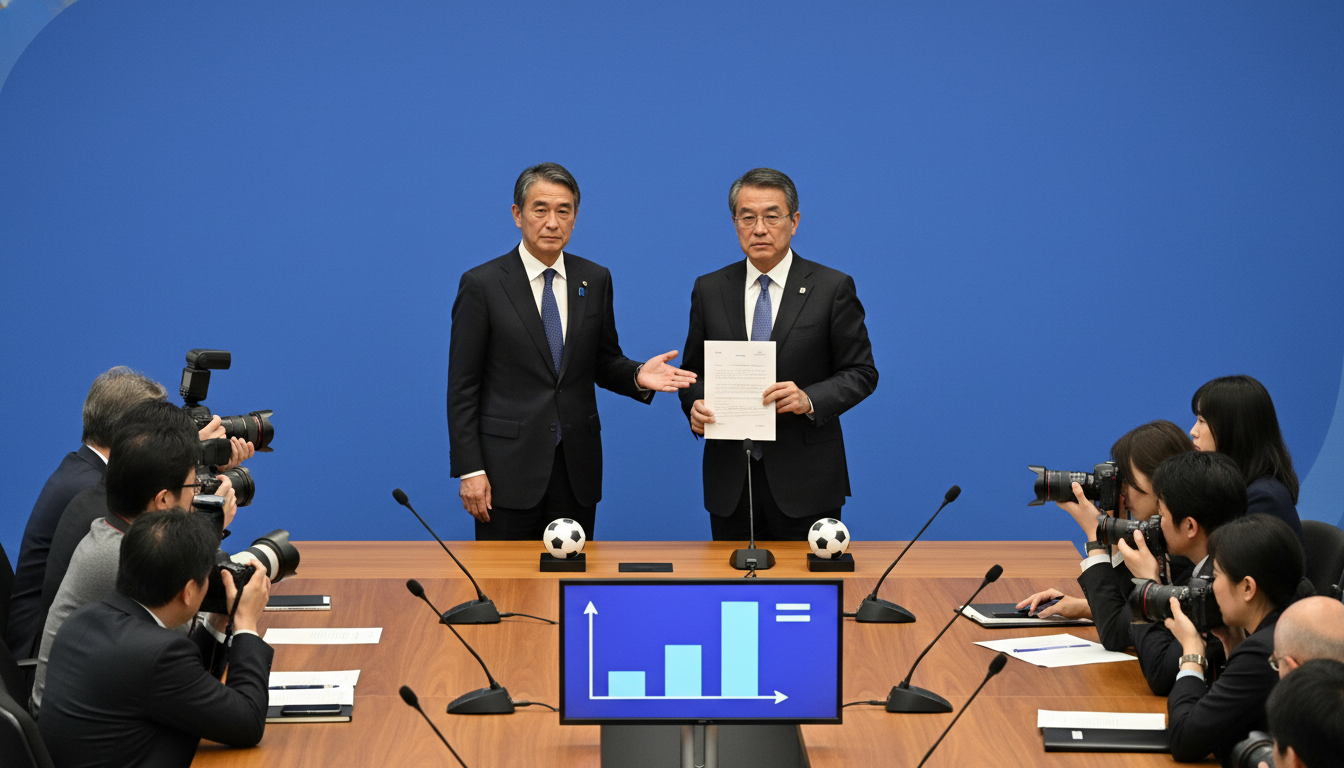
Women’s Asian Cup prize money faces fresh scrutiny after Japan and Australia demand equality
Japan and Australia call for equal Women’s Asian Cup prize money after Japan beat hosts in a record Sydney final, citing $1.8M payouts, $82.4M revenue potential and 350,000 fans.


Japan’s title win in Sydney and renewed demands for equal Women’s Asian Cup prize money have thrust tournament finances and governance into the spotlight. The Japanese side edged Australia 1-0 in front of more than 74,000 spectators on March 21, a final that delivered the competition’s largest-ever crowd and amplified calls for financial parity with the men’s tournament. Both finalists publicly challenged the Asian Football Confederation’s distribution of prize funds, arguing that the current $1.8 million women’s purse is out of step with the event’s commercial performance and public support.
Record final and historic attendance
The Sydney final set a new attendance benchmark for the Women’s Asian Cup, with over 74,000 fans in the stadium and a tournament total of roughly 350,000 spectators. Organizers and participating nations highlighted those figures as evidence of the women’s game drawing significant public interest across the region.
The unusually large turnout for the championship match came as the culmination of three weeks of increased visibility and media coverage for women’s football in Asia. Teams and observers say such on-field interest strengthens the case for reexamining how revenues and prize funds are allocated by the regional governing body.
Teams renew campaign for equal prize money
Both Japan and Australia formally renewed calls for equal Women’s Asian Cup prize money following the final, accusing the Asian Football Confederation of “ignoring” earlier requests to address the disparity. Their appeal centers on closing the gap between the $1.8 million women’s prize pool and the $14.8 million offered at the men’s equivalent.
Delegation statements and team leaders framed their demands as consistent with broader moves in world football to align pay and investment with market growth and sporting achievement. The two finalists emphasize that equality in prize money is not only symbolic but also practical for supporting the professional development of players and federations across Asia.
Financial argument: revenue estimates and commercial performance
A recent analysis from the global footballers’ union estimated that the Women’s Asian Cup could generate up to $82.4 million in revenue, a figure that teams and advocates have cited to support calls for a larger prize pool. The report, combined with the tournament’s aggregate attendance and broadcast interest, is being used to argue that the current payout lags well behind the competition’s market value.
Tournament promoters point to ticket sales, sponsorship, and media rights as growing revenue lines that could be redistributed to provide a more equitable prize structure. Clubs and national associations argue that a higher prize fund would accelerate investment in domestic leagues and grassroots programs, thereby expanding the commercial base that produced the 2026 attendance and viewership numbers.
Player welfare, political fallout and off-field issues
The tournament’s coverage was also shaped by an off-field humanitarian and political episode involving the Iran women’s team, when seven squad members sought asylum after publicly refusing to sing the national anthem and facing backlash at home. Two of those players remain in Australia, and the episode drew international attention to player safety and freedom of expression.
Teams and unions say such incidents underscore the broader responsibilities of governing bodies to protect players and to use prize money and support mechanisms to address welfare, legal and relocation needs that arise under extraordinary circumstances. Advocates contend that equitable funding can provide national associations with resources to better support players facing political or social risks.
Governance questions for the Asian Football Confederation
Japan and Australia’s renewed demand places fresh governance questions on the Asian Football Confederation, which has not yet announced a formal change to the tournament’s prize structure. The teams’ public accusations that the confederation has “ignored” prior requests raise scrutiny over how decisions on prize distribution are made and whether stakeholder input is adequately considered.
Observers note that any change to prize money would involve complex budgetary and contractual considerations tied to sponsorship agreements, broadcasting rights and long-term development programs. Federal leaders and confederation officials will likely face increased pressure to provide transparent accounting of tournament revenues and to explain the rationale behind the current allocation between men’s and women’s competitions.
Potential impact on women’s football across Asia
A shift toward equal Women’s Asian Cup prize money could have tangible downstream effects for national federations, leagues and players across the continent. Greater financial rewards at the continental level would make it easier for associations to invest in coaching, medical support, youth development and competitive domestic leagues that are necessary for sustainable growth.
Stakeholders from clubs to regional sponsors are watching closely, as any movement on prize parity could influence commercial negotiations and the strategic priorities of sponsors and broadcasters. Advocates say that aligning financial incentives with the sport’s growing popularity will encourage long-term investment and create better career pathways for female players throughout Asia.
The tournament’s record crowds, strong commercial indicators and high-profile incidents combined to produce a highly visible moment for women’s football in Asia, prompting the finalists to press their case for equal treatment. As federations, unions and the confederation weigh next steps, the debate over the Women’s Asian Cup prize money is likely to persist as a central issue shaping the future of the game in the region.