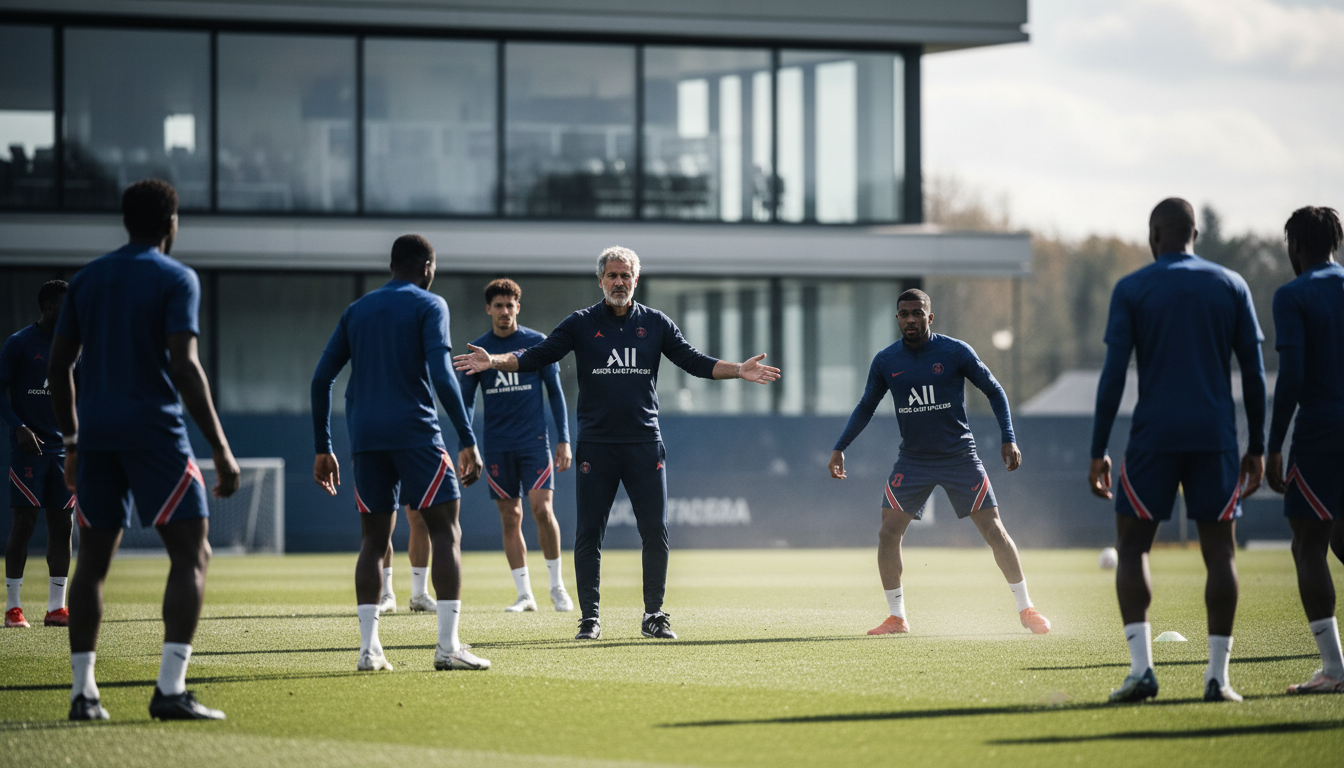
Marquinhos the anchor as Luis Enrique’s rebuilt PSG shows new steel
Marquinhos the anchor as Luis Enrique’s rebuilt PSG shows new steel


Paris Saint-Germain’s transformation under Luis Enrique reached a clear inflection point, with Marquinhos standing out as the defensive and emotional fulcrum of a side remade from the remnants of its superstar era. The performance showcased PSG’s new identity: a team-oriented unit that fuses individual quality with disciplined structure, and Marquinhos was at the heart of that shift. Luis Enrique’s overhaul has stripped away the permissive, personality-driven model and installed a framework in which collective duty is non-negotiable. That cultural reset now looks capable of carrying PSG deep into the big European tests that lie ahead.
Luis Enrique’s rebuild leaves no room for egos
Luis Enrique has deliberately recast PSG into a side where tactical clarity and shared responsibility come before individual celebrity. The coach, who previously led Barcelona to the Champions League, enforced a tougher selection policy and reset standards in training and matchday preparation. Players who could not buy into the regimented system were allowed to move on, and those who stayed were required to accept defined roles that prioritise team balance. The result is a cleaner structure on the pitch and a sharper sense of collective purpose.
That philosophy was evident not only in PSG’s pressing and shape but in the willingness of technically gifted players to embrace defensive duties. The team now looks built around interchangeable attackers who commit to tracking back, while midfielders and defenders maintain compact lines. This discipline has reduced the kind of individualistic breakdowns that previously undermined the squad. Luis Enrique’s message is simple and rigorous: talent must be married to work rate.
Marquinhos emerges as on-field commander
Marquinhos has evolved into more than a reliable centre-back; he is the on-field interpreter of Luis Enrique’s demands and the visible leader of PSG’s collective identity. The Brazil international, who joined from Roma more than a decade ago, has matured into a player who combines positional intelligence with a calming presence. His interventions, timely positioning and organizational voice allowed PSG to absorb pressure and spring forward with control.
Beyond technical attributes, Marquinhos brings a temperament that sets the tone for teammates in tight moments. He marshals the backline and communicates consistently, tempering urgency with composure when the game requires it. That steadiness was particularly valuable as opponents tested PSG at speed and in transition, and it repeatedly prevented small moments from becoming structural problems.
Defensive partnership anchored by Willian Pacho
Marquinhos’s partnership with Willian Pacho provided the physical foundation that allowed PSG’s wider pieces to operate more freely. Pacho’s pace and strength complemented Marquinhos’s reading of the game, forming a two-centre-back combination capable of dealing with both direct and intricate threats. Their chemistry limited opposition space and made it difficult for attackers to find clear avenues through the middle.
The pairing also helped PSG maintain a compact defensive block, enabling full-backs and midfielders to press with measured aggression rather than frantic recovery. Pacho’s recovery runs and Marquinhos’s interception timing together neutralised a number of dangerous moments. That reliability at the back gave the coach the freedom to deploy more adventurous players higher up the pitch.
Midfield balance drives PSG forward
PSG’s midfield trio of Vitinha, Fabián Ruiz and João Neves functioned as a well-oiled engine that linked defence and attack while preserving defensive solidity. Each midfielder brought a discrete skill set: Vitinha’s vertical burst, Ruiz’s vision and range, and Neves’s energetic positioning. Together they provided ball progression, control in transition and the willingness to undertake the gritty tasks that the coach demands.
The combination work of the midfield was visible in PSG’s most telling attacking move, where Ruiz threaded a precise pass that unlocked the final third and helped create the scoring opportunity. After contributing the creative pass, Ruiz reverted to the defensive responsibilities expected of him, closing gaps and pressuring ball carriers. That balance between craft and commitment has become a defining characteristic of PSG’s recent approach.
Wide threats and a youthful spark change the dynamic
On the flanks, the interplay between Khvicha Kvaratskhelia and Ousmane Dembélé produced moments of genuine incision, testing opponents with speed, dribbling and incisive link-up play. Their understanding allowed PSG to stretch defences and create mismatches that exploited transitional spaces. The attack’s fluidity was underpinned by structured movement rather than isolated individual heroics.
Fresh energy arrived from 20-year-old Desire Doue, whose second-half work caused repeated problems for defenders and pushed PSG’s threat level higher. Doue’s directness and willingness to engage defenders suggested a younger generation ready to carry the club’s forward momentum. Those emerging talents give PSG additional tactical options and a sustainable route for rotation in a congested calendar.
Tactical cohesion presents a serious test for opponents
PSG’s blend of tactical discipline and individual quality presents a different kind of challenge for opponents, and that was evident in how they controlled phases of play while remaining dangerous on the break. The team no longer relies on moments of individual brilliance alone; instead, it orchestrates attacks from a compact base and builds in patient, varied patterns. That makes them harder to unpick over 90 minutes.
Opponents that had previously found success by isolating star names now face a unit that defends collectively and counters with coordinated movements. The defensive organisation, led by Marquinhos, means that single-match-winning strikes from lone forwards will be less decisive without cohesive support. For clubs preparing to face PSG, the priority will be to match intensity and maintain structural discipline for the full game.
Implications for PSG’s European ambitions
If PSG sustain this blend of structure and individual invention, their prospects in continental competition will shift markedly compared with recent seasons. The mentality instilled by the coach and enforced by leaders like Marquinhos reduces the volatility that once defined the side. That mental recalibration, combined with tactical clarity, improves PSG’s ability to manage two-legged ties and grind out critical moments.
Sustained defensive reliability, coupled with younger attacking options and experienced midfield control, gives the club a deeper toolkit for the knockout stages. However, longevity will depend on maintaining intensity across domestic and European fixtures and managing squad minutes to avoid late-season fatigue. The challenge now is consolidation: to turn one strong showing into a consistent pattern.
Marquinhos’s role will remain central to that process, not only for his defending but for the standards he exemplifies in training and match preparation. As the team evolves, his presence will be the benchmark for others to measure themselves against. The leadership model he represents may well determine whether PSG can transform bright tactical moments into sustained success.
PSG’s recent display confirmed that the club’s identity has changed from a collection of stars into a coordinated, defensive-minded and tactically disciplined team, with Marquinhos as its indispensable anchor.