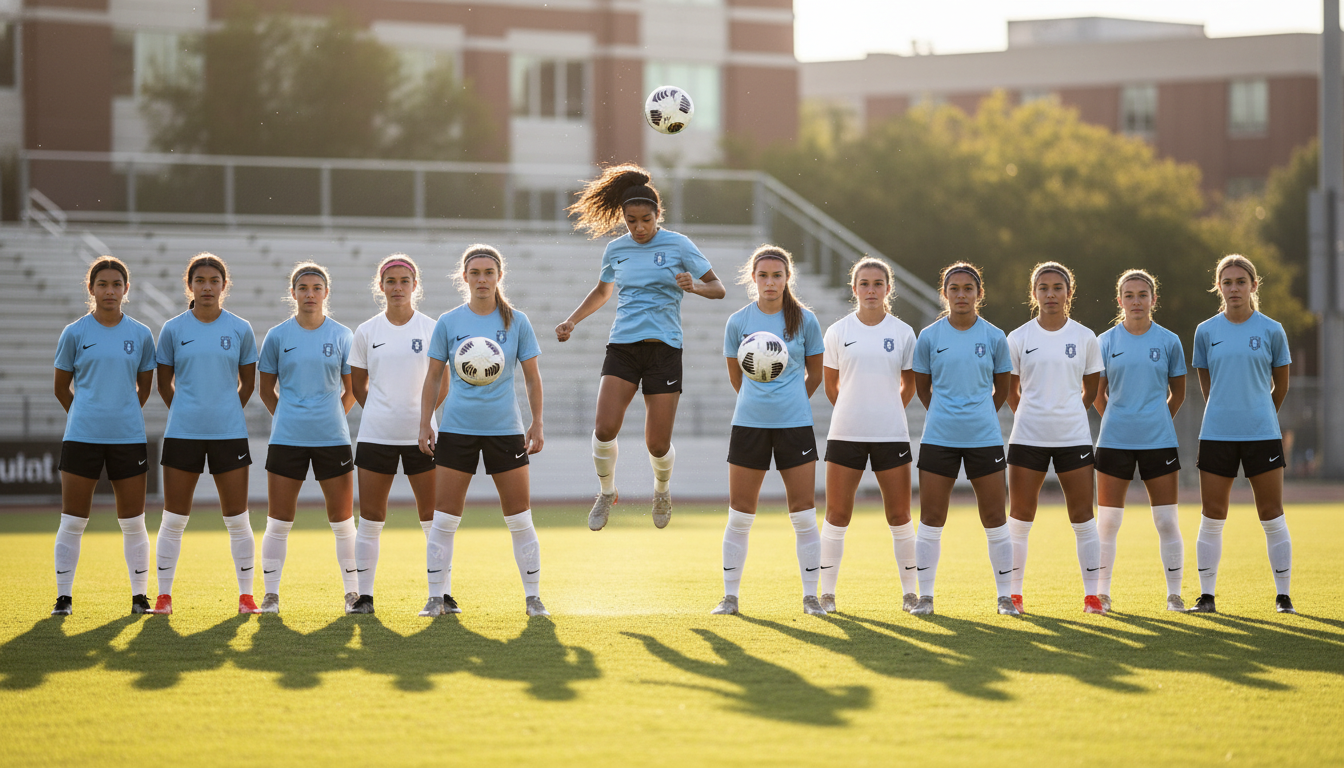
12 College Players to Watch in WPSL and UWS This Summer
12 college prospects to watch in the WPSL and UWS this summer, with insightful notes on development, tactical trends, key matchups and pro scouting coverage.


Dozen College Prospects Poised for Breakout Summers in WPSL and UWS
This summer’s WPSL and UWS campaigns present a vital stage for college players to sharpen their games before the fall season, and a dozen rising prospects stand out as those most likely to benefit. These players represent a cross-section of positions — dynamic wingers, box-to-box midfielders, and defenders who can marshal a backline — and each has a clear development objective for the short season ahead.
The list emphasizes players who will use competitive minutes to refine decision-making under pressure, improve match fitness, and demonstrate consistency against semi-professional opponents. Expect several of these prospects to return to campus with enhanced tactical awareness and a stronger profile for professional scouts.
How Summer Play Accelerates Development
Summer leagues like the WPSL and UWS compress high-intensity, competitive minutes into a short window, which accelerates learning curves for college athletes. Players face varied coaching philosophies and quicker tactical iterations than a typical collegiate season, which helps identify areas for immediate improvement.
Those advantages translate into measurable gains: better spatial awareness, sharper transition play, and more resilient physical conditioning. For many prospects, the summer is where incremental progress becomes visible to both college coaches and pro scouts.
Profiles of the Dozen Prospects and Their Summer Objectives
The dozen prospects span freshmen-to-seniors and cover every outfield position, each with a focused objective for summer play. A pacey outside forward aims to convert pace into end-product and improve crossing accuracy to become a reliable outlet in transition.
A creative attacking midfielder will target sharper link-up play and timing of late runs into the box to increase scoring influence. Two central defenders intend to develop communication under pressure and higher-line coverage to fit professional systems.
A defensive midfielder in the group is concentrating on ball retention and forcing turnovers in transition, while a target forward will work on hold-up play and aerial dominance. Finally, a fullback plans to sharpen overlapping runs and delivery into the penalty area to contribute both defensively and offensively.
Tactical Trends Shaping the 2026 WPSL and UWS Seasons
Coaches across WPSL and UWS squads continue to favor flexible formations that switch between compact defensive shapes and aggressive pressing phases. Teams emphasize rapid vertical transitions, which create space for wide players and reward quick decision-making in the final third.
Set-piece preparation has also become a decisive factor, with teams investing time to create rehearsed routines for both corners and free kicks. Increasingly, summer sides are using data-driven scouting to identify opponent tendencies and adapt mid-season, a practice that benefits collegiate prospects eager to learn modern preparation habits.
Clubs That Offer the Best Development Pathways
Not all summer teams provide the same developmental environment, and college players often choose clubs that align with their tactical ambitions. Some WPSL and UWS organizations are affiliated with professional academies or have experienced coaching staffs who prioritize player advancement.
Prospects looking to transition into pro play frequently seek teams that provide consistent minutes, rigorous training loads, and exposure to scouts. Clubs with a track record of alumni moving into the NWSL or overseas markets are particularly attractive because they offer both visibility and a tested pathway.
Scouting Attention and Professional Pathways
The summer circuit has become a reliable observation ground for scouts from the NWSL, USL Super League, and European clubs monitoring college-age talent. Consistent performance in the WPSL and UWS can convert into mid-season trials, preseason invites, or elevated draft positioning for the following year.
For players, standing out requires more than a few highlight-reel moments; it demands sustained tactical discipline, measurable match impact, and the ability to adjust to coaching feedback. Those who combine technical quality with tactical intelligence and physical readiness are the most likely to earn professional consideration.
Schedule, Key Matchups and What to Watch
Key matchups this summer will pit top WPSL and UWS clubs against each other in regional derbies that simulate postseason stakes. Fans and evaluators should watch contests that feature multiple collegiate standouts, as those games tend to reveal how players respond to high-pressure scenarios.
Individual battles — a quick winger versus an experienced fullback, or a creative midfielder against a controlling defensive pivot — often determine both match outcomes and player narratives. Tracking minutes and role consistency across several fixtures will be more telling than isolated statistical outbursts.
Summer leagues also feature midweek fixtures and double-headers, which test a player’s recovery and rotational readiness. Players who can maintain performance across condensed schedules demonstrate the physical and mental resilience pro clubs value.
Measuring Success: Metrics Beyond Goals and Assists
Evaluators in WPSL and UWS place increasing emphasis on process metrics rather than purely outcome statistics. Passing progression, successful pressure regains, expected goals built through movement, and defensive actions that prevent transition chances are all critical measures.
For attacking players, success also includes off-the-ball runs that create space for teammates, accurate crossing under pressure, and involvement in buildup phases. Defenders and midfielders are assessed on positional discipline, recovery speed, and effective communication during defensive shifts.
Coaches use these metrics to make targeted adjustments before the collegiate season resumes, ensuring players return to campus with a clearer understanding of their strengths and development needs.
This summer will be a proving ground for a dozen college prospects who can harness WPSL and UWS competition to catalyze their growth.
The concentrated competition of summer leagues often leaves a clear trajectory: players who earn consistent minutes, embrace tactical roles, and show resilience under pressure return to college seasons better prepared to lead and influence outcomes.