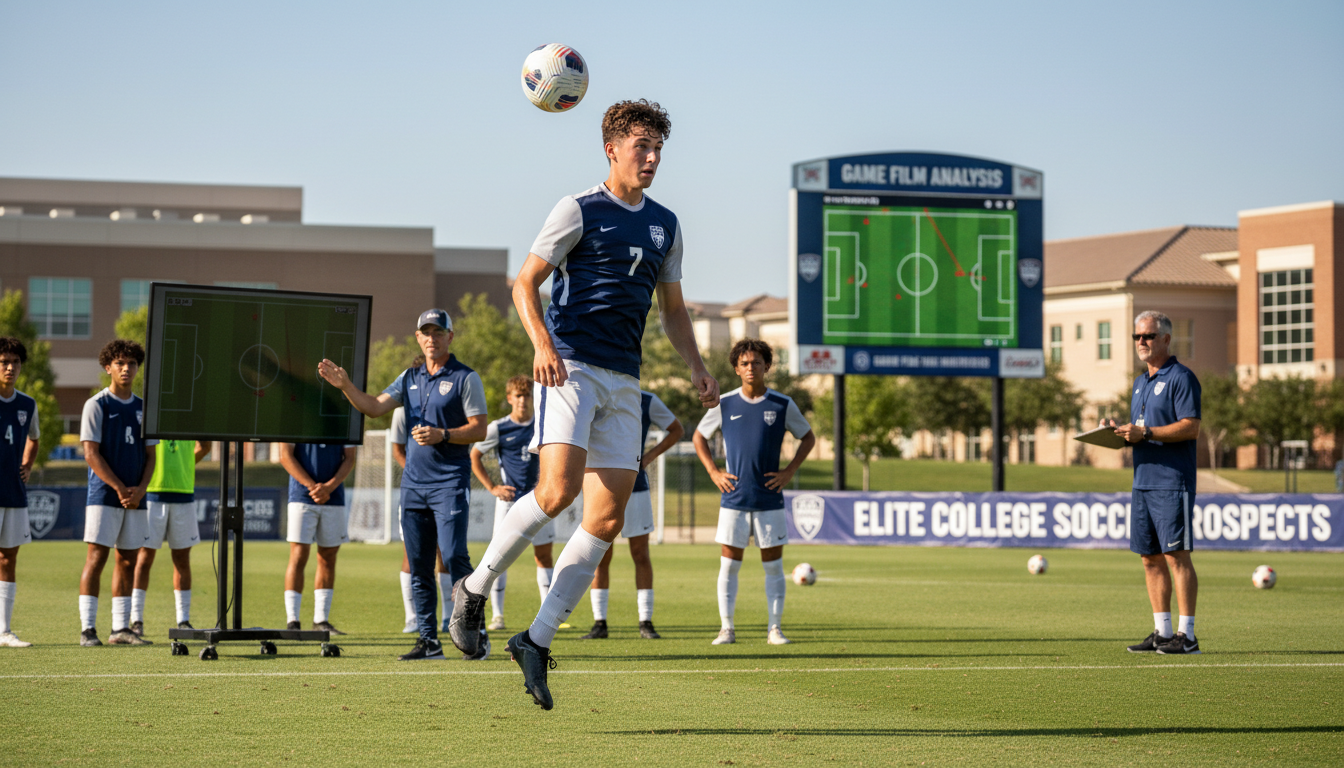
Elite College Soccer Camps launches coach-led recruiting camps with film and workshops in Los Angeles
Elite College Soccer Camps introduces coach-led, one-day recruiting camps in Los Angeles that include game film, live streams and a college recruiting workshop for players and parents.


Elite College Soccer Camps is rolling out a series of one-day, coach-centered recruiting events in Los Angeles designed to give high school players measurable exposure to college programs and clear next steps in the recruiting process. The camps combine on-field training run by collegiate coaches with video capture of 11v11 matches, a recruiting workshop for athletes and parents, and follow-up evaluation for every participant. Organizers say the format is built to reduce uncertainty for families and to replace passive showcase environments with active coach evaluation and instruction.
Camp structure prioritizes coached practice over passive showcases
The camps are structured around extended practice sessions led by college-level coaches rather than a schedule of back-to-back pickup games. Attendees participate in small-sided drills and 5v5 to 7v7 games that allow staff to assess decision-making, technical skill and tactical understanding in a controlled setting. Coaches then work the group through a full 11v11 match so they can see how players perform in a traditional game context.
Every training sequence is followed by direct, point-by-point feedback from the coaching staff to the players, giving athletes concrete improvement targets. Organizers emphasize that seeing a player in training reveals different attributes — work rate, coachability, and positional habits — that are often missed during tournament play. The intentional, coach-driven environment aims to replicate the rhythms of a collegiate practice and create situations where scouts can make informed evaluations.
Video capture and live stream expand coach access
Each camp will provide free full-game 11v11 footage for participants, enabling players to review performance and to distribute game film to coaches unable to attend in person. The organizers have also introduced an option to upgrade to a condensed highlight reel for athletes who want a polished scouting clip to send to college programs. Live streaming of matches places real-time visuals in the hands of remote evaluators and increases the pool of schools that can observe a player’s performance.
Camp administrators say partnering with a professional video provider improves the quality and consistency of the footage, addressing a long-standing obstacle for many recruits who rely on low-quality or incomplete clips. That higher production value can increase the likelihood that outreach emails and video links are opened and reviewed by coaching staff. For families, the availability of both full-game film and a highlights option is intended to create flexibility in how players present themselves to potential programs.
Recruiting workshop gives players and parents a tactical roadmap
A central component of the day is an educational workshop focused on college recruiting mechanics and immediate next steps. The workshop covers topics such as crafting an introduction email to coaches, building a targeted college list, understanding NCAA eligibility requirements, and strategies for timing outreach. Sessions are aimed at demystifying the process so players and families can act with confidence rather than relying on hope.
Officials say the program includes a separate parent meeting, held either in person or via video conference, to outline the parent’s role in recruitment and to answer administrative questions. That meeting is intended to align expectations and reduce common pitfalls such as improper communication timing or unclear scholarship terminology. By pairing on-field evaluation with actionable recruiting guidance, the camps aim to turn exposure into measurable progress in a player’s search for the right collegiate opportunity.
Coach-designed curriculum emphasizes player development and evaluation
The camp curriculum was developed by a college coach with the stated goal of mirroring the expectations and practices of collegiate programs. Training modules focus on position-specific responsibilities, transitional play, and the tactical concepts that college coaches prioritize during tryouts and practices. Coaches are present and active throughout, offering instant corrections and individualized instruction that a single-game showcase setting typically cannot provide.
In practice, staff break players into small groups to evaluate decision-making under pressure and then elevate the session to full-team play to assess consistency and game intelligence. At the close of the day, each player receives a written evaluation and a short in-person debrief with a coach to discuss strengths, areas for improvement, and recommended next steps. This systematic approach is intended to give athletes not only visibility but also a practical development plan that aligns with college-level expectations.
Registering for Los Angeles sessions and registration incentives
Organizers have scheduled multiple sessions in the Los Angeles area, and registration is open for players at a range of skill levels seeking collegiate pathways. The camps are presented as a concentrated, one-day opportunity for focused evaluation and education, which organizers argue offers better return on investment than a single tournament appearance. Families registering multiple players or groups can receive discounted rates, and there are package options for those who want to attend multiple dates during the season.
Camp staff advise early registration because spaces per session are limited to preserve the quality of coach-player interaction and ensure each athlete receives meaningful feedback. Participants will be asked to provide basic player information and preferred positions ahead of the camp so coaches can prepare drills and groupings that reflect athletes’ strengths. Administrators also note that the availability of video services and highlight upgrades is handled on a per-player basis and should be selected during the registration process.
How the camp model addresses common recruiting frustrations
The program responds to several recurring frustrations families report about the recruiting landscape, including uncertain coach attendance at tournaments, inconsistent video quality, and a lack of clear guidance after exposure events. By putting coaches on the field to actively run sessions, the camp reduces reliance on chance observations and forces a consistent evaluation environment. The added workshop and parent briefing seek to close the information gap that leaves many families unsure about next steps after a single exposure opportunity.
Organizers highlight that many recruits who are not the highest-profile athletes do not attract continuous coach attention in larger urban settings, and that tailored, coach-led sessions can help reveal overlooked potential. The format is designed to surface traits like tactical discipline, coachability and positional awareness — factors that often determine roster decisions at the collegiate level. With structured feedback and film to support follow-up outreach, the camp model aims to convert performance into substantive recruiting conversations.
Program officials say the Los Angeles dates are part of a broader effort to create replicable, high-value recruiting events in major recruiting hubs. They maintain that the combination of coach engagement, film production, and a focused recruiting curriculum is deliberately packaged to give families clarity and athletes a practical advantage. The approach also seeks to standardize what coaches look for during evaluation, making it easier for players to prepare and for coaches to compare prospects across sessions.
The adoption of professional film services and the option for highlight reels are presented as tools to help athletes present polished materials to coaches and improve response rates to outreach. Staff emphasize that the goal is not to promise scholarships but to increase the likelihood of meaningful conversations and to provide players with the materials and guidance necessary to pursue them. Distributing full-game footage alongside an optional highlight package helps families tailor their approach to individual coaches’ preferences.
Camp organizers say they will continue to iterate on session formats based on coach feedback and evolving recruiting timelines, and that maintaining small group sizes is a core priority. For families weighing the choices between tournament exposure and a structured, coach-led camp, the organizers position their offering as a more reliable and instructive route. Those interested in attending are encouraged to review session dates, available video services and group discount options during registration.
The Los Angeles camps are part of an ongoing effort to make college soccer recruiting more transparent and actionable for players who are not yet on the radar of multiple programs. By combining coached practice, full-game film, a live stream option and a recruiting education component, Elite College Soccer Camps intends to provide a cohesive platform for players to be seen, assessed and advised. Families registering early will secure a place in a controlled evaluation setting and receive the tools needed to communicate with coaches after the event.