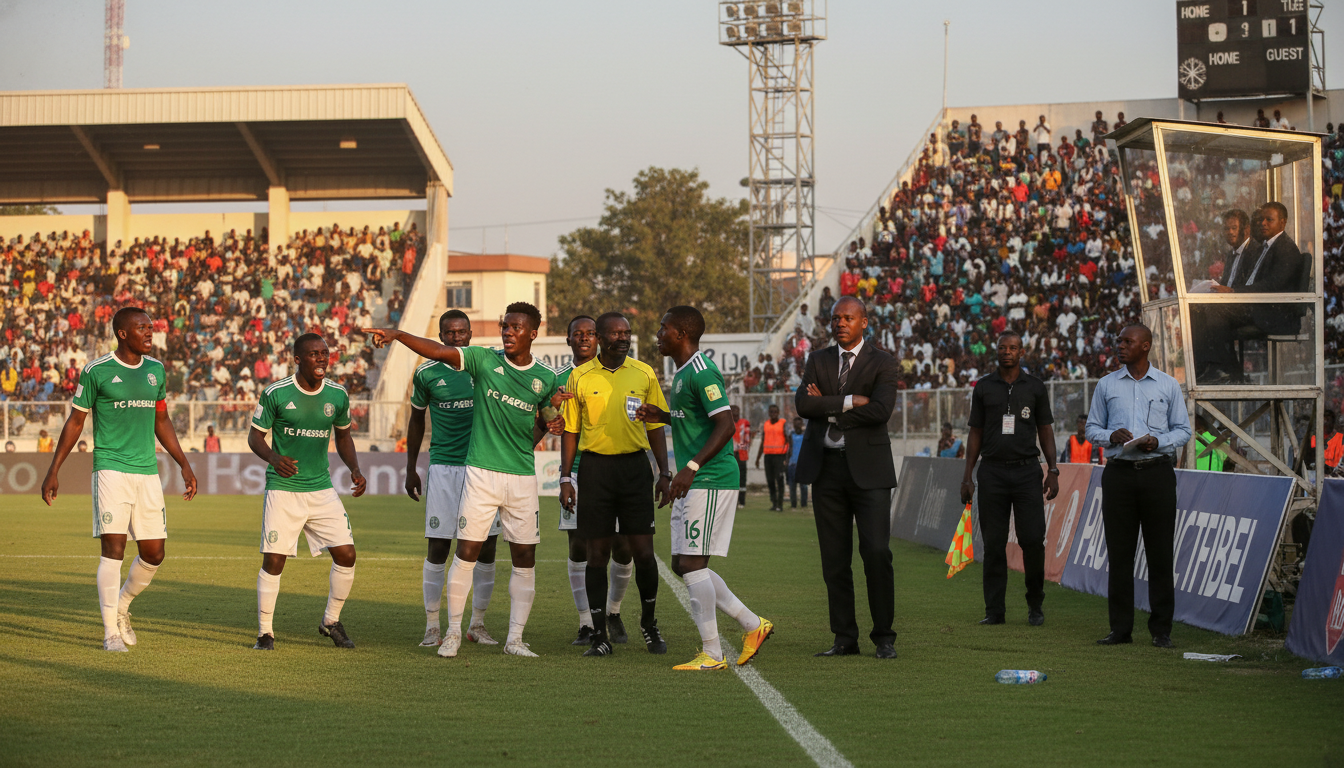
FC Fassell files ethics complaint seeking disqualification of Mustapha I. Raji in LFA presidency dispute
FC Fassell filed an ethics complaint seeking to disqualify Mustapha I. Raji from the LFA presidency, citing past sanctions and demanding rigorous vetting.


The Liberia Football Association (LFA) presidential race has taken a contentious turn after FC Fassell formally submitted an ethics complaint and a petition for disqualification against incumbent candidate Mustapha I. Raji. The club says the challenge, lodged with the LFA Elections Committee, rests on alleged historical sanctions it contends make Raji ineligible under the LFA’s own statutes and FIFA integrity rules. The move injects a new point of legal and administrative scrutiny into an already charged electoral calendar.
FC Fassell lodges formal complaint with Elections Committee
FC Fassell’s complaint was announced in a press statement from club president Cassell A. Kuoh Sr., who confirmed the documents were submitted directly to the LFA Elections Committee. The club framed the filing as an exercise of rights under the association’s electoral framework and international governance standards. The submission asks the committee to assess Raji’s eligibility and to apply the relevant integrity provisions without delay.
The filing underlines that the challenge is procedural rather than personal, and it urges the Elections Committee to act independently in determining whether past sanctions bar a candidate from contesting the LFA presidency. The club emphasized adherence to established rules and singled out the committee’s role as pivotal to preserving public confidence in the electoral process.
Allegations detail a 1998 ban and a 2008 expulsion
In its statement, FC Fassell cited two specific incidents it says demonstrate past disciplinary findings against Raji. The first allegation claims Raji received a two-year ban from all football-related activities in September 1998 after being accused of falsifying player registration documents in a Third Division playoff. The second allegation asserts that Raji was expelled from the LFA Executive Committee in 2008 for misconduct.
Those claims, if substantiated, would trigger provisions in the LFA statutes that disqualify individuals previously sanctioned by a recognized sporting body for serious misconduct. FC Fassell described the alleged measures as not merely technical but as matters that cut to the heart of integrity and trust in football governance.
Electoral rules and FIFA integrity standards cited by the club
FC Fassell’s petition specifically invokes integrity provisions within the LFA statutes along with FIFA’s global regulations on ethics and governance. The club argues that these provisions are designed to ensure that individuals who have previously been banned or expelled cannot hold top administrative positions that shape national football policy. The complaint asks the Elections Committee to interpret and apply these rules in a manner consistent with international norms.
Legal experts and governance observers note that the interpretation of past disciplinary records against present candidacies can be complex, particularly when records are old or disputed. FC Fassell has called for a thorough vetting process and for any historical sanctions to be verified through official documentation before any final determination is made.
Stakeholders react as election tensions rise
The filing has heightened attention among clubs, officials, sponsors, and fans who are already closely following the LFA elective congress. Some stakeholders expressed concern that the complaint could prolong pre-election disputes and risk distracting the association from preparations for competitions and development programs. Others welcomed the move as a necessary test of the LFA’s commitment to integrity and rule-based governance.
FC Fassell asked for calm from all camps and emphasized that the objective is to protect the image of Liberian football rather than to undermine individual candidates. The statement appealed to the broader football community to respect due process and to allow the Elections Committee to complete its review without interference.
Raji’s campaign and response efforts remain outstanding
Attempts to contact Mustapha I. Raji and members of his campaign for comment were unsuccessful up to the time of FC Fassell’s statement. The campaign has not publicly addressed the specific allegations detailed in the complaint, and it remains unclear whether Raji intends to mount a legal defense or to provide documentation that refutes the club’s claims. Political and administrative dynamics within LFA circles suggest that responses could range from immediate rebuttals to appeals for procedural clarifications.
If Raji or his campaign produces contemporaneous records that contradict the allegations, the Elections Committee will face the task of weighing competing evidence. The committee’s ability to obtain and validate archival records, witness statements, and formal disciplinary decisions will be central to any fair adjudication.
Elections Committee faces stringent timetable and legal tests
The Elections Committee must determine whether the complaint meets the procedural thresholds for investigation and whether it can be resolved within the timeframe set for the elective congress. The committee will need to apply LFA statutes and, where relevant, seek guidance from FIFA rules on eligibility and ethics. This process will likely involve document requests, witness interviews, and potentially a formal hearing.
Observers note that the committee’s ruling could set a precedent for how historical disciplinary matters are treated in future LFA contests. A finding for disqualification would reshape the candidate field and could prompt appeals to higher bodies, while a dismissal of the complaint could intensify scrutiny on the transparency and thoroughness of the vetting process.
Possible outcomes and implications for Liberian football governance
There are several potential outcomes from the complaint that carry distinct implications for the LFA and for the wider football community in Liberia. If the committee upholds the complaint and disqualifies Raji, the presidential race could change dramatically, altering alliances among clubs and officials and possibly triggering legal appeals. If the complaint is rejected on procedural or evidentiary grounds, the decision could raise questions about record-keeping and enforcement of ethical standards.
Regardless of the immediate resolution, the episode highlights the importance of clear vetting mechanisms, reliable disciplinary archives, and transparent enforcement of integrity rules. Stakeholders have indicated that a credible, rule-oriented resolution is necessary to avoid long-term reputational damage and to sustain sponsor confidence and public support for national football programs.
Next steps and what to watch ahead of the elective congress
The Elections Committee is expected to acknowledge receipt of FC Fassell’s complaint and to outline the procedural roadmap for review, including timelines for evidence submission and hearings. Clubs, candidates, and observers will watch closely for any public notice, which may include requests for additional documentation or scheduled hearings. The speed and clarity of the committee’s communication will be critical in containing speculation and preserving electoral legitimacy.
Football administrators and legal specialists in Liberia and the wider region may offer expertise or public commentary as the committee proceeds. Parties dissatisfied with the committee’s determination could seek recourse through appellate mechanisms within the LFA or, ultimately, through regional or international governing bodies that adjudicate sports governance disputes.
The complaint filed by FC Fassell brings governance and integrity questions squarely into the public view at a sensitive moment in the LFA electoral calendar. The Elections Committee’s handling of the matter will be watched as a barometer of the association’s commitment to rules-based leadership. The coming weeks will test both the robustness of the LFA’s statutes and the capacity of Liberia’s football institutions to resolve disputes transparently and promptly.