Hong Kong national team fall 2-1 to India as Roberto Losada completes debut in Kochi
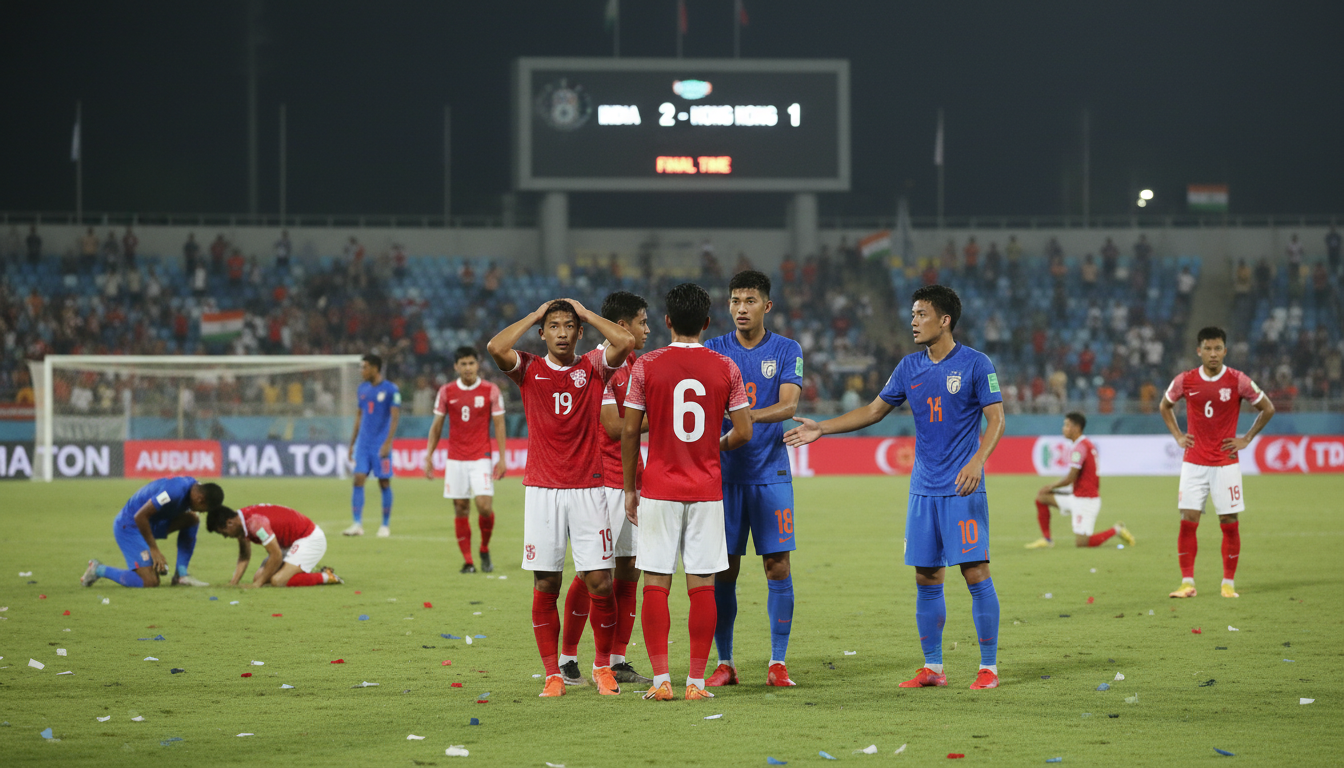
Hong Kong national team ended their 2027 AFC Asian Cup qualifying campaign with a 2-1 defeat to India in Kochi, as interim coach Roberto Losada handed four players their full debuts. The result closed a group stage in which Hong Kong were already unable to progress to next year’s tournament following a November loss to Singapore. Losada, appointed after Ashley Westwood’s departure, oversaw a heavily rotated side that mixed youth with experience amid injuries and suspensions.
Losada’s debut ends in 2-1 defeat in Kochi
Losada’s first match in charge produced a narrow loss but offered him an opportunity to assess options ahead of the Hong Kong national team’s next phase. The fixture in Kochi was a dead-rubber for qualification purposes, yet the result and player performances will feed directly into the coaching appointment process. While the scoreline favored the hosts, the match served as a live evaluation for several players who have pushed for longer-term inclusion.
The interim coach managed a squad that lacked several established starters, which complicated his tactical choices and game plan for the evening. With qualification already settled in the prior window, Losada was able to prioritize player assessment while still seeking a competitive result. The performance therefore has to be viewed through the lens of squad experimentation as much as immediate outcomes.
Squad selection hampered by injuries and suspension
Hong Kong entered the Kochi fixture without a full complement of frontline options, a factor the coaching staff cited when explaining the changes. Veteran forwards such as Matt Orr were absent through injury and Juninho sat out due to suspension, forcing Losada to alter his attacking setup. Those absences reduced the pool of experienced attacking players available, increasing the emphasis on younger and fringe players.
The starting XI contained only four players who featured in the November defeat to Singapore at Kai Tak Stadium, underlining the degree of rotation. That selection approach was partly tactical and partly pragmatic, reflecting the need to protect injured players and give prospects international minutes. The selection decisions will be scrutinized as Hong Kong prepares for the next competitive cycles and the permanent coaching appointment.
Four players handed full international debuts
A key outcome of the match was the introduction of four full international debutants, a clear sign of Losada’s willingness to blood new talent. Among them, 22-year-old goalkeeper Pong Cheuk-hei was selected to start ahead of the more experienced Tse Ka-wing, who was managing a thigh injury. The choice to entrust a young goalkeeper with a full international appearance in a foreign stadium indicates a focus on long-term goalkeeping depth.
Midfielder Barak Braunshtain, 26, also made his first start for Hong Kong, adding experience to a midfield that combined debutants and established players. The other debutants were given opportunities to stake claims for future call-ups in what was effectively a trial under match conditions. Those performances will be reviewed closely by the interim staff and any incoming permanent coach as they shape the squad moving forward.
Qualification already lost after November defeat to Singapore
Hong Kong’s inability to qualify for the 2027 AFC Asian Cup was effectively determined in November when they lost 2-1 to Singapore at Kai Tak Stadium. That result meant the Kochi fixture was played with the knowledge that progression was out of reach, allowing the coaching staff to adopt an experimental approach. The earlier elimination framed both selection and strategy in the remaining qualifiers.
Despite the disappointment of missing out, the November loss and the final group-stage outing in Kochi have provided a clearer picture of areas that require reinforcement. The defensive lapses and attacking limitations observed across the qualifying window will inform recruitment and development priorities. Administrators and coaches will need to translate those lessons into concrete plans ahead of future regional competitions and qualifying campaigns.
Coaching vacancy draws more than 300 applicants as Losada seeks permanence
The interim appointment remains tentative as the national association conducts a wide-ranging search for a permanent head coach, with more than 300 applicants reportedly in the running. Losada is among that large field, and his performance in Kochi will form one part of the wider assessment. The scale of applications reflects interest in the role and gives the association a broad pool from which to identify candidates with the right blend of tactical acumen and player-development focus.
Losada took over following Ashley Westwood’s departure in November and has used his brief tenure to evaluate talent and experiment tactically. The association faces the dual task of selecting a coach capable of immediate results and of overseeing a longer-term program to raise standards. How much weight is assigned to short-term match outcomes versus demonstrated ability to build a sustainable squad will shape the eventual hire.
Development priorities and the pathway for young players
The Kochi match made clear that Hong Kong must balance competitive objectives with the development of emerging players to strengthen depth. Integrating young goalkeepers and midfielders into the international set-up was a deliberate step toward expanding the pool of players available for future qualifiers. Continued investment in domestic coaching, scouting and competitive exposure will be essential to translate those individual debuts into durable international contributors.
The association and coaching staff will need to map clear pathways so promising performers can progress from debut minutes to regular selection. That includes increased playing time in competitive fixtures, targeted training programs, and monitoring of players’ club form. Such a structured approach will help the national team avoid overreliance on a narrow group of veterans and build resilience ahead of subsequent qualification cycles.
Losada and the technical staff will also be judged on their ability to identify the tactical shape that best suits Hong Kong’s player pool, combining defensive solidity with efficient attacking transitions. The choices made in Kochi—particularly in goalkeeper selection and midfield composition—offer clues to preferred systems but will require refinement. The next months present an opportunity to test variants and establish a clearer footballing identity.
Hong Kong’s leadership must now decide whether to prioritize continuity with internal candidates or seek an external appointment with international experience. Both routes carry trade-offs: promoting from within can maintain continuity and favor player development, while recruiting an experienced foreign coach may bring tactical innovation and fresh training methodologies. The large applicant pool gives the association flexibility but also raises the bar for a decision that aligns with long-term ambitions.
The match against India in Kochi closed a short chapter in Hong Kong’s qualifying campaign while opening another focused on rebuilding and selection. Interim results alone will not determine the program’s future, but the performances and assessments from this period will feed directly into selection and strategy. For players who debuted, the fixture represented an entry point into a more competitive international environment where consistent performances will be required.
Hong Kong’s next steps will include evaluating the coaching applications, reviewing player performances from the qualifying window, and setting priorities for upcoming fixtures and development programs. The association faces a strategic choice about the direction of the national team, balancing urgent competitive needs with the imperative to develop a broader, more resilient squad. Decisions made now will shape the team’s prospects in regional competitions and future Asian Cup qualifying cycles.
The immediate aftermath in Kochi leaves clear takeaways: a narrow defeat, valuable minutes for young internationals, and a coaching vacancy that remains open amid significant interest. As the Hong Kong national team transitions from qualification disappointment to rebuilding, the coming weeks will be critical in defining personnel choices and technical direction. The foundation laid by the recent matches will be tested as the association pursues a path toward greater consistency and competitiveness on the Asian stage.